To invest in Ghana from abroad, decide your goal and time horizon first, then choose an instrument you can verify, move money through a traceable channel, and set up reporting before the first cedi is spent. Each step is manageable on its own, but skipping one is how distance investors lose money: they convert at the wrong moment, pay into a personal account, or invest before they know how they will be told what happened. This guide walks through the process in order and flags where currency and oversight risk bite hardest.
Most people who ask how to invest in Ghana from abroad are really asking three things. Can I do it at all, how do I send the money safely, and how will I know my money is being used properly when I am thousands of kilometres away. Those are fair questions. The honest answer is that the mechanics are straightforward, but the rules on residence, tax and repatriation depend on your circumstances, and the verification steps take more effort than sending a transfer. The steps below are general. They are not legal or tax advice, and your situation may need a Ghanaian lawyer and an accountant before any large transfer.
Written by the Agro Prime Ghana team and reviewed against current market references (Bank of Ghana, Ghana News Agency, Securities and Exchange Commission Ghana). Last updated October 2026. General information, not financial advice.
Key takeaways
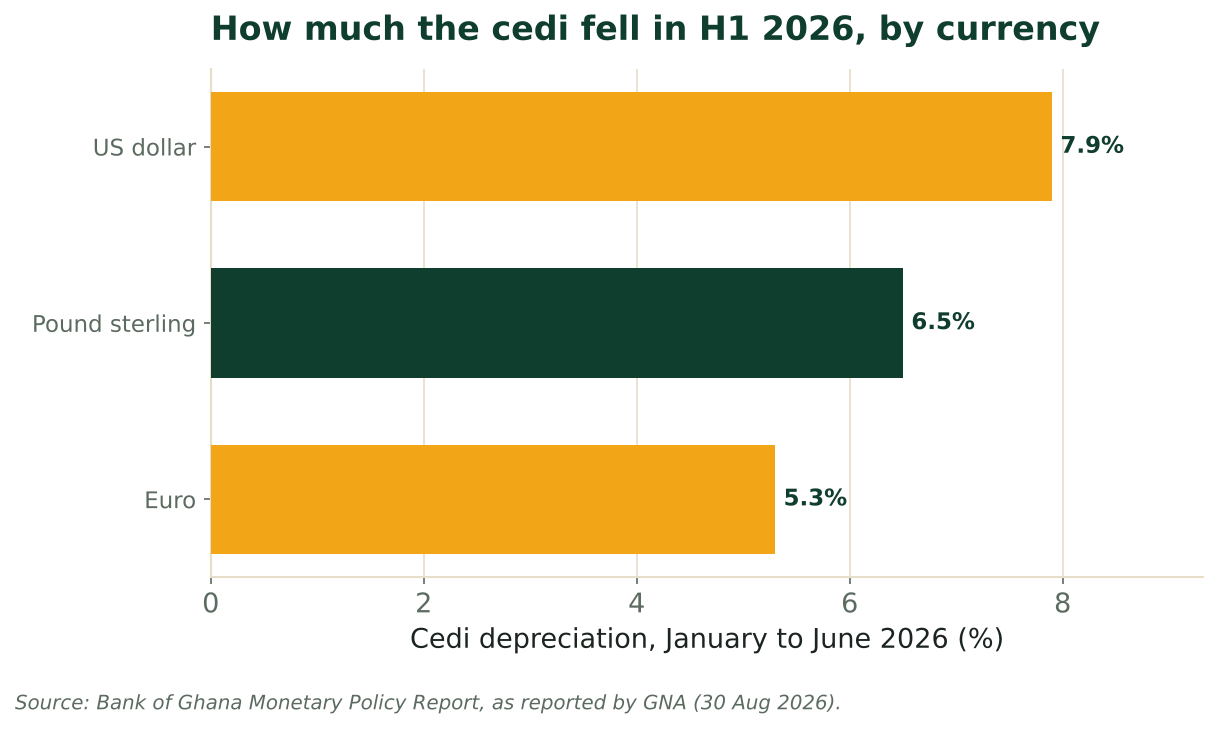
Work through the process in order: set your goal and horizon, pick an instrument you can verify, confirm the legal and tax position, choose a traceable transfer route, and agree written reporting before you pay. Currency is the largest hidden risk. The cedi fell 7.9 percent against the US dollar, 6.5 percent against sterling and 5.3 percent against the euro in the first half of 2026, according to the Bank of Ghana. Treasury bills yielded 4.62 percent on the 91-day and 9.71 percent on the 364-day at the latest auction reported on 18 October 2026, but yields move and access depends on your status. No return is guaranteed.
Step 1: Set a goal and a horizon before you look at options
Start with the question you are trying to answer. Are you trying to protect the value of savings, grow a sum over several years, create income for a family member at home, or build a business you may eventually run? Each goal points to a different instrument. A family income goal suggests a business that produces regular returns, which is also where the risk of disappointment is highest. A growth goal over ten years may suit equities or a longer-term project. A short-term goal should avoid anything that can lose a large share of its value quickly.
Next, decide the horizon and the currency you will measure your result in. If you plan to spend the money in dollars, pounds or euros, the result that matters is the one in those currencies, not the cedi figure on a statement. Write both down. This sounds obvious, but it changes the decision. A cedi return of 20 percent looks very different if the cedi has lost ground against your home currency over the same period.
Step 2: Compare local options on the same yardstick
Before you commit to a single investment, compare the main local options on the same measures: how the return is earned, how long money is locked, how easily you can exit, and what can make you lose money. Government treasury bills are the benchmark most people know. At the latest auction reported on 18 October 2026, the 91-day bill yielded 4.62 percent, the 182-day 6.31 percent and the 364-day 9.71 percent. In the auction reported on 27 July 2026, the same tenors were 5.78, 7.68 and 12.96 percent. Between those two reports, yields fell on all three tenors, which shows how quickly the number you see can change.
Compare those yields against inflation. Headline inflation was 5.0 percent in August 2026, up from 4.6 percent in July, according to MyJoyOnline's coverage of the September 2026 Monetary Policy Committee decision. The Bank of Ghana policy rate was 14 percent at the September 2026 decision. Higher-yielding instruments are not automatically better. A higher yield can reflect higher risk, longer lock-up or lower liquidity.
Step 3: Check the legal and tax position for your situation
This is the step most distance investors skip, and it is the one that causes the most expensive surprises. Before you send money, find out whether your residence status allows you to hold the instrument you want, whether a local account is required, how the investment will be recorded, and how and when you can take money out later. Rules differ between government securities, shares, company investments and direct partnerships, and between Ghanaian citizens living abroad and other foreign investors.
Take a short list of questions to the right people: the bank on whether a non-resident account is needed and how an inward transfer will be documented; the Ghana Investment Promotion Centre on how a foreign investment should be registered; a Ghanaian lawyer on how the contract is enforced; and an accountant on taxation in Ghana and at home. If an adviser cannot explain the rules clearly, slow down.
Step 4: Choose a transfer route you can trace
The way money moves matters as much as where it goes. Use a regulated bank or a licensed money transfer provider, send to a named account in the name of the business or agreed party, and keep every confirmation. Avoid sending cash through couriers, paying into a personal mobile wallet, or moving funds through a third party you have not verified. If the money is later disputed, a clean trail is the difference between a recoverable problem and an unrecoverable one.
Decide in advance how you will convert your currency. Converting the full amount on a single day exposes you to the rate on that day. Splitting the transfer into several tranches over time spreads the timing risk, though it does not remove the currency risk. Some investors decide to keep a portion of their funds in their home currency as a reserve, so they are not forced to convert at a bad moment. Whatever you choose, write the plan down and stick to it.
Investor note: the currency can decide the outcome
The Bank of Ghana's Monetary Policy Report, as reported by the Ghana News Agency on 30 August 2026, said the cedi depreciated 7.9 percent against the dollar in the first half of 2026. A local investment that earns a 10 percent cedi return can still lose money in dollar terms if the cedi falls by more than that. The reverse is also true, and the cedi appreciated 42.6 percent against the dollar in the same period of 2025. Do not assume the currency will cooperate.
Step 5: Verify the business or instrument before you pay
Verification is the step that protects you from fraud, and it applies to every option. For anything that involves shares, pooled money or a promise of returns, check the licensing status with the Securities and Exchange Commission. The SEC has repeatedly warned the public about unlicensed schemes. On 22 July 2026 it named 23 unlicensed online and social media investment schemes and urged people to verify the licence of any company offering investment products before committing funds. It also issued a public notice in February 2026 on another unlicensed scheme, and a warning in July 2026 about two named platforms.
For a farm or business, verify what you can see. Confirm the company is registered, the directors are who they say they are, and the premises exist. Ask for records you can check against the bank, not a summary prepared for you. A genuine operator will welcome these requests and answer them in writing. An operator who avoids specifics, rushes you, or offers a guaranteed return has given you the answer you need.
Step 6: Set up reporting before the first payment
Reporting is what lets you oversee an investment from a distance, and it has to be agreed before you pay, not after. Write down what you will receive, how often, and in what form. A useful minimum is a monthly statement of money in and out, a dated record of the activity being funded, and a short written update on problems. For a farm, that means feed and vaccine purchases, mortality, sales and the bank statements that support them. For a government instrument, it means the auction results and your own holding statement.
Agree a schedule for a site visit, a video call or a representative's inspection. A once-a-year visit is a sensible minimum for a meaningful stake. Set a rule for when you will ask questions, such as a missed report or a result that does not match the figures you were given. The point is not to distrust everyone. It is to make sure problems surface early, while there is still time to act.
Step 7: Plan the exit before you enter
Every investment needs an exit. Before you invest, ask how you will get your money back, when, and in what currency. Ask what happens if the business ends early, if the operator becomes unreachable, or if a cycle loses money. Check whether there are rules on taking profit out of Ghana and whether any tax is due on the way out. Government bills can be held to maturity or sold on the secondary market, but access and liquidity depend on your status and the market. A farm batch usually has a fixed end date and needs a written settlement process.
A clear exit protects you from the most common complaint in distance investing: money that is technically yours but cannot be recovered without a legal fight. Write the exit into the agreement and keep a copy in your own records.
Investor note: a fast promise is a slow problem
Schemes that promise high returns quickly, ask for payment through personal accounts, or discourage questions are the pattern the regulator warns about most. A legitimate investment can survive scrutiny. Ask for the licence, the records and the agreement, and take as long as you need. If the operator pushes you to decide quickly, treat that as a reason to walk away.
Where agriculture fits in a plan from abroad
Agriculture can fit into a plan from abroad, but it asks more of you than a bank deposit or a government bill. It produces a physical asset and a real income stream, which is attractive, and it also depends on the weather, disease, feed prices and the operator. A poultry batch is short and visible, which makes it easier to judge than a tree crop, but it is still a higher-risk use of money than a government bill, and a bad batch can cost you the whole of your stake.
If you are considering a poultry partnership, the process above applies directly. Use the verification steps, insist on written reporting, and ask how the currency will be handled. Our guide to whether poultry farming is profitable in Ghana and our note on writing a poultry business plan set out the numbers you should ask for. For the operational side of a flock, the cash flow of a poultry farm shows where money goes and when it comes back.
Ready to talk it through?
If you want to understand the profit-share model we use for poultry batches, read our partner page, which sets out how the arrangement works and what it does not promise. Send us the questions in this guide on WhatsApp (+233 24 915 1503), including your currency and reporting needs. If you can travel, book a visit to see the operation in person before you decide anything.
A simple checklist before you transfer
Before any money leaves your account, you should be able to answer yes to each of these points. If you cannot, pause and fix the gap first.
- I know my goal, my horizon and the currency I will measure the result in.
- I have compared the option with a government bill and an inflation figure, not a headline rate alone.
- A lawyer and an accountant have confirmed the legal and tax position for my situation.
- The business or instrument is licensed or registered where that is required, and I have checked.
- The money will go to a named account in the name of the business or agreed party.
- I have a written agreement covering the amount, the purpose, the reporting, the timeline and a loss scenario.
- I have agreed how I will be reported to, and how often I can visit or have it inspected.
- I know how my money comes back, when, and in what currency.
The bottom line
Investing in Ghana from abroad is possible, and the process is clear if you follow it in order. The steps that matter most are the ones people are tempted to skip: confirming the legal and tax position, checking the licence, setting up reporting before you pay and planning the exit. Currency will move your result in ways that a local return figure does not show. Treat the process as a discipline rather than a hurdle, start with an amount you can afford to lose, and be wary of any offer that asks you to move quickly or stop asking questions.
Frequently asked questions
Can I invest in Ghana from abroad?
In general, people living outside Ghana do invest in Ghanaian businesses and instruments. Rules depend on your residence status, nationality, the type of investment and the tax position in your home country, so confirm them with a Ghanaian lawyer and an accountant before transferring money.
What is the safest way to send money to Ghana for an investment?
Use a regulated bank or licensed transfer provider, send to a named account in the name of the business or agreed party, and keep every confirmation. Avoid personal mobile wallets, cash couriers and third parties you have not verified.
What are treasury bill rates in Ghana now?
At the latest auction reported on 18 October 2026, the 91-day bill yielded 4.62 percent, the 182-day 6.31 percent and the 364-day 9.71 percent. Rates change at each auction, and your access to government securities depends on your status, so check current figures and eligibility before acting.
How much has the cedi fallen against the dollar?
According to the Bank of Ghana's Monetary Policy Report, as reported by the Ghana News Agency on 30 August 2026, the cedi depreciated 7.9 percent against the dollar, 6.5 percent against the pound and 5.3 percent against the euro in the first half of 2026. Currency moves in both directions, so check current rates.
How do I check whether an investment company is licensed?
For shares, pooled investments or promised returns, check with the Securities and Exchange Commission Ghana. It publishes public notices on unlicensed entities, and in July 2026 it named 23 unlicensed online investment schemes. If a company is not on a licensing register where one applies, ask it for an explanation in writing and do not pay until you have one.
Should I convert all my money at once?
Converting in one go exposes you to the rate on that day. Splitting the transfer into tranches spreads timing risk, though it does not remove currency risk. Decide your conversion plan in advance and write it down, so you are not making the call under pressure.
What reporting should I ask for from a farm investment?
Ask for dated records that can be checked against bank statements: inputs bought such as chicks and feed, vaccination records, mortality, sales and money in and out. Agree how often you will receive them and how you can visit or have the site inspected by a representative.
What is the biggest mistake distance investors make?
The most common mistakes are sending money before a written agreement is signed, relying on one relative to be both operator and reporter, paying into a personal account, and ignoring currency risk. Each is avoidable with the steps in this guide, and none requires special access, only a written record and patience.
Sources & further reading
- Ghana News Agency: Cedi records 7.9% depreciation against US dollar in first half of 2026 (30 August 2026)
- MyJoyOnline: T-bills auction, government records marginal oversubscription (published 18 October 2026)
- Citi Newsroom: Treasury bill auction oversubscribed by 30.3% (27 July 2026)
- MyJoyOnline: MPC maintains policy rate at 14% for third consecutive meeting (reported 24 September 2026)
- MyJoyOnline: Inflation for June 2026 rises sharply to 5.3% (1 July 2026)
- Citi Newsroom: SEC names 23 unlicensed online investment schemes (22 July 2026)
- Securities and Exchange Commission Ghana: Public notice, warning against unlicensed investment scheme (16 February 2026)
- Securities and Exchange Commission Ghana: Public notice, list of entities operating without a licence
- News Ghana: Ghana remittances hit US$7.8 billion, surpassing FDI for the first time (April 2026)
About Agro Prime Ghana & a note on risk
Agro Prime Ghana Limited runs a poultry hatchery and mixed agribusiness in Kasoa and invites partners to invest in its farming production through a profit-share on a production batch. This is general educational information, not financial advice, and investing carries risk including loss of capital — always do your own research or consult a licensed adviser. Explore it: see how it works, book a visit, or message WhatsApp (+233 24 915 1503).