Sorghum is the best local substitute for maize in Ghanaian poultry feed: low-tannin ("white") sorghum carries almost as much energy as maize — a Ghana study measured 12.1 MJ/kg against maize's 13.1 — and can replace maize by up to about 70% of the grain in a well-balanced broiler ration. The one big catch is tannin. High-tannin (brown, bird-resistant) sorghum contains compounds that bind protein, cut digestibility, damage the gut lining and slow growth, so the variety you buy matters more than almost anything else. Get a low-tannin, pale-grained sorghum and you have a near-drop-in maize replacement; get a dark, bitter, high-tannin one and you can quietly wreck your birds' performance. This guide explains sorghum's energy and protein value, the tannin problem, how it compares with maize, and exactly how to use it in Ghanaian poultry feed.
Written by the Agro Prime Ghana poultry team and reviewed against current feed-science references (Feedipedia and a Ghana feedstuffs study published in Livestock Research for Rural Development). Last updated September 2026.
Key takeaways
Sorghum is an energy grain very similar to maize: about 10–12% crude protein, very low fibre (~3%), high starch (~74%), and a poultry metabolisable energy of roughly 12–16 MJ/kg depending on variety and source. Its make-or-break factor is tannin. Low-tannin (white/yellow) sorghum has negligible tannin (~0.5 g/kg) and feeds almost like maize; high-tannin (brown, bird-resistant) sorghum can carry 50+ g/kg condensed tannins that bind protein, cut amino-acid digestibility, damage the gut and slow growth and egg production. Low-tannin sorghum can replace maize up to about 70% of the grain fraction in balanced diets. Like maize, sorghum is low in lysine and lacks yellow pigment, so eggs and skin are paler. Choose pale, non-bitter grain, and it is a strong maize alternative in Ghana's north.
What is sorghum, and why consider it in Ghana?
Sorghum (locally often called guinea corn) is a hardy cereal grain grown widely across northern Ghana and the Sahel, prized for tolerating heat and drought far better than maize. For poultry it matters because it is fundamentally an energy grain in the same class as maize — high in starch, low in fibre, moderate in protein — and therefore one of the very few locally grown crops that can genuinely take maize's place at the heart of a ration. That is a big deal in Ghana, where maize is the single largest and most price-volatile ingredient in poultry feed, and where maize shortages and price spikes in the lean season squeeze every farmer's margins. According to Feedipedia, sorghum grain averages about 10.8% crude protein, just 2.8% crude fibre and roughly 74% starch, giving a broiler metabolisable energy around 15.7 MJ/kg of dry matter for good low-tannin grain. Those numbers put sorghum squarely in maize territory, which is why it is the first crop to look at when you want to reduce reliance on maize — a theme we return to in our guide to reducing poultry feed cost. As drought and climate pressure push more Ghanaian farmers toward hardy grains, and as national programmes encourage local grain production, sorghum's role in poultry feed is likely to grow.
How does sorghum compare with maize for poultry?
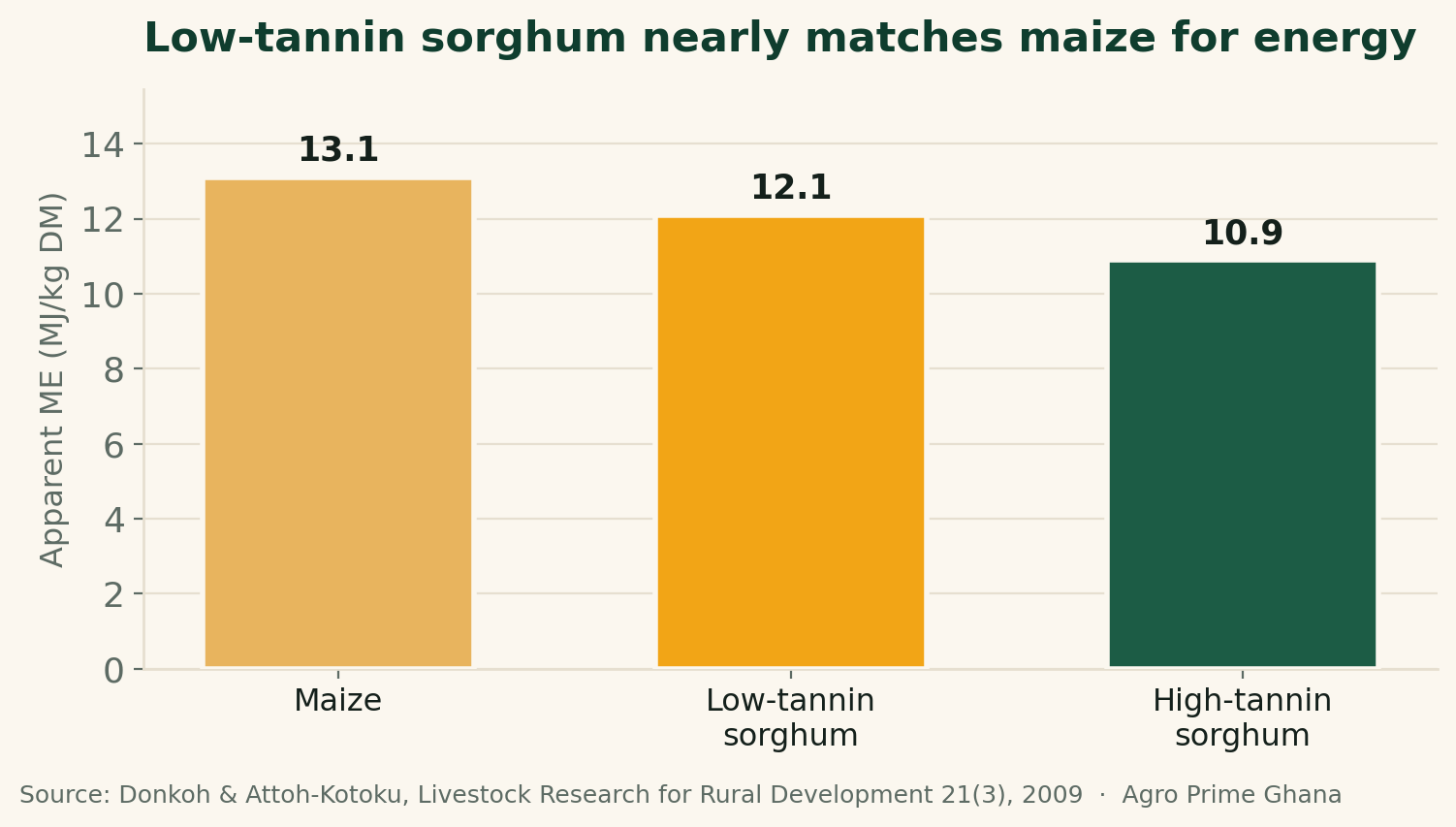
For a good low-tannin variety, sorghum is close to maize but usually a shade behind. The Ghana study by Donkoh and Attoh-Kotoku in Livestock Research for Rural Development measured low-tannin sorghum at 12.1 MJ/kg apparent metabolisable energy — about 92% of maize's 13.1 MJ/kg — with a slightly higher crude protein (10.8% versus maize's 8.2%) and similarly low fibre. Its lysine digestibility was strong too, at about 86%, almost matching maize. In other words, swap maize for good low-tannin sorghum and you lose only a little energy and gain a little protein — a very workable trade. There are two real differences to plan around, though. First, like maize, sorghum is low in lysine (only about 2.2% of its protein), so it does not fix a ration's amino-acid gaps; you still need a good protein source and, often, supplemental lysine and methionine, as covered in our guide to amino acids in poultry feed. Second, sorghum lacks the yellow xanthophyll pigment that maize supplies, so birds fed heavily on sorghum produce paler egg yolks and paler skin/shanks — not a health problem, but something Ghanaian buyers who prize deep-yellow yolks and yellow-skinned birds notice at market.
| Feature | Maize | Low-tannin sorghum | High-tannin sorghum |
|---|---|---|---|
| Grain colour | Yellow/white | White, cream, pale | Brown, dark, bird-resistant |
| Metabolisable energy (MJ/kg DM) | 13.1 | 12.1 | 10.9 |
| Crude protein | ~8% | ~11% | ~10% |
| Condensed tannins | None | Very low (~0.5 g/kg) | High (50+ g/kg) |
| Lysine digestibility | ~87% | ~86% | ~79% |
| Yolk / skin colour | Deep yellow | Pale (no pigment) | Pale (no pigment) |
Energy, protein and lysine figures from Donkoh & Attoh-Kotoku (LRRD 2009); tannin ranges from Feedipedia.
The tannin problem: the one thing that decides everything
Tannin is the single factor that separates good sorghum from harmful sorghum, so it deserves the most attention. Tannins are bitter plant compounds concentrated in the seed coat of certain sorghum types — the brown, "bird-resistant" varieties, so called because the bitterness protects the standing crop from wild birds. The very trait that guards the field also harms your poultry. According to Feedipedia, high-tannin sorghum can contain around 13.9 g/kg total tannins and over 50 g/kg condensed tannins, compared with roughly 0.5 g/kg in low-tannin grain. In the bird, these tannins bind proteins and digestive enzymes, reducing how much protein and amino acids the bird can extract, and they can "damage the mucosal lining of the digestive tract," as Feedipedia puts it — so high-tannin sorghum reduces growth rate, egg production and protein utilisation all at once. The Ghana study shows the cost in numbers: high-tannin sorghum's energy fell to 10.9 MJ/kg (down from 12.1 for low-tannin) and its lysine digestibility dropped to about 79% (from 86%). The practical rule could not be simpler: for poultry, buy low-tannin sorghum, and treat dark, bitter, bird-resistant grain with real caution.
Field note: judge sorghum by colour and taste before you buy
You cannot measure tannin in the market, but you can read its signals. Low-tannin sorghum is generally pale — white, cream or light yellow — with a thin, light seed coat, and it tastes bland or faintly sweet. High-tannin grain tends to be darker brown or reddish with a thicker, pigmented coat, and a few grains chewed will taste distinctly bitter and astringent, drying the mouth. That bitterness is the tannin talking. We always look at colour and take a taste before committing to a sorghum lot for feed, and we steer well clear of the dark, mouth-puckering samples for young broilers especially. If a trader is selling brown "bird-proof" sorghum cheap, there is usually a reason — and your birds will pay for the discount.
How to reduce tannins if you must use high-tannin grain
Sometimes low-tannin grain is not available and you are offered high-tannin sorghum at a tempting price. It can be used, but only carefully, at reduced levels, and ideally after treatment to knock down the tannins. The research-backed methods work by breaking down or leaching the tannins in the seed coat. Reconstitution is the best documented: Feedipedia notes high-tannin sorghum can be wetted and stored moist for around ten days, which markedly lowers tannin activity before feeding. Malting or germinating the grain and simple soaking also reduce tannin content. In practice, most small Ghanaian farms will find it simpler and safer to prioritise buying low-tannin grain and to cap any high-tannin sorghum at a low share of the ration, rather than rely on treatment. If you do use high-tannin grain, keep it well away from starter feeds for young chicks, whose guts cope least well, and lean on it more for older, hardier birds.
How much sorghum can you feed?
For good low-tannin sorghum, inclusion can be generous; for high-tannin grain, keep it low. As a working guide:
- Low-tannin sorghum, broilers: can replace maize substantially — Feedipedia notes broilers can be fed up to about 70% low-tannin sorghum in combination with soybean meal, minerals and vitamins. Many farmers replace maize partly rather than fully to hedge on pigment and consistency; see our broiler feeding guide.
- Low-tannin sorghum, layers: works well as a large part of the grain, but expect paler yolks; some keepers add a pigment source or keep some maize in to preserve yolk colour for the market.
- High-tannin sorghum: keep it low — a modest share at most, and out of starter diets — unless it has been soaked, malted or reconstituted to cut tannins.
- All sorghum: because it is low in lysine like maize, always pair it with a good protein source and balance amino acids; sorghum swaps for maize, not for your protein feed.
As with any grain substitution, formulate the whole ration to its energy and protein targets rather than just swapping weight-for-weight — a method like the Pearson square keeps the finished feed balanced when sorghum goes in for maize.
Beat volatile maize prices — build a sorghum-ready ration with us
When maize prices jump, farmers who can lean on low-tannin sorghum keep their feed cost — and their margins — steadier. At Agro Prime Ghana we supply quality feed and help farmers formulate rations that swap in local grains like sorghum sensibly, balancing energy, protein, lysine and (where it matters for your market) yolk colour. If you are thinking of using sorghum to cut your reliance on maize, message us on WhatsApp (+233 24 915 1503) or book a visit, and we will help you get the variety, level and balance right for your birds and your buyers.
Sourcing sorghum in Ghana: variety, season and price
Sorghum is grown mainly in the northern regions of Ghana, so its availability and price in southern markets like Kasoa and Accra depend on the northern harvest and on transport. Its great appeal is that, being drought-hardy, it often holds up in seasons when maize struggles, and it can be cheaper than maize when maize is scarce — the very moment you most want an alternative. But sourcing well means insisting on the right variety: for poultry you want a low-tannin, pale food-grade sorghum, not a dark bird-resistant type bred to survive in the field. Because much sorghum in local markets is destined for food, brewing (pito) or other uses, the grain on offer is a mix of types, and it pays to know what you are buying. We avoid quoting fixed cedi prices here because sorghum prices swing with the northern harvest, season and location, but the buying principle is clear: a slightly dearer lot of clean, pale, low-tannin sorghum will feed far better than a cheap sack of dark, bitter, high-tannin grain. National efforts to boost local grain and feed production, such as the Feed Ghana Programme, may widen sorghum's availability for feed over time, strengthening it as a maize alternative.
Field note: don't forget the yolk-colour question
One thing that catches farmers out when they shift layers onto sorghum is egg colour. Ghanaian buyers often associate a deep orange-yellow yolk with a "good" egg, and that colour comes from the yellow pigment in maize — which sorghum simply does not have. Move a laying flock heavily onto sorghum and the yolks go pale, and even if the eggs are perfectly nutritious, some buyers push back. We plan for this: either keep enough maize in the ration to hold yolk colour, or add a natural pigment source, so the switch to cheaper grain does not cost you at the point of sale. It is a market reality, not a nutrition problem — but it is real money, so plan for it before you change the feed.
The bottom line on sorghum
Sorghum is the strongest locally grown alternative to maize in Ghanaian poultry feed — a hardy, drought-tolerant energy grain that, in its low-tannin form, carries close to maize's energy, a little more protein, and can replace maize for a large share of the grain in a balanced ration. Its one decisive weakness is tannin: high-tannin, bird-resistant brown sorghum binds protein, cuts digestibility, damages the gut and drags down growth and egg output, so the variety you buy is everything. Choose pale, non-bitter, low-tannin grain; keep high-tannin sorghum low and out of starter feeds unless it has been soaked or malted to cut tannins; remember that sorghum, like maize, is low in lysine and lacks yellow pigment, so balance the amino acids and plan for paler yolks; and formulate the whole ration to its targets. Handled that way, sorghum is a powerful hedge against volatile maize prices — a way to keep good birds growing well on a grain grown right here in Ghana.
Frequently asked questions
Can chickens eat sorghum?
Can sorghum replace maize in poultry feed?
What is the problem with tannins in sorghum?
How can I tell low-tannin sorghum from high-tannin sorghum?
Does sorghum change egg yolk colour?
How much sorghum can I put in poultry feed?
Can I reduce tannins in high-tannin sorghum?
Is sorghum cheaper than maize in Ghana?
Sources & further reading
- Feedipedia (INRAE, CIRAD, AFZ, FAO) — Sorghum grain (composition, energy, tannin content and effects, lysine limitation, maize replacement and inclusion rates, tannin-reduction methods).
- Donkoh A. & Attoh-Kotoku V. — Nutritive value of feedstuffs for poultry in Ghana, Livestock Research for Rural Development 21(3), 2009 (Ghana AME, crude protein and amino-acid digestibility of low- and high-tannin sorghum versus maize).
- Ghana Ministry of Food and Agriculture — Feed Ghana Programme (national grain and feed production context).
- Agro Prime Ghana guides: reducing poultry feed cost, amino acids in poultry feed, and broiler feeding guide.
About Agro Prime Ghana
Agro Prime Ghana Limited runs a poultry hatchery and mixed agribusiness in Kasoa, supplying day-old chicks and supporting poultry keepers across the country. These guides combine hands-on hatchery and farm experience with current feed-science references. We supply healthy day-old chicks (broilers and layers), point-of-lay pullets, quality feed and hands-on farm support across Ghana. This article is general educational information, not a substitute for professional nutritional or veterinary advice. Ready to feed your flock better? Book a visit or message us on WhatsApp (+233 24 915 1503) to order chicks, feed or ration advice.