
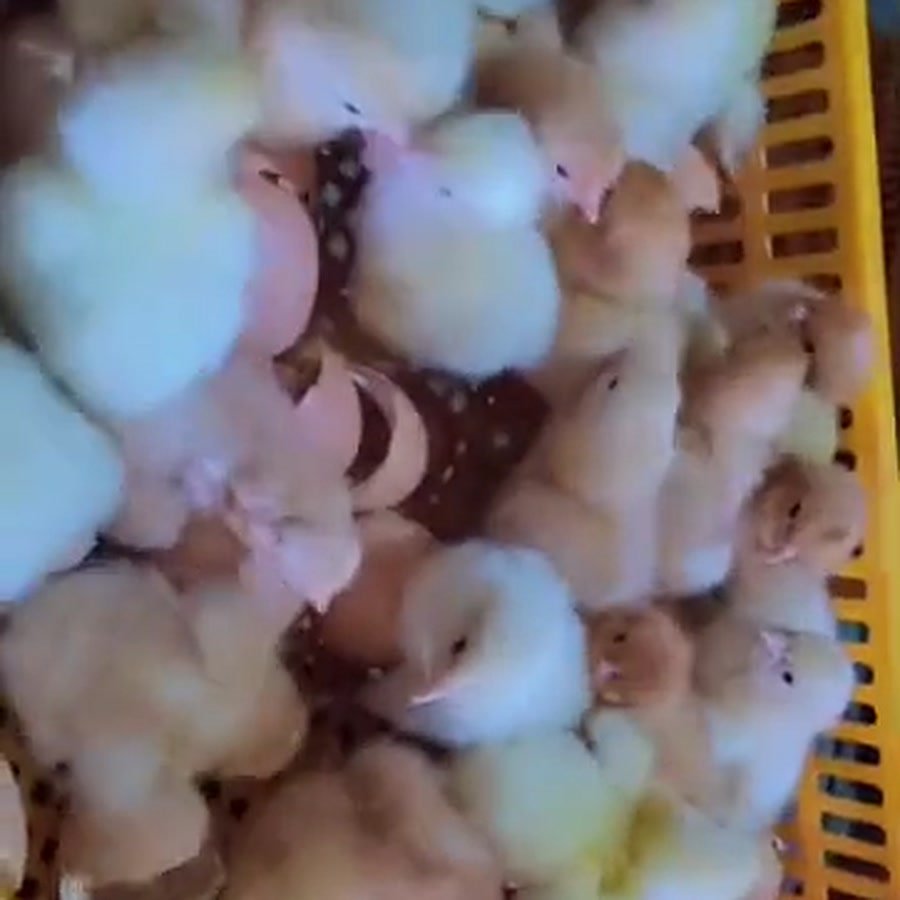
The mistake I most want an outside investor to avoid is treating a clear photo of chicks as evidence. A photo shows that chicks existed on one afternoon. It says nothing about the hatch rate, the vaccines, the feed bills or whether your money will land in the right account. Checking a farm from abroad is slower than walking the sheds yourself, but most of what matters can be asked, requested and measured from wherever you already live.
Start with the company, not the chicks
Before you look at a batch, establish who you would be paying. The company is Agro Prime Ghana Limited. Ask for its registration details in that exact name, and check them with the Registrar-General's Department, which holds the company register in Ghana. Then confirm that the same name appears on the partnership agreement, on invoices and on the bank account you are given. A mismatch is not proof of anything, but it is a question you need answered in writing before money moves.
Then look at the operating base. The hatchery in Kasoa hatches every Thursday at 7:00, and it averages a 98% hatch rate. Ask which Thursday falls next, and ask for the hatch records from the last few weeks, including how the hatch rate is calculated. A working operation should be able to answer those questions from its own records. If the answers arrive as a slide deck with no dates on it, you have learned something too.
The store and the farm visits are part of the same picture. Agro Prime sells feed, equipment and vaccines, and in-person farm visits run Monday to Saturday from 7am to 6pm for people physically in Ghana. For partners abroad, the equivalent openness should come through the live video call and the written reports. A business that keeps its distance from its own records is harder to follow from a distance.
Ask for the video walk-through, and ask for it live
Diaspora partners get a live video walk-through, and it is the single most useful thing to book before you commit money. Ask for it to be live rather than a pre-recorded tour. Ask the person holding the phone to move the camera where you point, not where they choose. Request to see the incubators, a chick crate and a house that is currently holding birds. You are looking for working basics rather than polish: litter that is managed, drinkers that run, and birds that move normally when someone opens the door.

If the call covers only an office and a slideshow, ask again for the sheds. A reasonable operator will agree without turning it into a favour. Keep notes during the call, and write down the date, the name of the person speaking and anything you could not check. Then follow up in writing. A short email to support@agroprimeghana.com summarising what you were shown, and what you still need to see, turns a conversation into a record.
Video also lets you ask questions a brochure cannot answer. Which vaccines were given at day zero, and when were the later ones given? What mortality did the last batch record, week by week, and what caused any peaks? What did the farm pay for the last bag of feed, and where was it bought? You want specific answers with dates attached. Vague answers are useful too, because they show you where to press next.
Put the numbers in front of you before the call
Work through the batch maths on the calculator first, so the questions you bring to the video call are about real figures. The partner page sets out the batch options and how reports and payouts work, which gives you a checklist to test the farm's answers against.
Test the plan against the cost base
Any plan you are shown should sit inside the cost base an ordinary broiler batch produces. The table below uses the figures we publish for standard broiler batches, so you can test a proposal against them. A plan that assumes chicks cheaper than the GH₵20 starting price, feed far below the GAPFA member price, or mortality well under 3% needs a clear explanation before you rely on it. The day-old chick price guide explains how the starting figure moves through the year.
| Line in a batch plan | Figure to test against | What to ask for |
|---|---|---|
| Day-old broiler chick | From GH₵20 (Cobb 500 or Ross 308) | Breed, hatch date and the price on the invoice |
| Feed per bird | About 4.2 kg, day-old to market | Feed bags used per batch, with dates and supplier |
| Feed, 50 kg bag of broiler starter | GH₵400–410 at GAPFA member prices; GH₵451–472 De Heus list | The price paid and a receipt that shows it |
| Other costs | About GH₵12 per bird: brooding heat, litter, vaccines and vitamins, labour, utilities | An itemised cost sheet from the last batch |
| Mortality | 3–5% when well managed; 10–20% with poor management or disease | A weekly mortality log, not a single final figure |
| Break-even | About GH₵70–81 per bird in a typical batch | Whether the plan's break-even falls in this range |
Feed deserves the most scrutiny, because it is more than half of total batch cost. The quoted price of a bag tells you less than the receipts for the bags actually bought. Ask for receipts from the last two or three batches, and check whether the price paid is in line with the member or list ranges. A gap between the plan and the receipts is the first place a plan starts to drift.
Feed is also the cost line that moves with the market, so one price is never the whole story. A batch placed before a feed increase can look healthy on paper and tighten in the later weeks. That is one reason the weekly reports include feed alongside weights. Compare feed use per bird with the 4.2 kg in the plan, and compare weights with the 2.3 to 2.55 kg a market-ready bird should reach in 6 to 7 weeks.
The documents worth asking for
Paper will not tell you whether the birds are healthy, but it will tell you whether the arrangement holds together. Before you put money into a batch, ask for a short pack of documents and read each one as if you had to explain it to someone else later. Most of them can be sent by email, and a partner who asks for them early gives the farm a fair chance to answer.
- The draft profit-share agreement, with the capital amount, the profit split and the payout timing written out in full.
- Registration details for Agro Prime Ghana Limited, matched to the name on the bank account.
- A bank letter or account confirmation showing the account name and number that will receive your transfer.
- A sample of the weekly report, with the photo, weight, feed and mortality fields laid out.
- The cost sheet and feed receipts from the most recent completed batch.
- The vaccination plan, showing what goes in at day zero and what follows by batch.
Read the agreement slowly. Look for who carries the loss if mortality runs high, what happens if the birds are sold late, and how a dispute would be settled. A profit share with a clear rule for losses is easier to trust than one that describes only the upside. If a clause is unclear, ask for it to be rewritten in plain words before you sign, and keep the earlier draft so you can compare the two.
The cost sheet deserves the same attention. A useful one lists the chicks, each feed delivery with its date and price, the heat and litter costs, vaccines, labour and utilities, and the number of birds placed against the number sold. If a sheet shows a single lump sum labelled "operations", ask for it broken down. Lump sums are where a good batch can quietly become a poor one.
Use a trusted person in Ghana as your eyes
A video call is strong evidence, but it is still a call the farm chooses to make. If you have a relative, a friend or a professional in Ghana whom you trust, ask them to visit the farm in person during normal visiting hours. A visitor who is not on the payroll and does not benefit from the sale can look at the litter, the drinkers, the stored feed and the biosecurity arrangements with fresh eyes. Give them a short written list so the visit stays focused on what matters to you.
Independent legal advice is the other sensible step. A Ghanaian lawyer can read the agreement for the terms that matter under Ghanaian law and explain any clause that is unusual. Their advice costs money, but it costs far less than discovering a gap after the capital has gone in. Choose someone with no connection to the farm, and ask them to report to you directly rather than through the farm.
Who actually runs the batch
Every small farm depends on a few people, and the question of what happens when one of them is unavailable is easy to skip. Ask who manages the house day to day, who checks the birds at weekends, and who signs for feed deliveries. Ask what happens if the manager is ill during a critical week of the cycle. The answer should name roles rather than personalities, and it should show that someone else knows the routine well enough to step in.
Biosecurity belongs in the same conversation. Ask who may enter the sheds, what visitors must do before they go in, and how the team handles any bird that looks off. Vaccines are one layer of protection, and routine hygiene is the layer that sits every day between the flock and a problem. A farm that can explain its routine clearly is easier to follow from abroad than one that relies on memory and goodwill.
How the money and reports should flow
A straight partnership has a clear sequence. Capital goes into a batch under a written profit-share agreement signed before placement. Reports follow every Thursday, covering photos, weight, feed use and mortality. When the birds are sold, the capital is returned first, and the agreed profit split follows. The payout goes by bank or MoMo, typically days after the final sale. Start to finish, a placement runs about eight weeks including clean-out, and a house can run five or six batches a year.
The poultry business plan guide shows how a full plan is laid out, which helps when you compare the farm's version against your own. Keep your own record in the same shape. A single sheet with one row per Thursday report, a column for feed, a column for mortality and a running total of capital paid in is enough. You will spot a slow drift in week three that a summary would hide until week seven.
Warning signs that end the conversation
Some signs are clear enough to stop the process early, whatever the farm says about its track record.
- Any promise of a fixed monthly return. Returns depend on real batch costs and sale prices, and anyone promising otherwise is not describing a profit share.
- A request to pay a personal account, a relative's wallet or a cash handler.
- Resistance to a live video call, or reports that stop after placement.
- Pressure to send money before the written agreement is signed.
Fixed-return schemes are the warning sign to remember
Ghana's Securities and Exchange Commission has warned the public against schemes that promise fixed returns. A legitimate batch partnership is a profit share with real costs behind it, and the agreement should say so plainly. If a fixed return appears in any message, treat it as the reason to stop, not as a reason to negotiate a better rate.
Close the file, then decide
Due diligence from abroad is less about trust than about evidence. The company name matches across every document, a live call has taken place, feed and mortality questions have written answers, the agreement is signed, and the payment route leads only to the company account. When those pieces are in place, the decision becomes an honest one about risk and capacity rather than a reaction to a photograph. If pieces are missing, the decision can wait.
Keep the whole file in one folder: the agreement, the company details, the bank letter, every weekly report and every receipt. Date each item when it arrives. Six months from now, when a report is unclear or a payout is late, that single folder will answer more questions than your memory of the calls.
Review the partnership and the calculator
For a wider look at how contract arrangements are structured, read how contract broiler farming works in Ghana.

