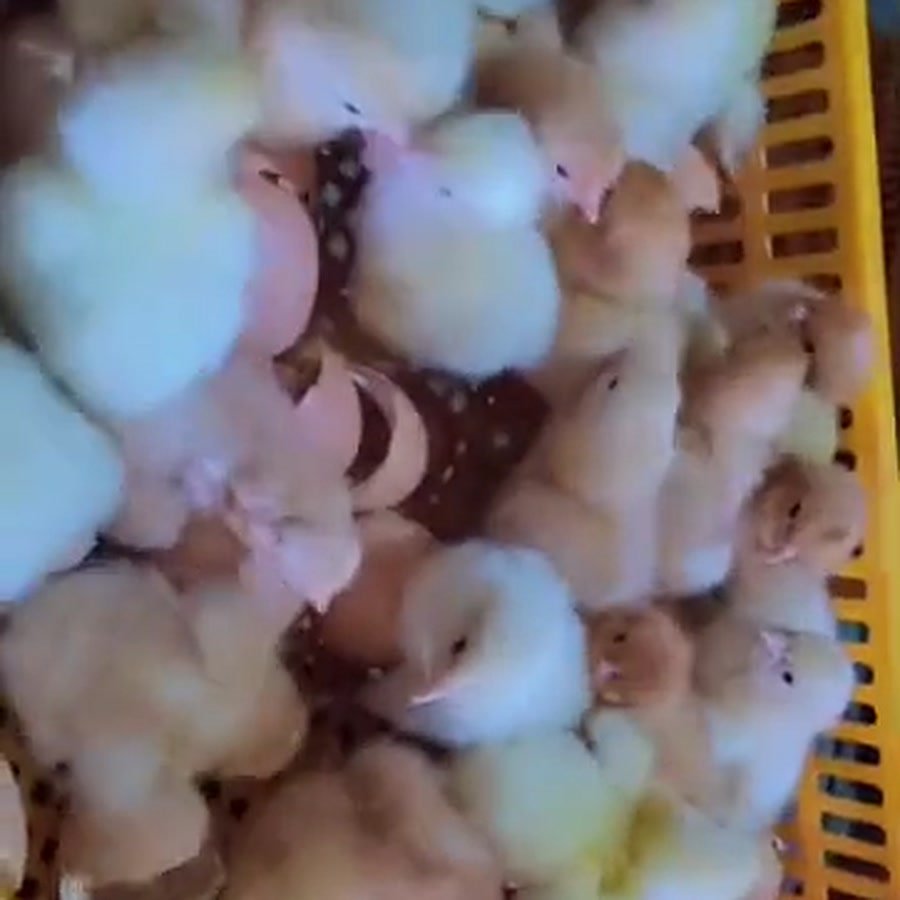
Walk into a brooding room at 2am during harmattan and you can tell in ten seconds whether the birds will live. Chicks piled on top of each other in one corner, cheeping loudly, are cold. Chicks pressed flat against the walls with their beaks open are cooking. Chicks scattered evenly, some eating, some sleeping in loose groups, are exactly where they should be. The thermometer helps, but the birds are the real instrument.
A day-old chick cannot control its own body temperature for the first ten to fourteen days. It has almost no feathers, a big surface area for its weight, and a yolk reserve that burns fast if it has to spend energy just staying warm. Get the heat wrong in week one and you pay for it all the way to sale day with stunted growth, pasty behinds and a mortality figure you would rather not talk about.
Quick answer
Start chicks at 33–35°C at bird level in the first three days, then drop about 2.5–3°C every week until you reach the room temperature. In most of Ghana you can switch the heat off completely by the end of week three or four, earlier in the hot north, later during harmattan. Always trust chick behaviour over the number on the thermometer.
Why day-old chicks cannot keep themselves warm
A hen sitting on chicks keeps them at roughly 35°C and lets them dart out to feed and scurry back. Your brooder is standing in for that hen. Until the down is replaced by real feathers, around two weeks in, the chick has no working thermostat. It relies entirely on the environment you build.
Here is the thing many first-timers miss: the temperature that matters is at the chicks' level, on the litter, not up where you hung the thermometer or where your face is when you check. Heat rises. A reading of 32°C at your eye level can mean 27°C where the birds actually sit. Tape the thermometer bulb about 5cm above the litter, right at the edge of the warm zone, and read that.

The week-by-week brooder temperature chart
These are the target temperatures at bird level, measured at the edge of the heated area so chicks can move toward or away from the heat as they please. Never heat the whole pen to one flat temperature; give them a warm zone and a cooler zone and let them choose.
| Age | Target temp (bird level) | What good behaviour looks like | Ghana notes |
|---|---|---|---|
| Day 1–3 | 33–35°C | Chicks spread in a loose ring, feeding, resting in small groups | Pre-heat the room 24 hours before arrival, especially in harmattan |
| Week 1 (day 4–7) | 32–34°C | Active, eating well, quiet contented cheeping | Coldest risk is midnight to 5am; keep a night watch the first three nights |
| Week 2 | 29–31°C | Moving freely across the whole guard | Feathers start showing; birds handle short cool spells better |
| Week 3 | 27–29°C | Using the full pen, sleeping away from the lamp | In warm southern days you may run the lamp only at night |
| Week 4 | 24–26°C | Fully feathered on the back and wings | Many farms switch heat off here in Kasoa, Kumasi, Tamale |
| Week 5–6 | Room temperature (about 24–28°C) | Independent of any heat source | Keep the lamp on standby for a cold harmattan night only |
Read the chicks, not just the thermometer
Every thermometer lies a little, and cheap agrovet-shop ones lie a lot. The birds never lie. Stand quietly at the pen for two minutes, morning and last thing at night, and read the picture:
- Piled tight under the lamp, loud cheeping: too cold. Lower the lamp or add a second heat source.
- Pressed to the walls, panting, wings held out, water intake high: too hot. Raise the lamp or open vents.
- All bunched on one side away from a wall: a draught is blowing across them. Find the gap and block it.
- Spread evenly, some at feeders, some dozing in loose clumps: perfect. Leave it alone.
Draughts kill more chicks in Ghana than raw cold does. A brooder can read a comfortable 32°C and still lose birds because harmattan wind is sneaking under a door or through a gap in the block work and cutting straight across the litter. Chicks avoid the draught, pile up, smother the ones underneath. That is why we cardboard or plywood the bottom 40cm of the walls inside the brooder guard.
The silent killer: draughts
A chick that is cold on one side will move away, but a chick caught in a cross-draught cannot escape it and simply piles with the others. Every year we see farmers blame feed or disease when the real culprit was a 3cm gap under a door letting harmattan wind in at night. Walk the pen at floor level with a lit candle; if the flame leans, you have a draught to seal.
Managing Ghana's swings: harmattan nights and midday heat
Ghana does not brood in a steady climate. From late November into February the harmattan drops night temperatures sharply, especially inland toward Techiman and up north, while the same day can still hit the low thirties by noon. Your brooder has to handle both without you rebuilding it twice a day.
The trick is a heat source you can dial down rather than one you switch fully on or off. In the cool small hours the birds crowd the lamp; by mid-afternoon they want to be away from it. Give them the room to make that choice, keep the warm zone honest, and open the pen up as the day warms so they are never trapped in a hot box. This same read-the-bird discipline is what separates a clean brood from the losses we cover in the brooding mistakes that quietly kill chicks.

Choosing a heat source when the lights go off
Dumsor is a brooding problem, not just an inconvenience. If your whole heat plan depends on electricity and the power drops at midnight in week one, you can lose a batch before dawn. Plan for the outage before it happens.
| Heat source | Roughly covers | Reality check for Ghana |
|---|---|---|
| Infrared bulb (250W) | 150–250 chicks | Cheap to buy, dies instantly during dumsor, runs your ECG bill up |
| Gas brooder (LPG canopy) | 500–1,000+ chicks | Independent of the grid, steady heat, best for larger batches; watch ventilation |
| Charcoal pot / coal pot | Small batches, backup only | Common and cheap, but fumes and fire risk are real; never seal the room |
| Ceramic heat emitter | Similar to bulb | No light so it will not disturb the lighting programme, still grid-dependent |
Always have a Plan B
Keep a full gas canister or a spare bag of charcoal on the farm from arrival day. When power fails at 1am you will not find fuel to buy in Kasoa. If you use charcoal as backup, crack a window or vent, because carbon monoxide will kill chicks silently in a sealed room long before you smell trouble.
The first 48 hours that decide the batch
Pre-heat the brooding area for at least 24 hours before the chicks land so the litter and the block walls are warm, not just the air. Cold litter pulls heat out of a chick's feet and belly no matter how warm the room reads. Set out clean water at room temperature with a little glucose or an anti-stress vitamin for the first day, and make sure every chick drinks before it eats. Chicks that arrive after a long tricycle or trotro journey are dehydrated first, hungry second.

Space matters too. Start the brooder guard tight, about 40–50 chicks per square metre in week one, and expand the ring every couple of days as they grow. Too much space early and they cannot find the warm zone; too little later and you invite pecking and damp litter. If you are still deciding how to lay the whole thing out, our guide to brooding day-old chicks in Ghana walks through guard size, feeder spacing and lighting step by step, and clean bedding is covered in litter management.
Frequently asked questions
How do I measure brooder temperature correctly?
When can I turn off the brooder heat in Ghana?
My chicks are panting under the lamp, what do I do?
What temperature is dangerous for day-old chicks?
Need chicks and brooding advice you can trust?
Agro Prime Ghana supplies strong, well-hatched day-old chicks from Kasoa with nationwide delivery, and we walk new farmers through their first brood. Message us on WhatsApp at +233 24 915 1503, email support@halaalfarmsghana.com, or book a farm visit and we will help you set your brooder up right before your birds arrive.