Pepper — the fiery chilli in every Ghanaian kitchen, from shito to pepper sauce to the base of countless stews — is a crop with two great strengths: unrelenting local demand and genuinely high value per kilogram. A modest plot of good pepper, well grown and well sold, can out-earn a much larger field of staples. It is also a hardy, long-yielding crop that keeps producing over months. The catch is that pepper is perishable, prone to a few key pests and diseases, and easily wasted at harvest — which is exactly where drying and value addition turn a good crop into a great business. This guide covers how to grow pepper profitably in Ghana and how to capture its full value.
Key takeaways
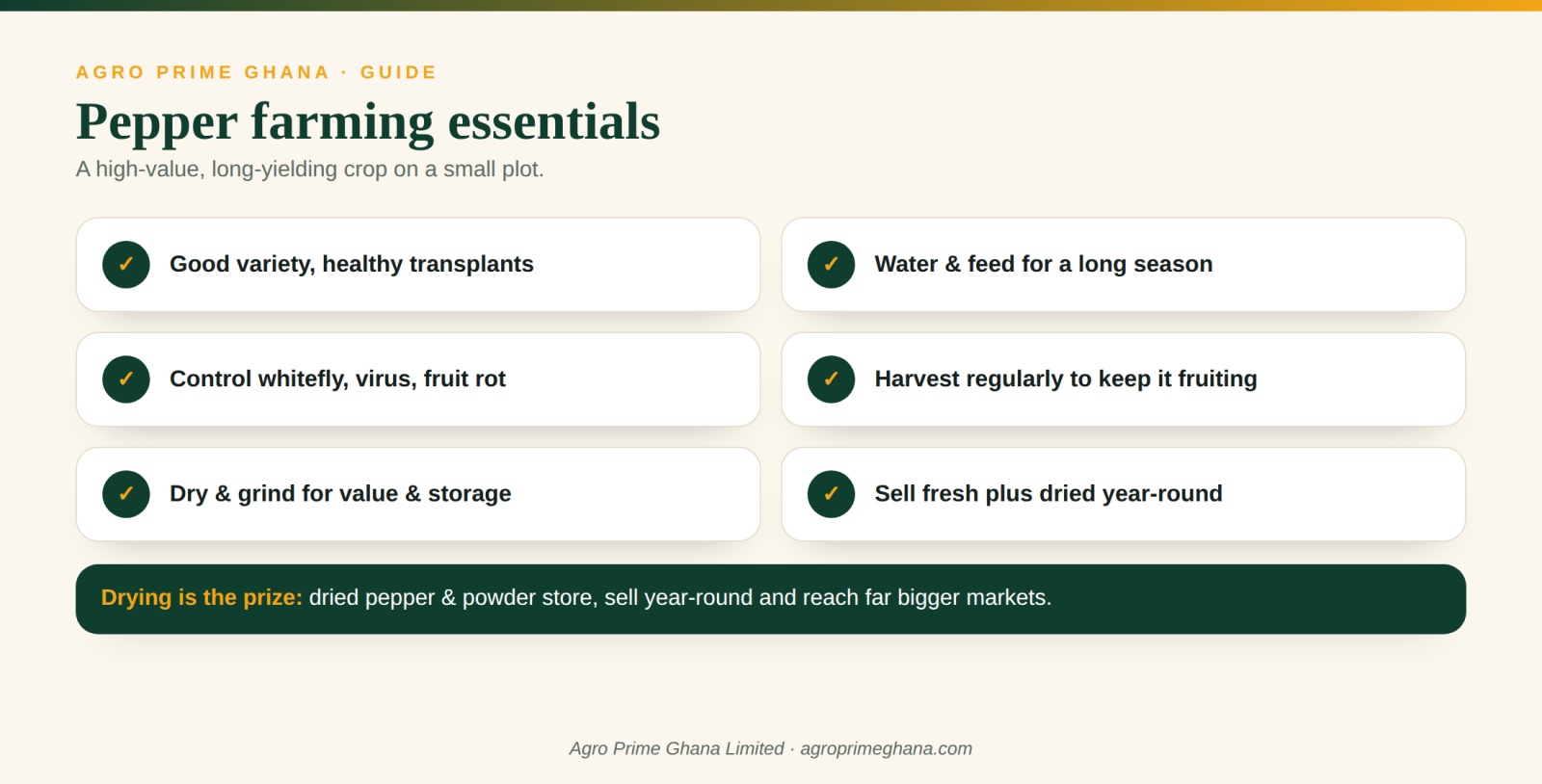
Pepper (chilli) is a high-value, high-demand crop that yields over a long period from a small plot. Grow a good variety from healthy nursery-raised transplants, water and feed steadily, and control the key pests and diseases (whitefly and virus, fruit rot, wilt). The big opportunities are its high value per kilo and, crucially, drying and value addition — dried pepper and pepper powder store, sell year-round and open bigger markets. Harvest regularly and handle the perishable fresh fruit carefully.
Why pepper is such a valuable crop
Pepper earns its place as one of the best cash crops for a Ghanaian farmer through three qualities. First, demand is constant and broad — pepper is a non-negotiable ingredient in Ghanaian cooking, used fresh and dried in stews, sauces, shito and spice blends, bought by every household, chop bar and processor, every day. Second, it is high-value: pepper sells for a good price per kilogram, so even a small, well-managed plot can generate strong income relative to its size — a real advantage for farmers with limited land. Third, it is a long-yielding crop: a healthy pepper plant flowers and fruits repeatedly over months, giving multiple harvests from one planting. Together these make pepper a crop where skill and care on a modest area pay off handsomely, and where the main task is to grow it well, keep it healthy over its long season, and capture its value at harvest rather than waste it.
Varieties, nursery and planting
Like tomato, pepper is usually raised in a nursery and transplanted, and it starts with variety choice. Ghana grows several pepper types — from the very hot small chillies and scotch-bonnet types prized for their heat and flavour to milder large peppers — so choose a variety that suits your market's taste and heat preference and your growing conditions, using good-quality seed. Raise seedlings in a well-managed nursery to get strong, uniform, healthy transplants, protecting them from pests and harsh sun and watering carefully, then transplant healthy seedlings at the right age into a well-prepared field at proper spacing. A clean, fertile, well-drained field gives the crop its best start. As with tomato, strong, disease-free transplants are the foundation — weak or infected seedlings hold back the whole crop over its long life.
Growing and managing the crop
Pepper rewards steady, attentive management across its long season:
- Water consistently. Pepper needs regular moisture, especially through flowering and fruiting; steady watering (irrigation in the dry season) supports continuous fruit set over months.
- Feed for continuous fruiting. Because pepper yields over a long period, it needs sustained fertility — good soil and balanced feeding keep the plant producing rather than exhausting after one flush.
- Keep the field clean and weeded, which supports the crop and reduces pest and disease pressure.
- Harvest regularly, since frequent picking of mature fruit encourages the plant to keep flowering and fruiting, extending and increasing the yield.
Pests and diseases to manage
Pepper is reasonably hardy but faces several pests and diseases that must be managed to protect its long, valuable yield. Key threats include insect pests such as whiteflies and aphids (which also spread virus diseases that stunt and deform plants), thrips, and fruit-damaging pests, along with diseases like fruit rot and anthracnose (which rot the fruit, especially in wet conditions), bacterial wilt and other wilts, and viral diseases. Because pepper yields over months, keeping it healthy across that whole period is important — a disease or virus that takes hold early undermines the entire season's harvest. Control it with the same integrated approach that serves all these crops: clean, healthy transplants and tolerant varieties where available; field hygiene and crop rotation (avoid following tomato or other related crops that share diseases); regular scouting; and correct, safe use of appropriate insecticides and fungicides at the right time, with extension or agro-dealer advice. Managing whitefly and virus, and preventing fruit rot in wet weather, are particularly worth attention.
Harvest, perishability and the drying opportunity
This is where pepper farming becomes a real business decision. Fresh pepper is perishable — it must be picked at the right maturity (green or fully coloured/red depending on the market), handled gently to avoid bruising, and sold quickly, or it spoils and loses value. Selling only fresh ties you to immediate local markets and exposes you to price dips and spoilage. The powerful opportunity is drying and value addition: pepper can be dried and sold as dried pepper or ground into pepper powder, which stores for a long time, sells year-round, commands good value, and reaches wider markets — including beyond the immediate locality. Drying transforms a perishable crop into a stable, storable, higher-value product, letting you hold stock, sell when prices are good, and avoid the losses of fresh-market gluts and spoilage. Good drying (clean, hygienic, well-dried to prevent mould) and simple processing into quality dried or ground pepper is often the difference between a decent pepper income and an excellent one. Fresh sales for immediate demand, plus drying for storage and value, is the winning combination.
The economics of pepper
Pepper's economics are attractive, especially for farmers with limited land. Costs are seed and nursery, land preparation, water and irrigation, fertiliser for the long fruiting period, pest and disease control, and the labour of frequent harvesting. Against that, pepper's high value per kilogram and long, repeated harvests mean a small, well-run plot can earn strong, sustained income — and drying/value addition adds another layer of return by turning perishable fruit into storable, higher-value product sold year-round. The main risks are pest and disease damage over the long season, and spoilage or price dips on fresh fruit — both eased by good crop health management and by drying surplus rather than dumping it. Because pepper earns well per unit area, it suits intensive, careful management: a farmer who grows a modest plot really well, keeps it healthy for the whole season, harvests regularly and dries the surplus can do very well. Know your costs and the value of both fresh and dried markets, and pepper is one of the most rewarding high-value crops on a small footprint.
Serving different pepper markets
Part of growing pepper profitably is knowing the different markets it serves and growing deliberately for them. The fresh local market is the everyday outlet — households, chop bars, market traders and processors buying fresh pepper constantly for immediate use — and it rewards a steady supply of clean, good-quality fruit picked at the right stage. The dried and processed market, as covered above, is where dried pepper and pepper powder reach beyond the immediate locality, sell year-round and command better value, and it lets you turn perishable surplus into a storable product. There is also demand from shito and sauce makers and other processors who need reliable quantities of pepper of the right heat and quality, and growing to meet such a buyer's needs can give you a dependable outlet. Thinking about which markets you are serving shapes sensible choices: which variety and heat level to grow, whether to sell mostly fresh or dry a large share, how to grade and present the fruit, and when to sell. A farmer who simply grows pepper and sells whatever comes at whatever price does less well than one who grows a chosen variety for chosen buyers, supplies fresh demand steadily, and dries the surplus to sell into higher-value, year-round markets. Matching your pepper to its markets is as much a part of the profit as growing it well.
Common mistakes to avoid
- Ignoring drying and value addition, selling only perishable fresh fruit and missing pepper's biggest opportunity.
- Letting virus and whitefly take hold, undermining the whole long season.
- Poor or infected transplants, weakening a crop that must yield for months.
- Irregular watering or feeding, so the plant stops fruiting early instead of yielding over its long life.
- Infrequent harvesting, which reduces fruit set and wastes ripe, spoiling fruit.
- Poor drying, letting dried pepper mould and lose value.
Frequently asked questions
Is pepper farming profitable in Ghana?
Why is pepper considered a high-value crop?
Should I dry my pepper?
What pests and diseases affect pepper?
Do I need a nursery to grow pepper?
How often should I harvest pepper?
Which pepper variety should I grow?
Can I grow pepper on a small plot?
The bottom line on pepper farming
Pepper is a small-footprint, high-reward crop: fiercely demanded in every Ghanaian kitchen, high in value per kilogram, and generous in yielding repeatedly over a long season. Growing it well means starting with a good variety and healthy nursery-raised transplants, then managing the crop attentively across its long life — steady water and feeding, clean fields, regular harvesting, and disciplined control of the pests and diseases (especially whitefly and virus, and fruit rot) that would otherwise erode the season's harvest. But pepper's greatest opportunity lies at and beyond harvest: because the fresh fruit is perishable, drying and value addition — dried pepper and pepper powder that store, sell year-round and reach wider markets — is what turns a good pepper crop into an excellent business. Grow a modest plot with real care, keep it healthy, harvest diligently, and dry your surplus, and pepper becomes one of the most rewarding high-value crops a Ghanaian farmer can grow.
Grow a high-value crop on a small plot
Agro Prime Ghana Limited runs a hatchery and agribusiness in Kasoa. High-value crops like pepper diversify income and reward careful management. Talk to us about building a resilient, profitable farm: book a visit or message WhatsApp (+233 24 915 1503).