Garden egg — the small white and green African eggplant at the heart of so many Ghanaian meals — is one of the most reliable, steady-earning vegetables a farmer can grow. Demand is deep and constant, whether eaten in stews and sauces, boiled with kontomire, or bought fresh at every market, and the crop is hardy and generous, producing fruit continuously over a long harvest. It is not a difficult crop, but it has one persistent challenge that decides how much of that fruit you actually sell: the fruit and shoot borer. This guide covers how to grow garden egg successfully in Ghana and how to protect its long, valuable harvest.
Key takeaways
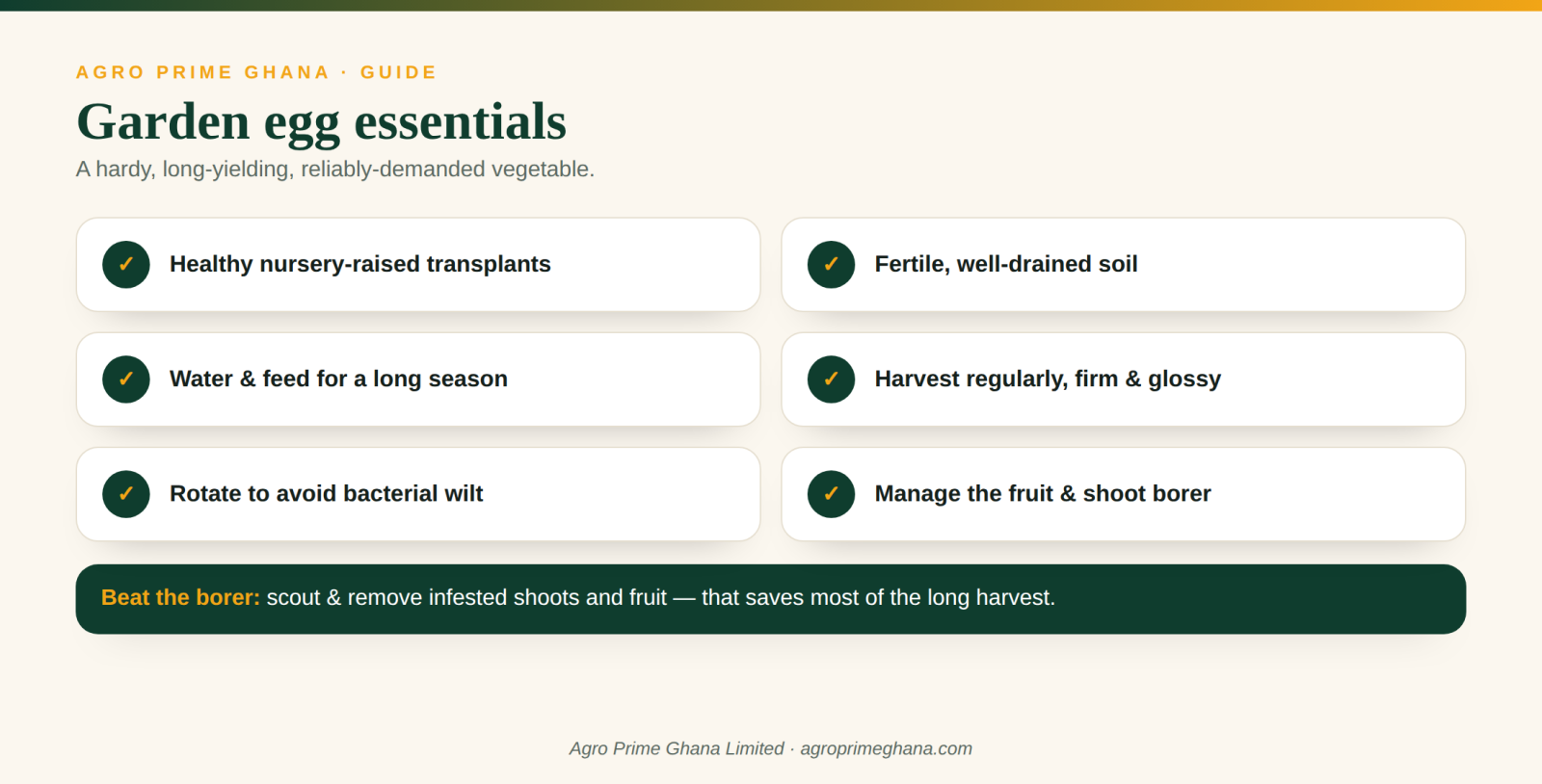
Garden egg (African eggplant/aubergine) is a hardy, long-yielding vegetable in constant local demand — a dependable, steady earner. Grow it from healthy nursery-raised transplants on well-drained soil, water and feed it for its long season, and harvest regularly. Its main challenge is the fruit and shoot borer, whose larvae bore into shoots and fruit; manage it with scouting, removing infested parts, and integrated, responsible control. Reliable demand plus long, continuous harvest makes garden egg a strong, low-drama crop.
Why garden egg is a dependable crop
Garden egg earns its place through steadiness rather than drama. Demand is deep, broad and constant: it is a staple vegetable in Ghanaian cooking — in stews and sauces, boiled and mashed, eaten with kontomire and in countless dishes — bought daily and fresh by households, chop bars and markets across the country, and the appetite for it rarely fades. The crop itself is hardy and forgiving, tolerating a range of conditions better than fussier vegetables, and it is long-yielding, producing fruit continuously over many weeks once it starts, so a well-managed plot delivers a steady stream of income rather than a single harvest. It is also well suited to smallholders and to mixed vegetable growing. Because the demand is so reliable and the crop so productive over a long period, garden egg is a dependable, low-risk earner — the kind of crop that quietly underpins a farm's income. The main thing standing between a healthy plot and a full harvest is pest management, above all the borer, which is where attention is needed.
Varieties, nursery and planting
Garden egg, like tomato and pepper (its close relatives), is usually raised in a nursery and transplanted. Choose a variety suited to your market and taste — Ghana grows several types of garden egg differing in size, shape, colour (white, green, striped) and bitterness — using good-quality seed. Raise the seedlings in a well-managed nursery to get strong, uniform, healthy transplants, protecting them from pests and harsh sun and watering carefully, then transplant healthy seedlings at the right age into a well-prepared field at proper spacing. Garden egg does best on fertile, well-drained soil in a sunny position and dislikes waterlogging. Give the plants enough room to grow bushy and be picked easily. As with its relatives, strong, healthy, disease-free transplants set into a well-prepared field are the foundation of the crop — important because garden egg must stay healthy and productive over a long harvest, and a weak or infected start holds back the whole season.
Growing and managing the crop
Garden egg rewards steady care across its long producing season:
- Water consistently. Garden egg needs regular moisture for continuous flowering and fruiting, especially in dry conditions where irrigation supports the long harvest.
- Feed for continuous fruiting. Because it yields over a long period, garden egg needs sustained fertility — good soil and balanced feeding keep it producing rather than tiring after one flush.
- Keep the field clean and weeded, which supports the crop and reduces pest and disease pressure.
- Harvest regularly, since frequent picking of fruit at the right stage encourages continued flowering and fruiting and keeps the crop productive.
None of this is difficult, and the crop is generally undemanding. The management that really matters in garden egg is keeping it healthy over its long life and, above all, staying on top of the fruit and shoot borer, covered next.
The main challenge: the fruit and shoot borer
Garden egg's defining pest challenge is the fruit and shoot borer (the eggplant fruit and shoot borer), the most serious and persistent enemy of the crop and its close relatives. The borer is a moth whose larvae bore into the growing shoots (causing them to wilt and die back) and, more damagingly, into the fruit, tunnelling inside and ruining it — often invisibly from the outside — which directly destroys marketable produce over the crop's long harvest. Because it attacks continuously and hides inside the plant, it is a challenging pest that demands ongoing attention. Managing it relies on an integrated approach: scout the crop regularly (which you do anyway during frequent harvest); remove and destroy infested shoots and fruit promptly, since this physically removes the larvae and is one of the most effective measures; keep the field clean; use tolerant varieties where available; and apply appropriate, responsible control measures at the right time when needed, with particular care over safety and pre-harvest intervals because the fruit is eaten. Because the borer is persistent and the crop is picked frequently and eaten fresh, sensible, well-timed, integrated management — leaning heavily on scouting and removing infested parts — is far better than relying on heavy spraying alone. The farmers who stay on top of the borer keep most of their long harvest saleable; those who ignore it lose much of the fruit to hidden damage. Managing the borer is the key skill in garden egg.
Other pests, diseases and crop health
Beyond the borer, garden egg faces some other pests and diseases worth managing to protect its long harvest. These can include sucking pests like aphids, whiteflies and mites (which weaken plants and can spread viruses), and diseases such as bacterial wilt (which can kill plants, especially on repeatedly used land), leaf spots and fruit rots. As with all its solanaceous relatives (tomato, pepper), crop rotation matters — avoid growing garden egg repeatedly on the same land or straight after related crops, which builds up shared soil diseases like bacterial wilt. The broader health toolkit is familiar: healthy transplants, tolerant varieties, clean well-drained fields, rotation, regular scouting and correct, safe use of treatments when needed. Keeping the crop generally healthy over its long producing life supports steady, continuous fruiting and protects both yield and the quality of the fruit. For most growers, garden egg's overall pest and disease pressure is manageable with attentive, integrated practice, with the fruit and shoot borer being the one that most demands consistent attention.
Harvest, markets and the economics
Garden egg is harvested by picking the fruit at the right marketable stage — usually while still firm and glossy, before it becomes over-mature, bitter or seedy — and picking regularly, which both supplies the market and keeps the plant productive. Handle the fruit reasonably carefully and sell it fresh, since it is perishable, though it is a little more forgiving than very soft vegetables. The fresh local market is strong and constant — households, chop bars, market traders and processors buying garden egg continuously — so a steady supply of clean, good-quality fruit sells readily. On economics, garden egg is attractive because it is hardy, long-yielding and reliably in demand: against modest costs (seed and nursery, land, water, feeding, pest management and the labour of regular picking), the crop produces over many weeks and sells steadily, giving a dependable stream of income from a small plot. The main risk to manage is the fruit and shoot borer eating into the marketable harvest, handled by the integrated management above; general perishability and other pests are manageable. Because demand is so reliable and the harvest so long, garden egg offers a strong, low-drama risk-to-reward profile. Grow healthy transplants, keep the crop productive and healthy over its long season, stay on top of the borer, and pick and sell regularly, and garden egg is one of the most dependable steady earners in Ghanaian vegetable farming.
Common mistakes to avoid
- Ignoring the fruit and shoot borer, losing much of the long harvest to hidden fruit damage — the number-one issue.
- Not removing infested shoots and fruit, letting borer larvae persist in the crop.
- Poor or infected transplants, weakening a crop that must yield for many weeks.
- Growing it repeatedly on the same land, building up bacterial wilt and other soil diseases instead of rotating.
- Irregular harvesting, letting fruit over-mature and slowing further production.
- Careless pesticide use on a frequently picked, fresh-eaten crop — mind safety and pre-harvest intervals.
Frequently asked questions
Is garden egg farming profitable in Ghana?
What is the main pest of garden egg?
How do I control the fruit and shoot borer?
Do I need a nursery for garden egg?
How long does garden egg produce for?
Why should I rotate garden egg with other crops?
When should I harvest garden egg?
Is garden egg a good crop for small farmers?
The bottom line on garden egg farming
Garden egg is a quietly excellent crop — hardy, generous and reliably in demand. It feeds a deep, constant appetite in Ghanaian kitchens, produces fruit continuously over a long harvest, and delivers a steady stream of income from a modest plot, making it one of the most dependable, low-risk earners in vegetable farming. Growing it is not difficult: start with a good variety and strong, healthy nursery-raised transplants on fertile, well-drained soil, then keep the crop watered, fed and productive across its long season, harvesting regularly. The one challenge that decides how much of that long harvest you actually sell is the fruit and shoot borer, best managed not by heavy spraying but by diligent scouting and the prompt removal of infested shoots and fruit, backed by rotation and responsible, well-timed control. Stay on top of the borer, keep the crop healthy, and pick and sell steadily, and garden egg rewards the farmer with exactly what a good staple vegetable should — reliable, continuous, dependable income.
Grow a dependable, steady-earning vegetable
Agro Prime Ghana Limited runs a hatchery and agribusiness in Kasoa. Reliable staples like garden egg are a great way to steady and diversify farm income. Talk to us about building a resilient, productive farm: book a visit or message WhatsApp (+233 24 915 1503).