Groundnut (peanut) is one of Ghana's most valuable and versatile crops — a protein-rich legume that feeds people as roasted nuts and "nkate", flavours countless dishes as groundnut paste and soup, yields cooking oil, and enriches the soil for the next crop. It grows especially well in the northern and transition zones, needs modest inputs, and enjoys strong, steady demand. For a farmer, groundnut pairs a good cash return with real soil benefits — but it carries one serious risk, aflatoxin, that must be managed. This guide covers how to grow groundnut successfully in Ghana.
Key takeaways
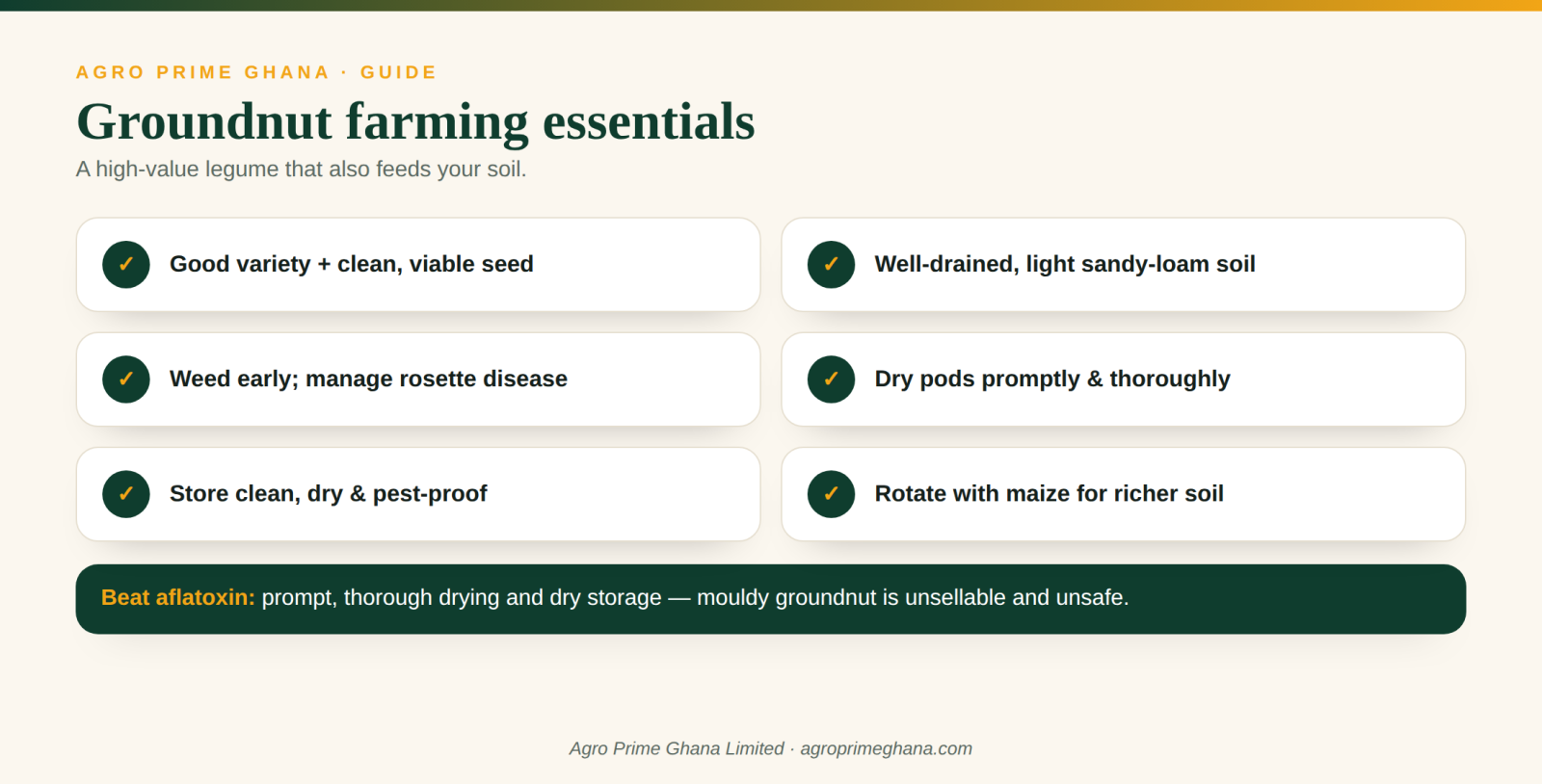
Groundnut is a high-value, protein-rich legume with strong demand (nuts, paste, oil) that also fixes nitrogen and improves the soil for rotation. Grow a good variety on well-drained sandy-loam soil, weed early, and manage rosette disease. The critical issue is aflatoxin: proper drying and dry, clean storage are essential, because mouldy groundnut is both unsellable and dangerous. Rotate it with cereals like maize for healthier soils.
Why groundnut is a valuable crop
Groundnut earns its place through value and versatility. It is protein- and oil-rich, sold as roasted and raw nuts, ground into the paste behind groundnut soup and many dishes, and pressed for cooking oil, with the by-product cake used in animal feed — several markets from one crop. Demand is deep and constant in Ghanaian kitchens and the wider food trade. And as a legume, groundnut fixes nitrogen from the air, leaving the soil richer for the maize or cereal that follows, which cuts fertiliser costs in rotation — the same soil-building logic behind growing soybean. It grows well in the drier north and the transition zones on lighter soils. For a farmer, groundnut is a rare crop that pays in cash, in nutrition, and in soil health.
Where and how to grow it
Groundnut does best in well-drained, light sandy-loam soils, which let the pods develop and are easy to harvest from; it struggles in heavy, waterlogged clays. It suits the northern savannah and transition zones especially, though it grows more widely with the right timing. Start with a good, adapted variety and clean, viable seed with strong germination — old or poorly stored seed germinates badly and gives thin stands. Prepare a clean, well-tilled seedbed, and plant at the start of the reliable rains at the recommended spacing so plants have room to develop pods and compete with weeds. Good land preparation and quality seed on suitable soil are the foundation of a strong groundnut crop.
Crop management
Groundnut care centres on a clean, well-fed crop:
- Weed early. Groundnut competes poorly when young, so weed control in the first weeks is critical; keep fields clean until the crop covers the ground.
- Manage rosette disease, a virus spread by aphids that can devastate groundnut — use resistant varieties, good plant stands and timely planting to reduce it.
- Support pod development with adequate calcium (and phosphorus) where soils are deficient; light, well-drained soil helps pods form and fill.
- Watch for pests and leaf diseases (leaf spots), scouting and acting where needed, and use clean seed and rotation to keep disease down.
Harvesting and drying — where aflatoxin is beaten
This is the most important section for any groundnut farmer. Harvest when the crop is mature — pods well filled and the inside of the shells showing the right markings — because both early and, especially, delayed harvest raise problems. After lifting the plants, the crop must be dried properly and promptly: dry the pods thoroughly on clean, raised surfaces with good air, never on bare damp soil, until they reach a safe low moisture. This matters enormously because groundnut is highly prone to aflatoxin, a toxin produced by moulds that grow on damp, poorly dried or badly stored nuts. Aflatoxin makes groundnut unsellable to quality buyers and genuinely harmful to health, so it is a food-safety issue, not just a quality one. Good, quick drying to a safe moisture, and clean handling, are how you prevent it — the single most important discipline in groundnut production.
Storage and preserving quality
Drying only pays off if storage protects the crop. Store well-dried groundnut clean and dry, off the floor on pallets, in a well-ventilated, rodent- and pest-proof store, protected from any moisture — because nuts that pick up moisture in storage develop aflatoxin even if they were dried well. Keep the store cool and dry, control storage pests, and check the crop periodically. Groundnut stored in shell keeps better than shelled nuts. Well-dried, clean, aflatoxin-free groundnut holds its quality through the lean season and commands the best price from quality-conscious buyers; damp or mouldy nuts lose both value and safety. The same drying-and-storage discipline that protects maize from aflatoxin applies with even more force to groundnut.
The economics and markets
Groundnut offers a good cash return plus soil benefits. Your main costs are quality seed, land preparation and the early weeding labour; as a legume it needs little nitrogen and improves the soil for the next crop, a saving that carries into the following season. Markets are varied and strong: raw and roasted nuts to households and traders, groundnut paste to the huge soup and food trade, oil pressing (with cake for feed), and processors. Well-dried, clean, aflatoxin-free nuts fetch the best prices. Keep records of costs and yields per acre so you know your real margin — and remember the hidden return in a better following maize crop. With multiple markets and soil value, groundnut is one of the more rewarding crops for a Ghanaian farmer who manages drying and storage well.
Rotation and adding value
Two things lift groundnut from a good crop to a strategic one. First, rotation: because it fixes nitrogen, groundnut leaves the soil richer, so a maize or cereal crop grown after it typically needs less fertiliser and yields better, while the rotation also breaks pest and disease cycles — a maize–groundnut (or maize–legume) rotation is one of the healthiest patterns a farmer can run. Second, value addition: selling raw nuts is the simplest route, but roasting and packaging nuts, making and packaging groundnut paste, or pressing oil (with the cake sold as protein feed) all earn more than plain raw grain, and cleanly processed products command better prices. For a mixed farmer, the groundnut cake and lower-grade nuts can even feed into livestock rations. Combining smart rotation with even simple processing captures far more of groundnut's value.
Shelling, grading and presentation for market
How you present groundnut after drying strongly affects the price it fetches. Buyers pay more for clean, well-graded, uniform nuts free of shells, stones, dust and — above all — mouldy or discoloured kernels, so the finishing steps matter. Decide first whether to sell in shell (which stores better and suits some buyers) or shelled; shelled nuts fetch more but must be handled and stored carefully to avoid picking up moisture and aflatoxin. When shelling, do it cleanly and sort out damaged, shrivelled, discoloured or mouldy kernels, because a few bad nuts drag down the whole lot's value and safety. Grade by size and quality for the market you are targeting — the confectionery and roasting trade wants good, clean, uniform kernels, while lower grades go to oil pressing or feed. Clean, hygienic packaging and honest grading build trust with regular buyers who will pay a premium for reliable quality. This simple discipline of shelling cleanly, sorting out the bad, grading sensibly and presenting the nuts well often earns more than any agronomy tweak in the field, and it is entirely within the farmer's control after harvest.
Common mistakes to avoid
- Poor or slow drying, the direct cause of aflatoxin — dry promptly and thoroughly on clean, raised surfaces.
- Damp or dirty storage, which lets well-dried nuts develop aflatoxin and pests.
- Using old or poor seed, giving weak germination and thin stands.
- Weak early weed control, letting weeds smother young groundnut.
- Ignoring rosette disease, instead of using resistant varieties and good stands.
- Selling only raw nuts when roasting, paste or oil would earn more.
Frequently asked questions
Is groundnut farming profitable in Ghana?
What is aflatoxin and why does it matter in groundnut?
Where does groundnut grow best in Ghana?
How does groundnut help my soil?
How do I dry and store groundnut properly?
What is rosette disease?
What can I make from groundnut?
Can groundnut cake be used in animal feed?
The bottom line on groundnut farming
Groundnut is a crop that pays three ways — a strong cash return from nuts, paste and oil; a richer soil for next season's maize; and, on a mixed farm, protein-rich cake for your livestock. Growing it well is not complicated: a good variety and clean seed on well-drained, light soil; early weed control; and attention to rosette disease. But everything hinges on one discipline after harvest — beating aflatoxin through prompt, thorough drying to a safe moisture and clean, dry, pest-proof storage. Get that right, and groundnut is safe, sellable and valuable; get it wrong, and the crop is both worthless and dangerous. Rotate it with maize for healthier soils, add value by roasting, making paste or pressing oil, keep records, and groundnut becomes one of the most rewarding and strategic crops a Ghanaian farmer can grow.
Grow a high-value, soil-building crop
Agro Prime Ghana Limited runs a hatchery and agribusiness in Kasoa. Groundnut diversifies income, improves your soil and can even feed your livestock. Talk to us about a resilient, mixed farm: book a visit or message WhatsApp (+233 24 915 1503).