Farmers in Tamale and across the Northern Region can order healthy, vaccinated day-old chicks — broilers and layers — point-of-lay (POL) pullets, and quality poultry feed from Agro Prime Ghana, hatched at our Kasoa farm and transported up to the north. Tamale is the largest city in northern Ghana and the commercial heartbeat of the savannah belt, with growing demand for chicken and eggs to sit alongside the region's famous guinea-fowl tradition. We are a working hatchery, not a middleman, so we can tell you the breed, hatch date and vaccination status of every bird — and because the north is a long haul from Kasoa, we plan each delivery carefully and confirm the arrangement with you before anything leaves the farm. The fastest way to start is a WhatsApp message: tell us what you want and your part of Tamale, and we confirm stock, a delivery plan and today's price.
From the Agro Prime Ghana team — a working hatchery in Kasoa supplying day-old chicks, point-of-lay pullets and feed across Ghana. Last updated October 2025.
Quick answer
Agro Prime Ghana supplies vaccinated day-old broiler and layer chicks, point-of-lay pullets and poultry feed to Tamale and the Northern Region from our Kasoa hatchery. We do not have a branch in Tamale — we hatch the birds at Kasoa and arrange transport north, confirming the delivery plan and timing with you first. To order, message WhatsApp (+233 24 915 1503) with your location, the breed and quantity, and your target date; we reply with availability and the current price. You can also book a visit to the hatchery.
What Agro Prime supplies to Tamale farmers
- Day-old broiler chicks — fast-growing meat strains (Cobb and Ross) for farmers supplying Tamale's chop bars, restaurants, hotels and the fresh-chicken trade at Aboabo and the Central Market.
- Day-old layer chicks — brown-egg layers for building a steady egg business across Tamale, Savelugu, Yendi and the surrounding districts.
- Point-of-lay (POL) pullets — near-ready layers at roughly 16–18 weeks, ideal when you want eggs within weeks rather than brooding from day one.
- Poultry feed — chick starter/mash, grower, finisher and layer feed so you are not hunting for feed the day your birds arrive.
Chicken and eggs are a growing part of northern diets, and the market is wide open. Ghana still imports the vast majority of the chicken it eats — the USDA Foreign Agricultural Service reported imports on the order of 350,000 metric tonnes in 2021 against only about 50,000 tonnes produced at home, and it notes that national consumption "continues to outstrip the domestic supply." For a well-run Tamale farm, that gap is an opportunity: locally raised birds are fresher and cheaper to move to market than frozen imports trucked up from the coast.
Raising broilers in the Tamale heat
The one thing that sets poultry keeping in Tamale apart is the climate. The Northern Region's long, hot, dry season and intense afternoon sun mean heat stress is your main enemy, especially for fast-growing broilers in the last weeks before market. Chicks still need brooder warmth in their first week, but after that your job flips to keeping birds cool: plenty of clean water, good airflow, shade over the house, and feeding in the cooler parts of the day. The chart below shows how quickly a Cobb 500 broiler should put on weight — hitting those targets in the heat depends heavily on birds drinking enough and not overheating.
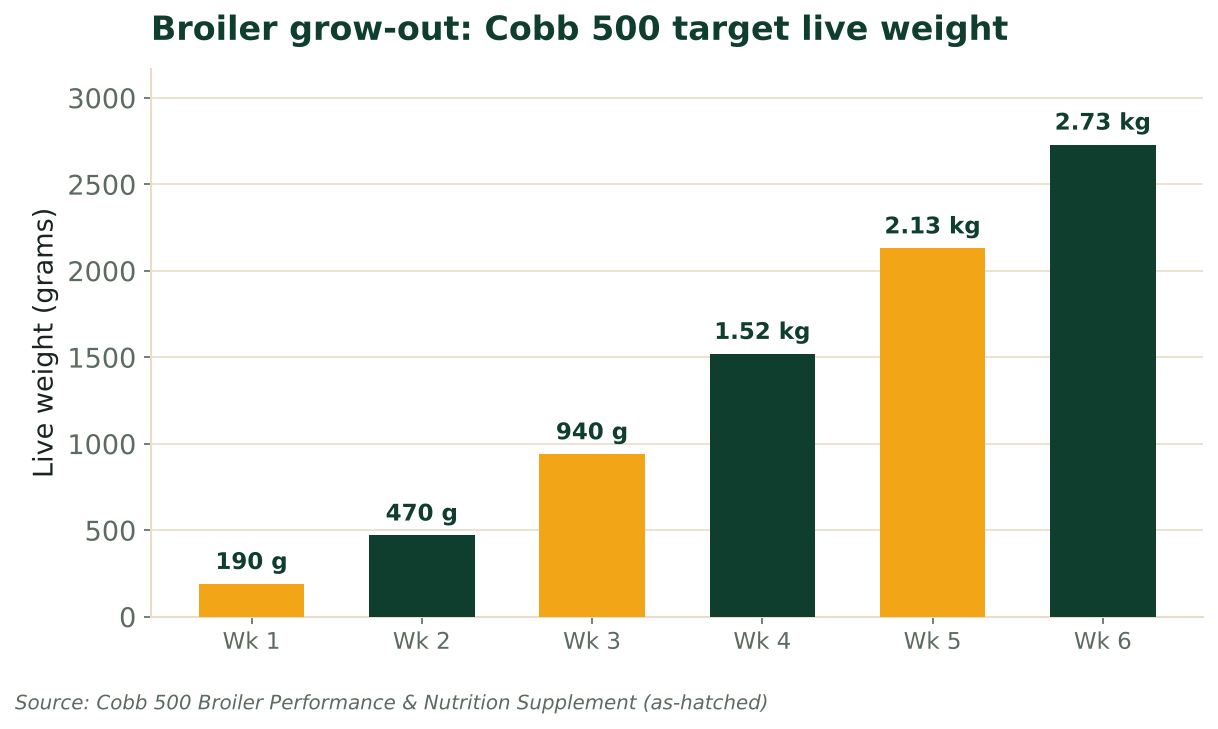
Our broiler feeding guide and the Cobb 500 guide explain how to keep weight gain on track, and the brooder temperature chart gives the exact brooder settings for week one before the heat-management phase begins.
Choosing the right bird for the north
Match the bird to your market and to the climate. Here is a quick comparison to help you decide before you message us.
| Bird | Best for | Strengths | Watch-outs in Tamale |
|---|---|---|---|
| Cobb / Ross broilers | Fast meat sales | Market weight in ~6–8 weeks; quick cash | Sensitive to heat late in the cycle — needs shade, airflow and water. |
| Brown layers | Steady egg income | Long laying run once mature | Months of feeding before first eggs; keep cool to protect lay rate. |
| POL pullets | Fast start in eggs | Eggs within weeks of arrival | Higher cost per bird; settle them in well after the long trip north. |
| Cockerels | Hardy, slower meat birds | Tough; tolerate rougher conditions | Slower to grow; best where free-range-style rearing suits. |
If you are weighing meat against eggs, read our note on the best chicken breeds for Ghana. Chickens sit comfortably alongside the guinea fowl many northern households already keep — they grow faster and lay far more eggs, giving you a quicker, more predictable income.
Planning a northern batch?
Because Tamale is a long haul from Kasoa, a little planning saves you money. Message us early with your plan — say, "150 broilers to Tamale for the next festive season" or "100 POL pullets to Savelugu" — and we will work out the best delivery window and quote today's price. Start on WhatsApp (+233 24 915 1503) or book a visit to the hatchery.
How to order day-old chicks for Tamale — step by step
- Message us on WhatsApp. Send +233 24 915 1503 your location in or around Tamale, the bird (broiler, layer, POL pullet, cockerel), the quantity, and your target date.
- We confirm and plan the haul. We check the hatch schedule and stock, quote today's price, and agree a delivery plan for the trip north — timing matters most for a long journey.
- You get your brooder ready. Set up warm, clean brooding space and have starter feed on hand before the birds arrive.
- Chicks arrive, vaccinated and counted. You settle payment as agreed, receive the birds, and get them under heat and onto water quickly.
Delivery and transport from Kasoa to Tamale
Agro Prime is based in Kasoa, near Accra — we do not run an outlet in Tamale, so treat any "Agro Prime Tamale branch" claim with caution. Tamale is several hundred kilometres north, typically via Kumasi and Techiman, so this is a genuine long-haul delivery and timing is everything. Day-old chicks travel well in their first 48–72 hours because they live off the residual yolk, which is why hatcheries move them at a day old; we pack them in ventilated chick boxes to keep them warm and calm. For a trip this length we plan the departure and travel window carefully, and we are happy to talk about consolidating larger orders to make the economics work better for you. Because distance and timing drive the cost, we confirm the transport arrangement and any charge when you order — we will not promise a delivery price or time we cannot stand behind. If you prefer, you can arrange collection, including meeting a batch partway. See our delivery guide for how this works in practice. If you are further north or west, our Wa and Bolgatanga pages cover those routes.
What to prepare before your chicks arrive
- A clean, draught-free brooder warm for week one, with a reliable heat source used safely.
- Clean dry litter such as wood shavings.
- Chick drinkers and feeders, and clean water (with a little glucose for the first hours) — vital after a long trip north.
- Chick starter feed / mash ready on day one — order it with your chicks.
- Shade and ventilation planning for the weeks after brooding, since heat, not cold, is the bigger risk here.
Our full brooding guide walks through the first critical weeks.
Honest pricing guidance
We do not post a fixed price list here, because chick, pullet and feed prices shift with breed, season, order size and feed costs — and a stale figure would mislead you. Day-old broiler and layer chicks are the cheapest way to start; POL pullets cost more per bird because the farm has already fed and raised them for about four months. The honest move is to message us for today's price on WhatsApp, tell us your quantity, and we will give you a real, current quote. If a price looks far below the market, be careful — in chicks, suspiciously cheap often means unvaccinated or poorly handled birds that cost you dearly in losses, which is the last thing you want after a long journey north.
Why buy from a working hatchery
Northern farmers are often sold chicks of unknown origin by traders passing through. Agro Prime hatches, raises and vaccinates its own birds in Kasoa, so we can tell you honestly what breed you are getting, when it hatched and what vaccinations it has had. You also get practical advice tuned to Ghanaian conditions — including managing heat, which is the defining challenge in the Northern Region. If you are thinking about scaling a commercial farm, or want to invest in poultry without running it day to day, see our partner and invest page.
Lock in your northern delivery
The long haul to Tamale rewards planning, so send us your batch details early. Tell us the breed, quantity and target date and we will set a sensible delivery window, confirm the arrangement and quote today's price. Message WhatsApp (+233 24 915 1503) or book a visit to the hatchery.
The bottom line
Tamale anchors a large, underserved market where locally raised chicken and eggs can beat trucked-in imports on freshness and price. Agro Prime supplies vaccinated day-old chicks, POL pullets and feed from a hatchery that stands behind its birds, with carefully planned delivery to the north and honest pricing confirmed at order time. Decide what you want to raise, plan for the heat, get your brooder ready, and send us a message.
Order from Agro Prime Ghana
Agro Prime Ghana Limited runs a poultry hatchery in Kasoa and supplies healthy day-old chicks (broilers & layers), point-of-lay pullets, quality feed and hands-on advice to farmers across Ghana, with delivery arranged to Tamale and the Northern Region. Message us on WhatsApp (+233 24 915 1503) for a current quote and to order, or book a visit.