
Ghana's demand for broiler meat is put at roughly 400,000 tonnes a year. Local production is around 58,000 tonnes, and recorded imports are above 180,000 tonnes. Those three figures do not reconcile neatly, so I would not build a business plan on any single one of them. Taken together they still say something clear: most of the chicken on Ghanaian plates is not raised here, and that gap is where the entry points sit.
This article walks the poultry chain from the incubator to the market counter. It shows what each stage costs to get into, and works out where a person with some money or some time can realistically plug in. It also makes the case for the lowest-friction entry, which is backing a grow-out batch rather than building a chain of your own from scratch.
The chain, from incubator to counter
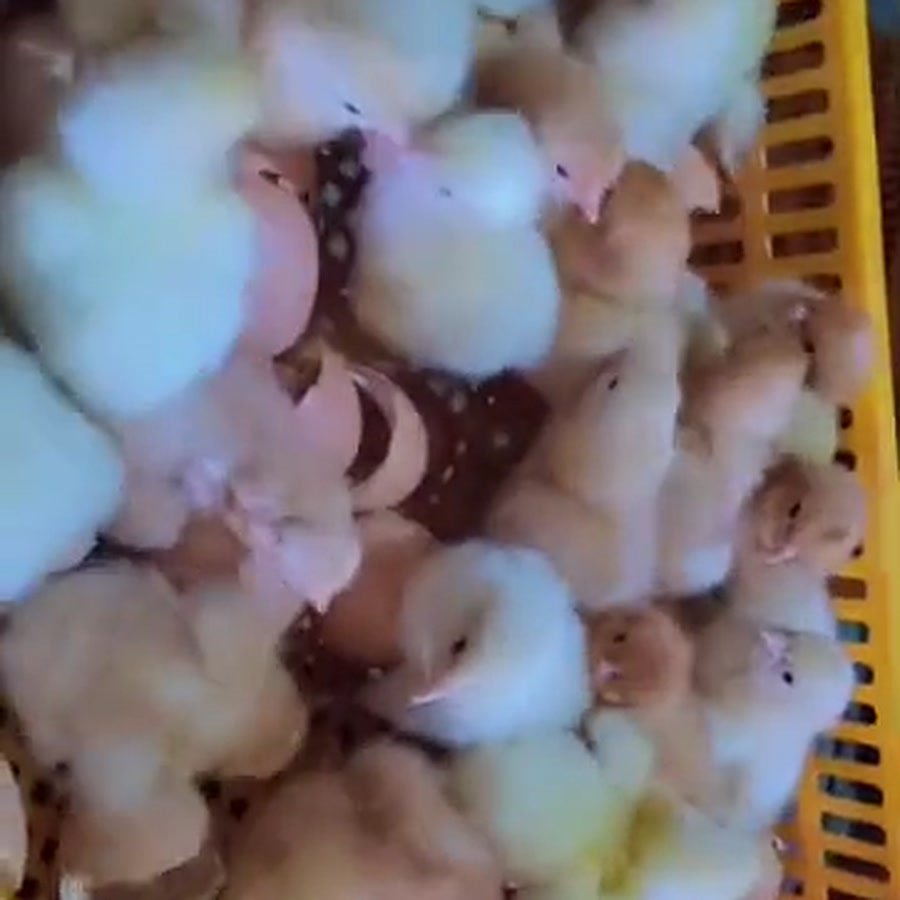
Every batch starts in an incubator. A hatchery turns fertile eggs into day-old chicks. Our hatchery vaccinates at day zero against Marek's disease and, for many batches, Newcastle and Gumboro. We hatch every Thursday at 7am in Kasoa with a 98 percent average hatch rate, and our day-old broiler chicks start from GH₵20. The details of the chicks themselves are in our guide to day-old chicks in Ghana.
Chicks are fragile in their first hours. Transport from the hatchery to the house is a stage where many batches start badly, because a box left in the sun or a long wait at the roadside costs birds before they have eaten. Plan the delivery day so the house is ready, the brooder is warm and the feed is in place before the box arrives.

Feed comes next, and it is the largest share of what a grower spends. A 50 kg bag of broiler starter sits at GH₵400 to GH₵410 at GAPFA member prices and GH₵451 to GH₵472 at the De Heus list. Feed is more than half of total batch cost. Whoever sells feed in volume holds a strong position in the chain, which is why feed dealing attracts capital and why it is rarely a first project for a small investor.
Feed is also where the chain is most crowded with middlemen. A bag can pass through two or three hands before it reaches a grower, and each hand adds margin and risk, including the risk of old stock sitting in a warm store. Buy from a seller who can show the manufacturing date and who will tell you the batch number.
Brooding and housing is the stage where people underestimate the work. Chicks need heat, litter, clean water, feeders and biosecurity from the first hour, and a cold night in the first week can set a batch back. Beyond the chick and the feed, the remaining costs of heat, litter, vaccines and vitamins, labour and utilities come to about GH₵12 per bird across a batch. That is small on paper and easy to overlook in practice.
Brooding is also where the first real labour question appears. Someone has to check heat, water and litter at night as well as during the day, because a house left alone for one cold night can lose birds in a few hours.
Grow-out is where the margin is made or lost
Grow-out is the stage where the batch is raised to market weight, about 2.3 to 2.55 kg live at six to seven weeks. Mortality decides most of the result. Well-managed houses lose roughly 3 to 5 percent of their birds, while poor management or disease can push that to 10 to 20 percent. The grower carries the feed bill and the flock risk, and the buyer at the end of the chain sets the price.
Processing and distribution are where the chain becomes less visible. Slaughter, dressing, cutting and cold storage need premises, hygiene standards and a dependable buyer base, and the figures in our records do not cover those costs. Moving birds is a stage where specialist help already exists. Agro Prime delivers chicks to all 16 regions, and the same logic applies to anyone moving live birds from a farm to a market.
Markets do not all want the same bird. Some buyers want live birds, some want dressed birds and some want cut portions for institutional kitchens or restaurants. Knowing which one you are selling into changes the whole cost structure, so find that out before you choose a stage in the chain.
Retail is the final counter, whether that is a market stall, a chop bar, a supermarket or a restaurant supply. Live sale prices in our records sit at about GH₵75 to GH₵80 in quiet months and reach GH₵100 or more at Christmas, Easter and Eid. The day-old chick price for 2026 sets the floor on your first cost, but the counter price sets the ceiling on what the whole batch can return.
Buyers at the counter care about weight, colour and consistency more than most growers expect. A batch that arrives heavier and more even tends to sell more easily, which is why feed programme and mortality management affect revenue as well as cost. Ask buyers what size they prefer before you place a batch.
| Stage | What happens there | Entry figure from our records | Realistic for a newcomer |
|---|---|---|---|
| Hatchery | Eggs are incubated, chicks hatched and vaccinated at day zero | Day-old broiler chick from GH₵20 | Rarely a first project; needs incubators, space and a steady supply of eggs |
| Feed | Milling, dealing and retail sale of feed, often in bulk | 50 kg broiler starter at GH₵400 to GH₵410 (GAPFA member prices) | Capital-heavy; buyers expect volume and reliable terms |
| Brooding and equipment | Heat, litter, drinkers, feeders and biosecurity | Other batch costs about GH₵12 per bird | Learnable, but the heat and litter routine cannot slip |
| Grow-out | Raising birds to market weight | 1,000-bird batch about GH₵65,000 to GH₵80,000, chick to market | The most accessible entry, especially as a backed batch |
| Processing | Slaughter, dressing, cutting and cold storage | Not in our figures | Needs premises, hygiene standards and a dependable buyer base |
| Distribution and retail | Moving birds or meat to buyers and selling at the counter | Not in our figures; live sale prices about GH₵75 to GH₵80 in quiet months | Depends on local relationships, transport and cash flow |
Where a person with capital can plug in
If you have capital and a site, the most direct route is your own grow-out house. You buy chicks from a hatchery, buy feed direct, set up brooding and equipment, and carry the working capital for each batch. A 1,000-bird batch typically needs roughly GH₵65,000 to GH₵80,000 from chick to market. In our planning figures a house can run five or six batches a year, which means the cash has to keep moving between cycles, not just during them.
The risk in that route sits on one site. Biosecurity, a proper clean-out between batches and a feed store that stays dry matter as much as the capital does. A house that is opened to visitors without a footbath policy, or that runs low on feed for a few days, can lose more in a single bad week than the owner expected to make in a month.
If you have capital but no site, you can still work through a partner who already has a house. Read the terms in writing, ask who owns the birds and the feed stock, and check how sales are recorded and paid out. Our guide on contract broiler farming in Ghana sets out the questions worth putting to any grower before money changes hands.
Where a person with time but little money can start
Time is also a currency in this chain. People who are willing to learn can start on a working farm, follow the brooding routine, help with weekly records and watch how feed, mortality and sale prices interact over a full cycle. That kind of exposure is worth more than most people expect when they plan a first project, because the mistakes that cost money are usually the ones nobody has seen before.
Hatcheries, feed stores and transport businesses all benefit from people who can read a batch record and talk to buyers without getting lost in the numbers. If that describes you, the role may be more available than the capital-heavy stages suggest. Ask to shadow a batch, then ask to keep its records for one cycle.
A batch record is a simple sheet: the date chicks arrive, the mortality each day, the feed weighed out, weights taken at intervals and the final sales. Anyone who keeps one through a full cycle understands the chain better than most people who only read about it.
A visit that lands on a hatch day, which is Thursday from 7am, shows you the front of the chain in one morning. Compare what you see with the cost figures above, and you will have a clearer sense of which stage fits your money and your time.
The lowest-friction seat: backing a grow-out batch
For most people the lowest-friction entry is backing a grow-out batch rather than building a chain of their own. You finance a batch of at least 500 birds, with 1,000 recommended, and the farm raises and sells it. The profit share is set out in a written agreement signed before the chicks are placed. Capital comes back first, the profit is split as agreed, and payment goes out by bank or MoMo days after the final sale.
Start with one batch and a written agreement
If the chain makes sense to you but you are not ready for a site or a feed bill, a batch partnership is the simplest seat. The batch partnership page sets out the terms, and the calculator shows how the numbers move with feed, mortality and price. Diaspora partners can book a live video walk-through of the farm before they send any money.
Reports are the part of this model that people tend to underrate. Every Thursday you receive a photo, a weight, feed used and mortality, so the batch stays visible while it runs. That visibility does not remove the risk. A bad week of mortality still costs money, and the final result still depends on the sale price. That is why the agreement and the reports matter more than any headline number.
Be wary of fixed returns and of payments to personal accounts
Any poultry offer that promises a fixed monthly return or a guaranteed percentage should be treated with suspicion. Ghana's Securities and Exchange Commission warns against fixed-return schemes, and an honest poultry offer will name its variable costs. Payments to Agro Prime are only ever made to the Agro Prime Ghana Limited company account, so check the account name before you transfer anything.
Choosing your first step
The chain is long, and most of it is out of reach for a first project. The stages that are realistic for a newcomer are grow-out, backed by a written agreement, or a place on a working farm that teaches the routine. Hatcheries, feed milling and processing need premises, capital and buyers that most people do not have on day one.
Pick the seat that matches your money and your time. If you have a site and capital, plan a grow-out house with a cost sheet and a buyer named in advance. If you have less of both, a single batch with a written profit share is a clear way to learn the chain without taking on all of it. Whichever you choose, check the market figures against the ministry's own publications before you rely on them, because the numbers in this sector are still rough.
A useful test is to write down, for each stage you are considering, the money you would need, the person you would need to know and the first month you would earn. If any of the three is blank, that stage is not yet a plan.
Review the batch partnership terms
To compare the batch model with starting a chain of your own, read our guide to the hatchery partnership model in Ghana.

