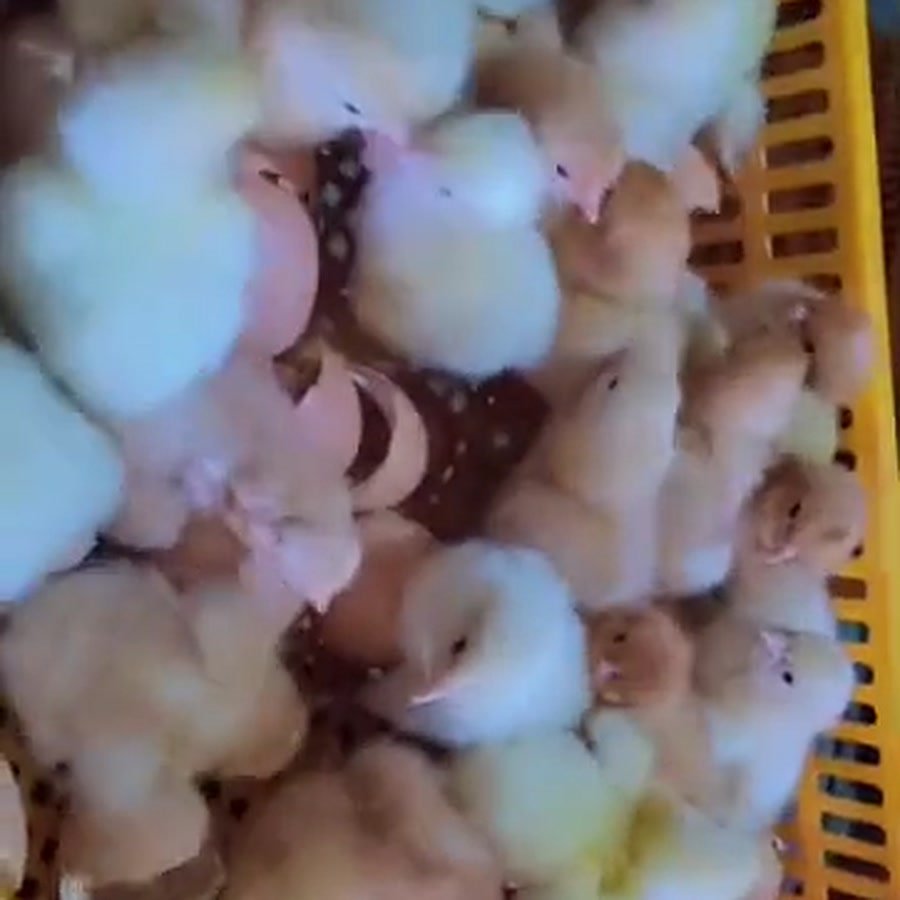
A live broiler at market weight, around 2.3 to 2.55 kg, sells for roughly GH₵75 to GH₵80 in a quiet month. Wait for the Christmas, Easter or Eid run-up and the same bird can fetch GH₵100 or more. That gap is the reason timing sits at the centre of almost every poultry decision in Ghana.
Christmas 2026 is about ten weeks away, which makes this a practical moment to look at the agribusiness options on the table. Some are worth your capital. Some sound good in a pitch and fall apart under the first real question. This guide sorts them by what you can measure, what they cost to start and what can go wrong.
Start with the calendar, not the chicks
Most people begin by asking how many birds they can afford. A better first question is when the birds will be ready to sell. Placement happens on a Thursday, when our hatchery is producing. Market-ready comes six to seven weeks later, and payout follows about eight weeks after placement, including clean-out. Those are the timings we work to, but the market does not sell to a calendar, so treat any date as an estimate.
The table below shows what three consecutive Thursday placements in October would look like on paper. These are illustrative dates that assume the usual six to seven weeks to market and about eight weeks to payout.
| Chicks placed (Thursday) | Market-ready (6 to 7 weeks) | Payout (about 8 weeks) |
|---|---|---|
| 15 October 2026 | 26 November to 3 December | About 10 December |
| 22 October 2026 | 3 to 10 December | About 17 December |
| 29 October 2026 | 10 to 17 December | About 24 December |
Read the rows closely. The earlier placement sells before the peak week, and the later one sells into it. A later batch may catch more of the festive price, but it also leaves less room for delay. A few days of slower growth can push a sale from the peak week into the week after it, and that is a real cost.
Seasons, not averages
An average price hides the thing that matters most. Quiet months sit around GH₵75 to GH₵80 a live bird, and the festive peaks run to GH₵100 and above. A batch that sells across the year lands somewhere between those two, and the typical profit we quote, GH₵12 to GH₵20 per bird sold in a normal cycle, reflects that mix. Sell only in quiet months and the batch does not reach that figure.
Sell only at peak and the plan becomes a different problem. It is a bet on timing rather than a plan, because a single week of delay can move the sale out of the window that paid. Before you commit, ask which month the batch is likely to sell in, what happens if it slips, and whether the quiet-month result still covers the cost.

Check the calendar against your own dates
Pick a placement Thursday and see what the sums look like for that batch. Our partner page has the batch plan and the calculator, so you can test a quiet-month sale and a festive-month sale before you commit. Festive timing is covered in more detail in our Christmas broiler market guide.
Four areas, read by what you can check
Agribusiness is a wide label. The useful way to compare its parts is by asking how much you can check before you pay. The areas below run roughly from most measurable to least, and each one carries different risks.
Broiler batches: the part you can count
Each batch has a clear start, a weight at sale and a cost you can total. Compared with most farming ideas, it gives you more numbers to test and a shorter wait to see whether the plan worked. The trade-off is a cycle that rewards good management and punishes small slips. Mortality is the number to watch, because a house that loses 10% to 20% of its birds can wipe out the profit of the cycle, while a well-run house keeps losses at 3% to 5%.
Capital for a 1,000-bird batch runs at roughly GH₵65,000 to GH₵80,000 from chick to market. A partnership can start from 500 birds, with 1,000 recommended, which lowers the entry point for a first commitment.
Input supply: feed, chicks and equipment
Every batch buys feed, chicks, vaccines and equipment, and the buying happens again each cycle. A supplier earns on the volume that growers keep coming back for. Feed is more than half the cost of a batch, so a supplier who can hold a steady price through a season has a real advantage, and so does a grower who knows when to buy.
Price spread matters as much as volume. The broiler starter we quote at GAPFA member prices, GH₵400 to GH₵410 for a 50 kg bag, compares with a De Heus list price of GH₵451 to GH₵472. On a 1,000-bird batch that needs about 84 bags, the gap is several thousand cedis. That is why the buying decision deserves as much care as the selling one.
The margins are thin and credit is the real test. Growers often pay after they sell, and a supplier who extends credit can end up financing the losses of the farms it serves. Our store sells feed, equipment and vaccines, which makes it a practical place to see how a supply counter runs day to day before you decide whether that trade suits you.
Layers and eggs: a longer clock
Egg production runs on a different schedule from broilers. The birds stay in the house for many months rather than weeks, and the income comes in steadily rather than in batches. The capital needed, the feeding routine and the risk profile are not the same as a broiler batch, so the questions you ask have to change too.
We do not publish layer figures in this guide, so compare any layer offer on the same terms you would use for a broiler batch. Ask for the written agreement, the reporting schedule, the mortality history and how payments are made. If the answers are vague, treat the offer the way you would treat a vague broiler pitch.
Processing and delivery: where buyers meet supply
Adding processing or delivery means more capital and more management, but it can reduce your dependence on the price on sale day. A processor who can hold birds for a few days can choose when to sell, and a delivery route can reach buyers who would otherwise go to a competitor. The catch is that these only work when buyers are lined up before the equipment arrives.
Our own chicks already go out to all 16 regions, so distribution is something we understand from the inside. That experience is useful when you are judging whether a delivery plan is realistic, because the cost of getting product to the buyer is often the number that gets underestimated.
If a delivery or processing plan is on the table, ask how product is stored between the farm and the buyer, how long it can wait without losing value and what the transport costs per trip. Ask who carries the loss when a delivery arrives late or damaged. Those details rarely appear in a brochure, but they decide whether the margin survives the road.
How to size a first commitment
Start from the price you can live with in a quiet month, not from the festive headline. If a batch only works at peak prices, the plan is a bet on the calendar. A quiet-month sale should still cover the cost of the batch, even if the margin is slim, and it should leave you able to pay for the next batch without borrowing in a hurry.
Then size the commitment so that a bad cycle is a setback rather than a crisis. For poultry, that usually means a smaller first batch than your enthusiasm suggests. Partnerships begin at 500 birds, and the poultry business plan guide walks through how to build a budget that holds up when the numbers move against you.
Opportunities that sound too certain
Ghana's Securities and Exchange Commission has warned against fixed-return schemes. In agribusiness these often arrive as a guaranteed harvest, a monthly payout or a promise that prices will rise on a set date. Prices move, feed moves and birds die. If the risks are missing from the pitch, look for them in the contract before you pay, and if you cannot find them there, treat the offer as incomplete.
Questions to take into any meeting
Before you sit down with any operator, whether it is a poultry farm, a supplier or a processor, have a short set of questions ready and write down the answers. Find out what the cost base is and where it comes from. Work out how losses or spoilage are measured and how often they are reported. Trace how the money flows, from the buyer to the business to you, and who signs each step.
Then ask for the part of the answer you cannot see yourself. Request the written agreement, a sample report and a visit date. An operator with nothing to hide will agree to all three without a fuss, and one who avoids them has told you what you needed to know.
Worth your capital, if you can check it
Agribusiness in Ghana has room for careful investors, and the calendar gives poultry an unusually clear set of dates to plan around. The options worth your money are the ones where you can see the numbers, question the people running them and walk away if the answers do not hold. A broiler batch, sized to what you can lose, meets that test better than most.
Set your timing, your losses and your cash needs down on paper before you commit. Then test the plan against a quiet month and a festive one, and only fund what still works in the quiet month.
Christmas will come whether or not your batch is ready for it. The useful question is whether your plan still makes sense if it arrives a week late.
Compare the batch terms How to start a poultry farm with 100 broilers


