
Most people who sign a power of attorney do it once, put the paper in a folder and forget what it still allows. For a Ghana investment, the distance between what you meant and what the document actually says can be expensive. A broiler batch runs for about eight weeks from placement to payout, and a single signature given years earlier can still reach into it.
This guide is about using a power of attorney in a narrow, sensible way for one batch in Kasoa. It is not legal advice. A Ghanaian lawyer should draft or check any document you intend to use, and we say so again where it matters.
Why someone on the ground may be needed
Between placement and payout, a few things may need a person in Ghana. You might want someone to visit the house, to collect a document that a counterparty insists on receiving in person, or to speak with a lawyer or a bank on your behalf. Living abroad makes each of those harder. A power of attorney is the usual legal route for letting someone act for you on those points.
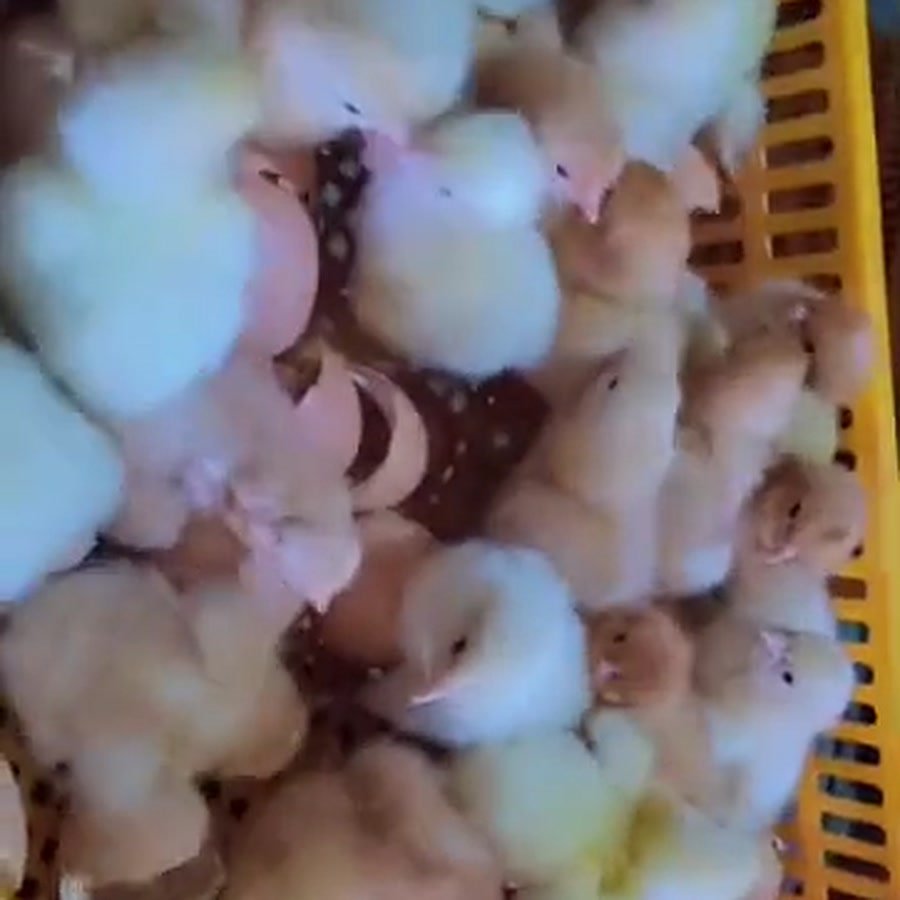
The farm is open to visits Monday to Saturday, 7am to 6pm, and the hatchery hatches every Thursday at 7:00. Someone who understands the batch can tell you more than a photo can. The question is whether that visitor should also be allowed to sign for you, and that is a separate decision from who should visit. Our hatchery page describes what a visit covers.
Keep those two decisions apart. Visiting, observing and reporting back needs very little legal authority. Signing, receiving money and changing terms need a great deal. Many people hand over the second when they only needed the first.
What a power of attorney actually does
A power of attorney is a written grant from one person, the principal, to another, the attorney. It allows the attorney to act in the principal's name within the limits of the document. It does not transfer ownership. The money and the batch remain yours, and the attorney acts for you, not in their own right.
The trouble is the word limits. Many documents are drafted broadly, with a line that gives the attorney power to do all acts necessary in connection with the principal's affairs. Language like that can be read to cover far more than a single batch, including bank accounts and property you had not thought about when you signed.
For a Ghana investment, an attorney might end up signing for a bank account, receiving reports, approving a change to a contract or accepting a payment. Each of those is a separate decision with its own risk. The document should name which of them are covered and which are not. If it does not, a lawyer should be the one to explain in writing what it covers.
General or limited: choose the narrower document
The general power
Some people choose a general power because it is the standard form. Standard is not the same as suitable. A general power covers a wide range of your affairs and usually stays in force until you revoke it. It can be convenient for someone who looks after property or family matters for you at home. It is a poor fit for a single batch, because the breadth that makes it convenient is the same breadth that makes it risky. It can reach accounts and decisions that have nothing to do with the farm.
The limited power tied to one batch
A limited power names the transaction, the counterparty and the dates. For a batch, that means naming the partnership with Agro Prime Ghana Limited, the placement, the reports you want the attorney to receive and the payout. It should end when the cycle ends, and the document should say so in plain words. This takes more drafting than a template, but a Ghanaian lawyer can prepare this kind of document, and you will have something clear to show anyone who asks.
Whichever form you choose, add a line that revokes the power in writing once the batch closes. Revocation is the step most people forget, and it matters most after the money has been paid.
A power of attorney is also not the same thing as a trust, a company or a bank mandate, and each of those carries its own paperwork and its own risks. If you are unsure which one fits, the lawyer should settle that question before anything is drafted.
A house can run five or six batches a year. If you do not want one document to cover all of them, each batch may need its own limited power. Ask your lawyer whether a single power can cover a stated number of cycles, or whether a fresh document is cleaner for each one.
Where the attorney's role might sit
The table below shows the stages of a typical batch and the points where an attorney might be asked to act. It is a planning aid, not a list the farm has agreed with you. The actual division of tasks belongs in the agreement and in the power, and both should be checked together.
| Stage | Typical timing | Where an attorney might be involved |
|---|---|---|
| Agreement signed | Before placement | Only if the power expressly covers signing |
| Chick supply | Hatch every Thursday at 7:00, Kasoa | Visit the house, if you have asked for a visit |
| Weekly reporting | Every Thursday | Receive and file the photo, weight, feed and mortality figures |
| Market-ready birds | 6 to 7 weeks after placement | Check weights and sale arrangements against the plan |
| Payout | About 8 weeks from placement, including clean-out | Confirm the payout account, which should be in your own name |
| Revocation | After the final payout | The power ends when you revoke it in writing |
A narrow role is a good sign. The aim is a power that does exactly what the batch needs and nothing else, even if that means the attorney does less than you first imagined.
Read the batch terms before you appoint anyone
The batch partnership page sets out the 500 and 1,000 bird options, the profit-share structure and the reporting schedule. Read it with your lawyer first. Only then decide who, if anyone, should act for you, and how far.
Choosing the person who acts for you
The person you appoint matters as much as the document. Choose someone you trust with money, who will read the weekly reports rather than skim them and who can keep track of dates over several months. Someone with a personal stake in the payouts, or a commercial tie to the farm, is harder to rely on later, however well meant the arrangement is.
Ask your lawyer what duties your attorney owes you. Find out whether they must keep records of what they do and receive, and whether they can be asked to account for it. The detail of Ghanaian law is for a Ghanaian lawyer to confirm, not for this guide, but it is far easier to settle these points before signing than to argue about them afterwards.
What the agreement still requires of you
A power of attorney gives someone authority. It does not change the commercial terms. The profit-share agreement sets out the capital, the reporting, the order of repayment and the split. Those terms apply whether you act in person or through someone else.
Capital is returned first, and the profit is split as the agreement says. Reports arrive every Thursday with the photo, weight, feed and mortality figures. Payouts go by bank or mobile money after the final sale. The attorney should understand these terms well enough to recognise whether a report or a payment matches them. An attorney who does not know the terms offers little real protection.
Payments are made only to the account of Agro Prime Ghana Limited when you fund the batch. That rule applies whoever signs for you. If anyone asks you to send partnership money to a personal account, stop the transfer and check with the company first.
Much of the detail sits in the contract terms, so read the wider picture as well. Our guide to contract broiler farming in Ghana explains how these arrangements usually work, and it is worth reading before you meet the lawyer.
Drafting and signing from abroad
Drafting a power of attorney is a job for a lawyer who knows Ghanaian law. Do not rely on a template downloaded from a website, however official it looks. Ask the lawyer to confirm the form the document needs, whether it must be signed before a witness, and whether it needs notarising or legalising before it can be used in Ghana. Requirements can change with the place of signing, so ask before you travel and before the paper goes into the post.
Expect the lawyer to ask about your reasons for each power, the banks you use and whether a Ghanaian bank account is involved. Answer those questions fully. A document drafted from partial facts is the one most likely to end up too broad.
Ask for enough signed originals to cover the banks and counterparties who may need one, and keep a scanned copy in your own files. A copy that exists only in someone else's inbox is of little use when a bank asks for it on a Thursday afternoon.
If you are signing in Germany, the UK or elsewhere, check whether an embassy, a consulate or a notary in your own country can help before you sign. Start early. Legal paperwork usually takes longer than placing a chick order, and a batch timetable does not wait for a document that is still in the post.
A general power over your money is the risk to avoid
Do not sign a general power that lets someone move your funds, open or close accounts, or receive payouts in their own name. If an attorney will be involved in money at all, the payout account should be in your own name, and the power should say so. Payments to the partnership go only to the Agro Prime Ghana Limited company account. Returns on a batch are never fixed. Ghana's SEC warns against fixed-return schemes, and any offer that promises a set monthly figure is one to walk away from.
Keeping control from a distance
Living abroad does not mean losing sight of the batch. Diaspora partners can ask for a live video walk-through of the farm, and you can ask for it to include the house and the reporting file. Use the call to check what your attorney sees, and to confirm that the figures in the weekly report match the birds in front of the camera.
Set a simple routine. Read each Thursday report when it arrives. Note the weight and mortality in your own sheet, so you can see the trend rather than one week in isolation. Well-managed houses aim for mortality of 3 to 5%. If a figure surprises you, ask the farm in writing and copy your attorney. Feed is more than half of the batch cost, and 20% mortality can erase the cycle's profit, so those lines deserve the closest reading.
If a weekly report does not arrive on a Thursday, do not let the gap sit. Ask the farm in writing for the missing week and copy your attorney, so the record is complete before the final payout rather than rebuilt afterwards.
Timing matters for your own tax position as well, so raise it with your adviser alongside the power. Several payouts can land in one tax year and others in the next, and a power that is still active when money arrives is one more reason to keep the revocation date firm.
Put a review date in your calendar for the day the batch is due to close. On that date, confirm the final payout. Then revoke the power in writing and send a copy to the lawyer who drafted it. Keep the revocation with the rest of your file.
Next steps for a diaspora partner
If you are still weighing whether to fund a batch at all, start with the partnership page and run the calculator on cautious assumptions. Only then bring the documents to a Ghanaian lawyer. The order matters, because the lawyer should read the agreement and the power side by side.
Our team answers in English and German. Message +49 151 68495881 on WhatsApp, or write to support@agroprimeghana.com. We will say plainly what the farm can and cannot put in writing, and we would rather say no to a vague request than agree to one nobody can explain later.
See the batch partnership terms
If anything in this guide does not fit your circumstances, that is a reason to see a lawyer sooner, not a reason to reach for the nearest template.
For the wider picture of how a batch is organised, read the hatchery partnership model in Ghana.


