A mycotoxin binder (or toxin adsorbent) is a feed additive that grabs mould poisons in the bird's gut before they can be absorbed, passing them out in the droppings instead of into the liver and bloodstream. In Ghana's hot, humid climate — where maize and groundnut, the backbone of poultry feed, are prone to aflatoxin and other mycotoxins — a binder can be a valuable insurance layer. But it is exactly that: insurance, not a cure. Binders vary enormously in what they can actually catch (clay-based ones are good at aflatoxin but weak against several other toxins), they can strip out vitamins and trace minerals if used carelessly, and no binder makes badly contaminated grain safe. This guide explains the mycotoxin risk in Ghanaian poultry, how the two main binder types work, their real limits, and why clean grain and good storage always beat relying on a binder.
Written by the Agro Prime Ghana poultry team and reviewed against current veterinary references (MSD Veterinary Manual and university extension sources). Last updated September 2026.
Key takeaways
Mycotoxin binders are feed additives that adsorb mould toxins in the gut so the bird excretes them instead of absorbing them. Two families dominate: inorganic clay/aluminosilicate binders (bentonite, HSCAS, zeolite), which are very effective against aflatoxin but have limited reach against other mycotoxins; and organic yeast-cell-wall binders (glucomannans from Saccharomyces cerevisiae), which act against a broader range. HSCAS is typically added at around 5 kg per tonne (0.5%). Key limits: both types are largely ineffective against deoxynivalenol (DON/vomitoxin), a common grain toxin; clay binders are non-specific and can bind vitamins and trace minerals too; and the US FDA has not licensed any product as a mycotoxin binder. There is no antidote once birds are poisoned, so a binder is a safety net on top of clean, well-dried, well-stored grain — never a licence to use mouldy maize or groundnut.
Why mycotoxins are a real risk in Ghanaian poultry
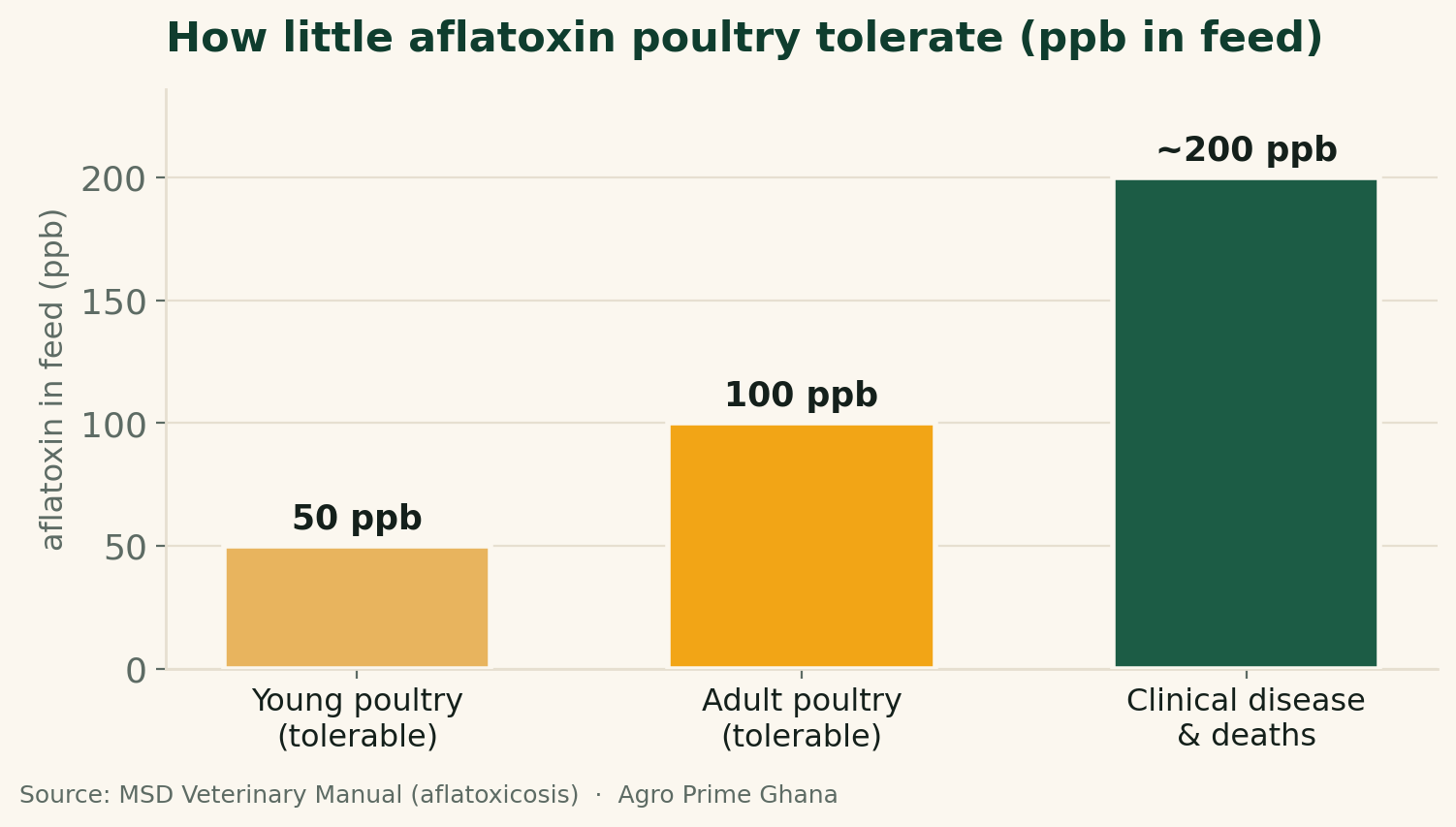
Mycotoxins are poisons produced by moulds that grow on crops in the field and, especially, in storage — and Ghana's climate and staple ingredients put poultry squarely in the firing line. The most important for us is aflatoxin, made by Aspergillus moulds that thrive on maize and groundnut, the two ingredients at the heart of nearly every local ration. The MSD Veterinary Manual notes that Aspergillus proliferation is favoured by consistent temperatures above about 21°C together with moisture — a fair description of Ghanaian conditions from harvest through storage. Aflatoxin damages the liver, suppresses the immune system so vaccines work poorly, slows growth and worsens feed conversion, and it does harm at levels measured in parts per billion: the MSD Veterinary Manual gives tolerable dietary levels of only about 50 ppb for young poultry and 100 ppb for adults, with clinical disease at roughly double those. We cover the toxin itself in depth in our guide to aflatoxin in poultry feed. Aflatoxin is not the only threat — other mycotoxins such as fumonisins, ochratoxin, zearalenone and deoxynivalenol (DON) can also contaminate grain — but in Ghanaian poultry, aflatoxin from maize and groundnut is the dominant, most-studied problem, and it is the one binders are best at addressing.
How mycotoxin binders work
A binder works inside the digestive tract, not on the mould or the grain. It is a material with a large, active surface that adsorbs mycotoxin molecules as feed passes through the gut, holding them so tightly that the toxin stays trapped in the binder and is carried out in the droppings rather than crossing the gut wall into the bird. Nothing is destroyed; the toxin is simply escorted through and out. There are two broad families, and the difference between them is the single most important thing to understand before buying one. Inorganic (clay/mineral) binders — bentonite, zeolite and hydrated sodium calcium aluminosilicate (HSCAS) — work by physical adsorption in a porous silica structure that traps toxins, and they are, in the words of the extension literature, "very effective aflatoxin binders." Organic binders are made from the cell walls of yeast (Saccharomyces cerevisiae) — the glucomannans and beta-glucans — and use a more varied binding mechanism that acts against a wider range of mycotoxins. Many commercial products combine the two to broaden the coverage. The chart below shows how little aflatoxin poultry tolerate — the thresholds a binder is meant to help you stay under.
Clay versus yeast binders: strengths and limits
No binder catches everything, and the differences between the two families are practical and important. Clay/aluminosilicate binders are the champions at aflatoxin — their structure grips the aflatoxin molecule well — which is exactly what matters most in Ghana. But the same extension sources note they have "limited activity against other types of mycotoxins," and, crucially, both clay and yeast binders are largely ineffective against deoxynivalenol (DON, or vomitoxin), one of the commonest grain contaminants worldwide. Yeast-cell-wall binders reach a broader spread of toxins — they show activity against zearalenone and some others that clays miss — but are generally less powerful against aflatoxin specifically than a good clay. There is also a real cost to clay binders that keepers must weigh: because they adsorb by non-specific physical attraction, they can bind vitamins and trace minerals as well as toxins, reducing the nutrient value of the feed if over-used or poorly formulated. The table sets out the trade-offs.
| Binder type | Best against | Weak against | Watch-outs |
|---|---|---|---|
| Clay / aluminosilicate (bentonite, HSCAS, zeolite) | Aflatoxin — very effective | DON (vomitoxin); limited on many other toxins | Non-specific — can also bind vitamins & trace minerals |
| Yeast cell wall (glucomannans, β-glucans) | Broader range incl. zearalenone | DON; weaker on aflatoxin than good clays | Efficacy varies by product and dose |
| Combined products | Aim to cover both aflatoxin & wider toxins | Still weak on DON | Quality and proof of efficacy vary widely |
| Activated charcoal / others | Some general adsorption | Very non-specific | Readily binds nutrients too; use with care |
Inclusion rate and how to use a binder
Binders are added to feed at low but meaningful inclusions, and the exact rate depends on the product and the contamination risk. For clay-type binders, the MSD Veterinary Manual cites hydrated sodium calcium aluminosilicate used at around 5 kg per tonne (about 0.5% of the feed, roughly 10 lb/ton), and reports that such binders reduce aflatoxin effects in poultry and pigs — for context, they cut aflatoxin carry-over into milk by about 50% in dairy studies, though, importantly, they "do not eliminate the residue." Follow the specific product's recommended inclusion rate rather than guessing, because too little gives false confidence and too much (of a clay type) risks stripping nutrients. Practical use points: add the binder evenly through the feed, just as you would a premix, so every bird gets its share; use a binder as a routine safeguard when your grain risk is high — humid seasons, ground-dried maize, groundnut cake of uncertain origin — rather than only after birds are already sick; and remember that a binder added to visibly mouldy, heavily contaminated feed cannot rescue it. It is worth knowing, too, that regulators treat these products cautiously: the MSD Veterinary Manual notes the US FDA has not licensed any product for use as a mycotoxin binder in animal feeds, even though HSCAS is widely recognised as effective — a reminder to buy from reputable suppliers who can show real evidence, not marketing claims. Binders sit within the wider toolkit of poultry feed additives.
Field note: a binder is a seatbelt, not a licence to speed
We think of a mycotoxin binder the way we think of a seatbelt: something sensible to have on when the risk is real, but no reason to drive recklessly. The mistake we see is keepers treating a binder as permission to buy the cheapest, doubtful maize or groundnut cake on the market — "the binder will sort it out." It will not. A binder reduces how much toxin the bird absorbs from moderately contaminated feed; it does not neutralise heavily poisoned grain, it does not touch some toxins at all, and, once a bird's liver is damaged, nothing reverses it. Buy clean grain first. Dry and store it well. Then, if your risk is still real — and in our climate it usually is — add a good binder as the backup layer. In that order, a binder earns its cost. In the wrong order, it just gives false comfort while the flock quietly underperforms.
Why prevention beats binders every time
The most important thing to understand about binders is why they are the last line of defence rather than the first. There is no antidote for mycotoxin poisoning — the MSD Veterinary Manual is explicit that "no specific antidote for aflatoxins is available," and treatment is only supportive once damage is done. A binder reduces absorption but does not undo liver damage, does not restore a suppressed immune system, and does not remove the toxin's residues from eggs and meat. And binders have genuine gaps: they miss DON, they vary in quality, clays can bind nutrients, and none is a regulator-approved cure. Every one of those limitations disappears if the toxin never gets into the feed in the first place. Prevention is entirely within your control and costs little: buy quality maize and groundnut and reject mouldy, discoloured, musty or insect-damaged grain; insist on grain that is properly dried to a low, safe moisture, not dried on bare ground or stored damp; store feed and grain dry, cool, ventilated, off the floor and pest-free, and use it in good time rather than holding large stocks through the heat; and never feed visibly mouldy feed. These are the same habits that protect your grain generally — see feed storage and pest control and our note on choosing poultry feed ingredients. A binder is a valuable safety net on top of that discipline; it is a poor and expensive substitute for it.
Protect your flock with clean feed — Agro Prime Ghana can help
The best mycotoxin defence is clean, well-dried, well-stored grain — with a quality binder as backup where the risk is real. Agro Prime Ghana supplies poultry feed made with attention to ingredient quality, and can advise on binder selection, inclusion rates and grain-storage practices to keep aflatoxin and other mould toxins out of your birds. If you are seeing the tell-tale signs of mycotoxins — poor growth, vaccine failures, disease breaking through a well-run programme — talk to us about your feed before you replace "weak" chicks that were never the cause. Message us on WhatsApp (+233 24 915 1503) or book a visit for feed supply and ration or storage advice.
Choosing and buying a binder in Ghana
If you decide a binder makes sense for your operation — and in Ghana's climate, for most commercial flocks, it does — choose it deliberately. Match the binder to your main risk: since aflatoxin from maize and groundnut is the dominant threat here, a good clay/aluminosilicate binder (or a combined clay-plus-yeast product) covers the most important base. Buy from reputable suppliers who can point to real efficacy data rather than slogans, remembering that no product is officially licensed as a binder and quality varies widely. Use the recommended inclusion rate — commonly around 0.5% for clay types — and do not over-dose a clay binder, to avoid stripping vitamins and trace minerals from the feed. Keep the binder as a routine backup during high-risk periods rather than an emergency-only measure, because by the time birds show clinical signs the damage is already done. And keep your expectations honest: a binder meaningfully reduces the toxin load the bird absorbs, but it works alongside — never instead of — clean grain, proper drying and dry, pest-free storage. Used that way, it is one of the cheaper forms of insurance in poultry keeping.
The bottom line on mycotoxin binders
A mycotoxin binder is a feed additive that traps mould poisons in the gut so the bird excretes them rather than absorbing them, and in Ghana's warm, humid conditions — with aflatoxin-prone maize and groundnut at the heart of our rations — it is a sensible layer of protection. Clay/aluminosilicate binders are very effective against aflatoxin, our biggest threat, and are typically used around 0.5% of the feed; yeast-cell-wall binders reach a broader range of toxins; combined products aim to cover both. But every binder has real limits: they miss DON, clays can bind nutrients, quality varies, none is a licensed cure, and nothing reverses damage once a bird is poisoned. That is why the order matters: buy clean, well-dried grain and store it dry, cool and pest-free first, and add a good binder as backup second. Get that sequence right, and a binder becomes cheap, effective insurance against one of the biggest hidden drains on Ghanaian poultry — rather than false comfort riding on doubtful grain.
Frequently asked questions
What is a mycotoxin binder and how does it work?
Do mycotoxin binders remove aflatoxin from feed?
What is the best type of mycotoxin binder for poultry in Ghana?
How much binder do I add to poultry feed?
Can a binder fix mouldy or heavily contaminated grain?
Are there mycotoxins that binders cannot catch?
Why is prevention better than using a binder?
Are mycotoxin binders approved and safe to use?
Sources & further reading
- MSD Veterinary Manual — Aflatoxicosis in Animals (tolerable aflatoxin levels, no antidote, HSCAS binder dose and partial efficacy, FDA licensing status, residue carry-over).
- Kansas State University Extension — Mycotoxin binders (how clay/aluminosilicate and yeast-cell-wall binders work, efficacy against aflatoxin vs other toxins, ineffectiveness against DON, nutrient binding).
- Peer-reviewed research on clay- and yeast-based binders in broilers exposed to aflatoxin B1 (see Veterinary Medicine and Science and related PMC literature on binder efficacy in poultry).
- Agro Prime Ghana guides: aflatoxin in poultry feed, poultry feed additives, and feed storage and pest control.
About Agro Prime Ghana
Agro Prime Ghana Limited runs a poultry hatchery and mixed agribusiness in Kasoa, supplying day-old chicks and supporting poultry keepers across the country. These guides combine hands-on hatchery and farm experience with current veterinary references. We supply healthy day-old chicks (broilers and layers), point-of-lay pullets, quality feed and hands-on farm support nationwide. This article is general educational information, not a substitute for professional veterinary or nutrition advice. Ready to start or expand? Book a visit or message us on WhatsApp (+233 24 915 1503) to order chicks, feed or advice.