
The first thing you notice at the hatchery is the noise. Trays open, chicks start to shuffle and call, and the room is louder than most visitors expect. Agro Prime's hatchery in Kasoa runs its hatch every Thursday at 7:00, and a batch you finance begins with that same ordinary, noisy morning.
Most people who finance a batch picture the money going in at the start and coming back at the end, with very little in between. That picture explains why some first-time partners feel uneasy around week three. A batch is really a run of small, dated events. Once you know what each one looks like, the quiet stretches stop feeling like silence.
Placement and the first two weeks
Placement is the point at which your capital is committed and the birds leave for the house. The written profit-share agreement has to be signed before that day. The order is deliberate. A partner who has paid before anything was signed has no document to point to when a question comes up later, and questions always come up at some point.
The first fortnight is mostly about warmth and water. Chicks need a properly heated house, clean drinking water and feed they can find without effort. Marek's vaccine is given at day old in the hatchery, and Newcastle or Gumboro doses are added according to the batch. The farm manages that schedule. Your part is to know it exists, so that a vaccine line in a report does not come as a surprise.
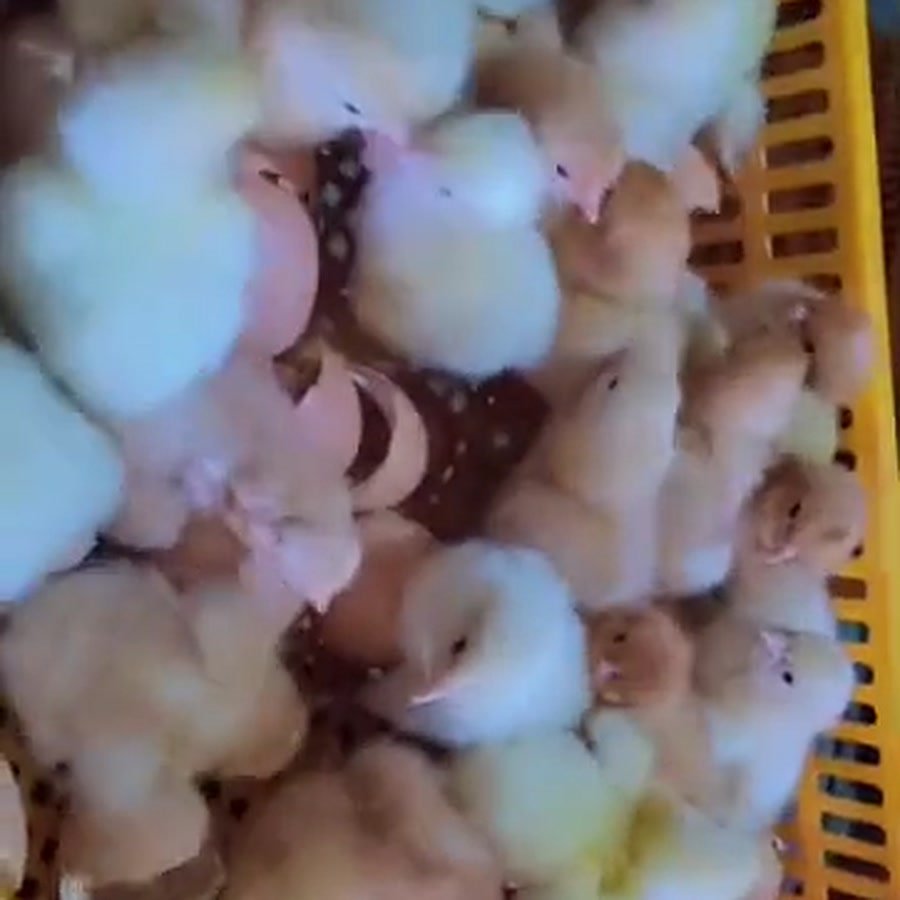
Feed deliveries are the other rhythm worth watching early on. Your first few reports show feed used against the expected intake, and a gap there can point to a delivery timing question rather than a problem with the birds. Ask about it in the same week, while the question is still small.
Reading the Thursday report properly
Every Thursday the farm sends a report with four parts: a photo, a weight, the feed used and the mortality count. Each part answers a different question. The useful reading comes from putting them side by side, not from looking at one of them alone.
The photo shows condition. You can see whether the birds are spread across the house, whether the litter looks dry and whether the group looks bright. A photo cannot tell you how heavy anything is. The weight tells you growth, and growth is what the sale depends on. A bird that is light in week four is not automatically sick, but it is behind, and you want to know that while there is still time to ask why.
Feed is the line you can check against the plan. It makes up more than half of a batch's total cost, so a weekly figure that runs well ahead of plan deserves a question. Ask whether the birds are eating more than expected or whether the bags are simply costing more. Those are different problems with different answers.
Mortality is the number that can change the outcome fastest. A well-managed batch loses around 3 to 5 per cent of its birds. A batch with poor management or disease can lose 10 to 20 per cent, and at the top of that range the losses alone can erase the cycle's profit.
No one can promise the birds will all survive
Mortality is the part of a batch that nobody controls completely. Any offer that describes a set return or a guaranteed monthly figure is describing something the poultry cycle cannot honestly deliver. Ghana's Securities and Exchange Commission has warned the public about schemes that promise certain returns. A profit share is only trustworthy when it names costs, mortality and sale prices openly.
The simple arithmetic shows the stakes. This is an illustrative calculation, not a forecast. If a 4 per cent loss leaves 960 birds from a 1,000-bird batch, and each sold bird carries between GH₵12 and GH₵20 of profit in a normal cycle, the batch lands somewhere between about GH₵11,500 and GH₵19,200. At a 20 per cent loss, only 800 birds sell, and the feed and heat already spent on the birds that died do not come back. The margin can disappear quickly at that level, which is why the mortality line deserves a weekly look.
When you write to the farm about a number, name the week and the figure. A question such as why the weight moved between one Thursday and the next is easier to answer well than a general worry about how the batch is doing. Specific questions get specific answers, and that keeps the reporting useful for both sides.
Test the numbers before the first Thursday
The calculator on the partner page works through a batch in cedi terms, so you can test your own assumptions before you commit. Open the calculator, or read the full batch plan to see how the reports and payouts are arranged.
Weeks three to five, when the feed bill climbs
By the middle of the cycle the birds are eating heavily, and the feed line is at its largest. Feed comes in 50 kg bags. At about 4.2 kg of feed per bird from day-old to market, a 1,000-bird batch needs roughly 4,200 kg, which is 84 bags. At the GAPFA member price of GH₵400 to GH₵410 a bag, that is about GH₵33,600 to GH₵34,440 for feed alone. At the De Heus list price of GH₵451 to GH₵472, the same 84 bags come to GH₵37,884 to GH₵39,648.
Treat those figures as an illustrative calculation, not a quote. Their purpose is to show why the weekly feed line matters. A rise in the price of a bag between placement and the middle weeks changes the cost of a batch planned on an older price. The weekly feed figure records what was used, so the effect shows up in the report rather than as a surprise at the end.

A weight that tracks ahead of plan is good news, but it raises a question about timing, and timing is where the sale comes in. Birds reach market weight at six to seven weeks, at about 2.3 to 2.55 kg live. The report should show the batch closing on that range week by week, not only at the end, so that the sale is never a surprise.
Weeks six and seven, and the question of timing
Market-ready birds are the point at which the batch becomes money. A live bird sells for roughly GH₵75 to GH₵80 in quiet months and for more than GH₵100 at the Christmas, Easter and Eid peaks. Break-even in a typical batch sits between about GH₵70 and GH₵81 a bird. The space between break-even and the sale price is where profit comes from, and in a quiet month that space is narrow.
Agro Prime raises the birds and handles the sale, so the timing of that step belongs to the farm's operation rather than to your calendar. What you control is how you read the numbers that lead up to it, and whether you understand what those numbers mean for your share.
The calendar therefore matters as much as the birds. A batch placed in late October finishes its growth in December, when festive demand usually lifts prices. That pattern is useful to understand, but it is not a promise. A batch that finishes in January sells into a quieter market, and a partner should plan for that possibility from the start. The Christmas broiler market guide sets out how demand moves through the year.
Once the birds are sold, the house still has work to do. It is cleared, cleaned out and readied for the next batch, and that clean-out is part of the roughly eight weeks from placement to payout. People often forget it when they count the cycle. Payout follows the agreement: capital comes back first, then the profit is split as agreed, paid by bank or MoMo days after the final sale. Cash timing across the whole cycle is covered in the cash flow and break-even guide.
The Harmattan months and the house
Depending on when a batch is placed, its later weeks can fall in the dry, dusty spell that Ghanaians call the Harmattan. Dry air and fine dust from the north make a house harder to keep clean, and they test ventilation and litter management at the very time the birds are heaviest. Nothing about that is unusual on a working farm, and it is one reason the weekly photo matters. Dust on the litter or dull, watery eyes can show up in a picture well before they show up in the mortality line.
The wetter months bring the opposite problem. A house that runs too warm stresses birds, and a house that holds moisture lets litter go wet and sour. A well-run house adjusts ventilation and litter for the season, and a partner who knows that the season matters will read each photo with more understanding.
Keeping your own record of the batch
Keep a simple sheet with one row per Thursday. Record the date, the average weight the farm reports, the feed used to date and the mortality count to date. A spreadsheet is enough. Within a few weeks the batch will read as a line rather than a series of separate reports, and a line is far easier to question.
| Stage | What your record should hold | What to watch for |
|---|---|---|
| Placement | Placement date, number of birds placed and the signed agreement on file | Any gap between placement and the first report |
| Weeks one and two | Photo, weight, feed and mortality from each Thursday | Signs of heat stress and early losses |
| Weeks three to five | A running feed total and a weekly mortality trend | Feed running ahead of plan, or losses that repeat week on week |
| Weeks six and seven | Weight against the 2.3 to 2.55 kg range and the planned sale date | Weights that stall close to market age |
| After the final sale | Sale total, clean-out date and payout date | A payout that falls outside the agreed timing |
Read a single soft week with patience. One light weight or one jump in mortality may come from weather, a late feed delivery or a ventilation problem rather than from a failing batch. A trend across two or three weeks is a different matter. When you see one, ask the farm what they are doing about it, and write the answer beside the number.
If you follow the batch from abroad
Many partners follow their batch from another country, and the reporting is built for that. The Thursday photo, weight, feed and mortality figures reach you in the same form whether you live in Kasoa or several time zones away. Diaspora partners can also ask for a live video walk-through of the house, and international transfers are available.
Time differences matter less than people expect, because the report is the fixed point. You can read it at whatever hour suits your week, and send questions when they occur to you rather than waiting for a scheduled call.
Questions are welcome at any point. The partnership WhatsApp line is +49 151 68495881, and it is answered in English or German. Email goes to support@agroprimeghana.com. If you would rather see the house in person, the farm is open Monday to Saturday from 7am to 6pm.
What the batch teaches you about the next one
Every batch leaves a record that is more useful than the profit figure on its own. The feed per bird, the weight at each Thursday, the mortality trend and the price received show where the cycle was tight and where it had room. A partner who keeps that record can compare batches honestly, and can decide whether a larger placement suits them or whether a smaller one is wiser for the next round.
That comparison matters because a well-run house can turn over five or six batches in a year, and the rhythm of one batch shapes the next. Clean-out, rest and restocking all sit on the same calendar. A partner who sees the whole pattern is far less likely to treat one good or bad cycle as the permanent truth about the business.
Before the first Thursday
Following a batch is mostly a matter of reading one short report a week and asking a clear question when a number moves. The four figures will rarely tell the same story in the same week, and that is normal. What matters is that the reports arrive, that you read them, and that you know what each number measures.
If you are considering a batch, read the agreement next to the reporting schedule. Check that it describes a profit share with costs, mortality and sale prices named openly, and that payment details point only to the Agro Prime Ghana Limited company account.
See the batch plan and open the calculator
For background on how the hatchery partnership is put together, read how the hatchery partnership model works in Ghana.

