
A 1,000-bird broiler batch needs roughly GH₵65,000 to GH₵80,000 of capital, from the first chick to the final sale. Few households have that sitting idle. A group of ten or twenty people, each saving a modest amount every month, might. That arithmetic sits behind co-operatives and savings and credit associations across Ghana, and it is a fair question for any group to put to a poultry farm.
The short answer is yes, a group can finance a batch. The longer answer is that money pooled by many people needs more written rules than money held by one, and those rules matter most when a batch is struggling. This article covers the rules, and where a group's savings sit alongside a partnership with the farm.
Is a SACCO the same as a bank?
No. A SACCO, or savings and credit co-operative, is a member-owned group. Members save into a common pool and borrow from it, and the board and the general meeting answer to the members, not to outside shareholders. The rules on loan limits, interest and how surpluses are shared should all be written down in the group's bylaws.
That structure has real strengths. Lending decisions are made by people who know each other, which can make them quicker and more flexible than a bank's. The same closeness can also hide problems. A small group with thin records can lose track of who owes what, and a single officer with too much control can do damage long before members notice.
Before a group puts a cedi into anything, ask for its registration documents and its most recent audited accounts. A group that cannot produce them should not be trusted with a batch, however long it has existed. Age is not evidence of good governance, and a long history with no records is a reason for more caution, not less.
Can a co-operative finance a broiler batch?
Yes, but the structure has to be settled first. A group can take up a partnership in one of two ways. Each member can sign an individual agreement with the farm, with their own contribution and share recorded. Or the group can appoint a representative who holds a written mandate from every member, approved at a properly minuted meeting. The first route is simpler and keeps each member's rights clear. The second suits larger groups, but only if the mandate is specific about what the representative may sign and spend.
Whichever route you choose, the money goes into the Agro Prime Ghana Limited company account. Not into the treasurer's MoMo wallet, and not into a personal bank account, however well the group knows and trusts that person. A partnership starts with a profit-share agreement signed before the chicks are placed. If your group is also comparing other arrangements, our guide to contract broiler farming in Ghana is worth reading first.
Groups usually start by asking how much each member should put in. The table below uses the per-bird capital range to show a straight-line split for two batch sizes. It is illustrative only, because each member's share of profit follows the written agreement, not a neat average.
| Batch size | Capital, from the per-bird range (GH₵) | Each of 10 members (GH₵) | Each of 20 members (GH₵) |
|---|---|---|---|
| 500 birds (minimum) | 32,500 to 40,000 | 3,250 to 4,000 | 1,625 to 2,000 |
| 1,000 birds (recommended) | 65,000 to 80,000 | 6,500 to 8,000 | 3,250 to 4,000 |
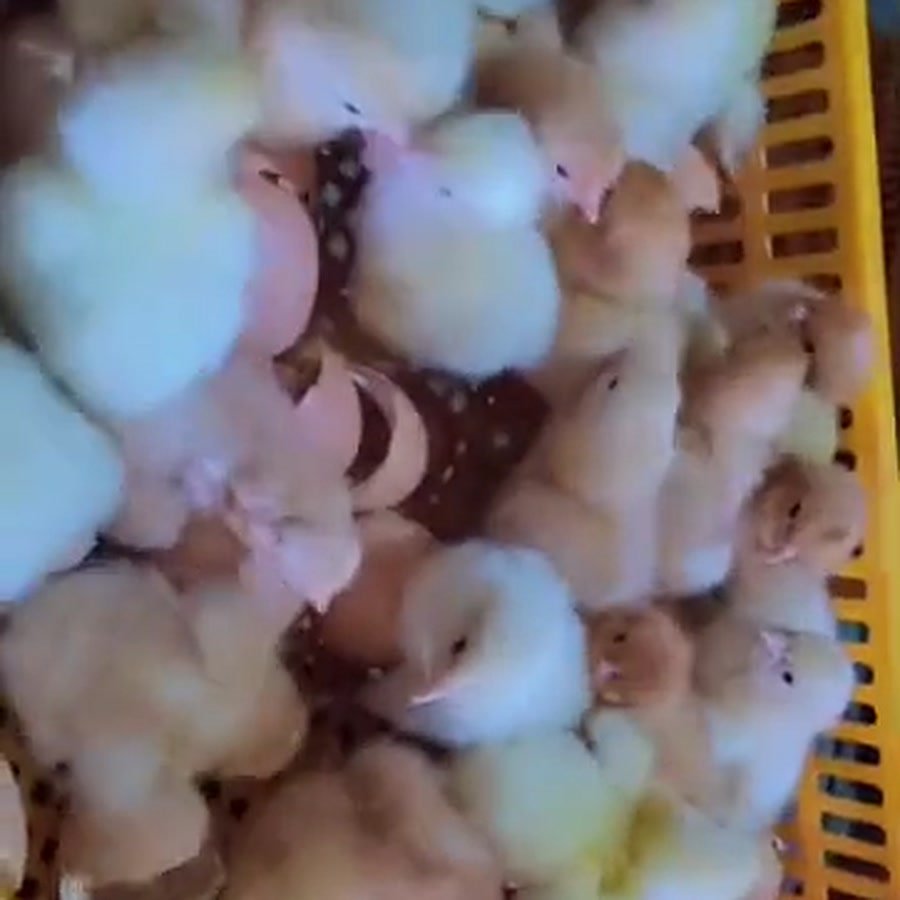
The minimum for a partnership is 500 birds, with 1,000 recommended. At 500 birds the simple split is roughly half the capital of a 1,000-bird batch, but costs do not divide perfectly. Feed still comes in bags, brooding still needs heat, and mortality still applies. Agro Prime hatches the chicks at its hatchery in Kasoa, raises the batch and sells it, so ask for the figures for the exact size you plan rather than doubling or halving a number from this table.
Be wary of fixed returns in groups
Some group leaders promise members a fixed return every month from a poultry project. That promise moves the risk onto the members, and it is often paid from newer contributions rather than from the birds. Ghana's Securities and Exchange Commission has warned against fixed-return schemes of this kind. A profit share is the honest alternative, and it can be small or nil. If a cycle loses money, the capital itself may not come back in full.
What the farm agreement should say to a group
Before any money moves, read the agreement line by line. It should name the contracting party as Agro Prime Ghana Limited, state the batch size and the capital each side brings, and set out the order of repayment: capital back first, then the profit split as agreed. It should explain how the profit split is calculated, how the weekly reports reach you, and how the payout arrives, whether by bank or MoMo, days after the final sale.
A group needs a few extra lines. The agreement should list every member, or name the representative and the scope of that person's authority. It should say what happens when a member wants to leave before payout, and how a loss is shared if a cycle does not pay its way. If a clause is unclear, ask about it in writing and keep the reply with the signed copy. A verbal assurance from anyone in the chain is not a term of the agreement.
A loss-making cycle, step by step
The best way to understand mortality is to follow the money through a bad cycle. Take the 1,000-bird batch from earlier and assume losses reach 15%, which sits within the poor-management range. That means 150 birds never reach market and 850 are sold. At a live price of GH₵78, which sits inside the quiet-month range, those sales bring in about GH₵66,300.
The simple sum from the table assumes every bird reaches market, so it is the generous reading. Set against that sum of GH₵65,600, the margin is about GH₵700. The chicks in the 150 lost birds still cost GH₵20 each, which is GH₵3,000, and if those birds had eaten the full 4.2 kg, roughly GH₵5,040 of feed would have gone into them. Those costs are already inside the sum, which is why a small rise in losses, a delayed sale or a lower price can take the margin to nothing.
This scenario is illustrative, not a forecast. It exists to show that mortality can decide the outcome more than the headline price does. A group that understands this will watch the weekly mortality figures as closely as the sale price, and will talk through what it would do if those numbers turned.
How should the group write things down?
Good governance is mostly boring paperwork, and paperwork is what protects members. The minutes of the meeting that approves a batch should record each member's contribution, the date it was paid, who signed, and the agreed profit split. Keep those minutes with a copy of the farm agreement, in a place more than one officer can reach.
Ask who receives the weekly reports. Every Thursday the farm sends a photo, the weight, and the feed and mortality figures for the batch. Those reports should go to at least two people in the group, so that one officer's absence does not leave everyone blind to a batch that is struggling.
Plan for members who leave, fall ill or fall behind on their contributions. Your bylaws should say what happens to a member's share of an open batch, and whether a new member can step in. Leaving that question until payout is an easy way for a group to end up arguing over a sum nobody discussed.
Keep the group's batch books separate from its savings ledger. A simple batch ledger should show every contribution against the bank or MoMo receipt that proves it reached the Agro Prime Ghana Limited company account, and every reported figure from the farm, week by week. Reconcile the two once a month. If the ledger and the receipts disagree, you have found the problem while it is still small.
Give each member a short written statement after each meeting, even when nothing has changed. It takes minutes to write, and it keeps everyone in the same picture. Members who hear about a batch only at payout tend to ask questions that could have been answered months earlier.
Test the split before the meeting
Open the calculator on the partner page and run your group's batch size at a well-managed mortality of 4% and again at a poor 15%. Bring the printed result to the meeting so the numbers, not personalities, drive the discussion. Members who want to see the house can visit the farm Monday to Saturday, 7am to 6pm.
Should members borrow to invest?
Some members will want to borrow from their SACCO to add to their share. Think carefully before doing so. A typical batch takes about eight weeks from placement to payout, including clean-out, and a house can run five or six batches in a year. Loan repayments run on the calendar, though. They do not pause because a batch is late, and they do not shrink because mortality came in higher than planned.
The honest test is simple. Before borrowing, ask whether you could repay the loan from your other income if the batch returned nothing at all. If the answer is no, the loan is funding a risk you cannot carry. Our guide to poultry loans and grants in Ghana covers the wider options, and it is worth reading before any group takes a loan for a farm.
Start with one batch, then review it
A group's first batch should test the group's systems as much as the birds. Starting at the 500-bird minimum keeps the capital smaller and gives members a full cycle to see how the reports, the meetings and the payments actually work. The 1,000-bird recommendation is there for a reason, but a group that has never run a cycle together should not rush to it.
When the first payout arrives, sit down as a group and review it against the agreement. Did the capital come back in the agreed order? Did the profit split match what was signed? Were the weekly reports reaching the people they were meant for? Only a group that can answer yes to those questions should decide on a second batch, and it should decide again under the same written rules.
Keep the batch separate from common savings
The most important rule for a SACCO is that the group's common savings are not the batch's capital. Members' savings exist for everyone's emergencies and loans, and they are protected by the group's own rules. Moving them into a poultry batch turns a shared safety net into a shared bet, and it puts members who never agreed to that bet at risk.
If the group decides to finance a batch, the decision should be taken separately, by members who opt in, with their own money. A member who does not want to join should not be pressured, and should never find that their savings were quietly used. Keep the batch contributions in their own record, and leave the common savings ledger untouched by the farm project.
A sensible rule of thumb is that no member should put in money they could not afford to lose on a bad cycle without damage to their household. That is a judgement for each person, not a formula. It is also the reason a written, opt-in structure is worth the effort.
Pooling that holds up
Pooling works when the rules were written before the money moved. Agree the batch size, each member's contribution, the signatory and the profit split in a minuted meeting. Then check those terms against the farm's agreement, and only after both match should any money leave the group.
Groups that treat a batch as a shared project rather than a shared bet are better placed to hold together through a hard cycle. Mortality may arrive in some cycle, and feed prices will move. The real question is whether the group has agreed in advance what it will do, and whether every member understands it.
If your group is ready to look at real numbers, the partner page is the place to start, with the calculator, the batch plan and the agreement terms in one place.
Review the partnership terms with your group
For the cost side of the plan, read our poultry business plan guide for Ghana.

