Bone meal and meat-and-bone meal (MBM) are rendered animal by-products valued in poultry feed for two things at once: a solid dose of protein and a concentrated supply of calcium and phosphorus. Meat-and-bone meal typically runs about 50–55% crude protein with roughly 9–11% calcium and 4–5% phosphorus — a useful combination for a farmer building a balanced ration from local materials. But it is also the ingredient where quality, batch-to-batch variation and safety matter most: a good, consistent product earns its place, while a poor or mishandled one drags down growth, unbalances your minerals and risks disease. This guide explains what these meals contain, how much to use, and how to buy and handle them safely in Ghana.
Written by the Agro Prime Ghana poultry team and reviewed against current feed-industry references (Feedipedia and University of Florida IFAS Extension). Last updated September 2026.
Key takeaways
Meat-and-bone meal (MBM) is a rendered mix of meat trimmings and bone; pure bone meal is mostly bone and is used chiefly as a mineral source. Typical MBM carries about 50–55% crude protein, roughly 9–11% calcium and 4–5% phosphorus at a natural Ca:P ratio near 2:1 — so it supplies protein and the two most important bone minerals together. Its main limits: inclusion is usually held to under about 5% of the diet because the high calcium, phosphorus and lysine unbalance the ration quickly; quality varies a lot between batches; it can go rancid; and it must be well heat-treated to be safe from Salmonella. For laying hens it is a handy phosphorus source, but the bulk of shell calcium should still come from oyster shell or limestone.
What bone meal and meat-and-bone meal actually are
These ingredients come from the rendering industry, which cooks and dries animal slaughter by-products into stable, storable meals. It is worth separating three related products. Bone meal is made mainly from crushed, cooked bone and is used above all as a mineral supplement — calcium and phosphorus — with only modest protein. Meat-and-bone meal (MBM) is meat tissue and bone rendered together, so it delivers substantial protein as well as minerals. Meat meal contains more meat and less bone, giving higher protein but less calcium. In everyday Ghanaian usage "bone meal" is applied loosely to any of these, so establish with a supplier which product you are buying — their protein and mineral values differ significantly.
According to Feedipedia, a typical meat-and-bone meal analyses around 55% crude protein, about 10% calcium and roughly 4.9% phosphorus on a dry-matter basis, with a very high ash content near 30% reflecting all that bone. Those numbers explain both the appeal and the constraint: the same bone that makes MBM a good mineral source loads the ration with calcium and phosphorus fast, which is why you cannot simply pile it in.
Why calcium and phosphorus make MBM special — and tricky
The stand-out feature of these meals is that they carry calcium and phosphorus together, in roughly the ratio bones need. Feedipedia gives MBM a Ca:P ratio near 2.1:1, close to the ideal for bone formation, and its phosphorus is largely in an available form birds can use — unlike the phytate-bound phosphorus in plant ingredients. For a Ghanaian keeper this is valuable: an ingredient that brings usable phosphorus — one of the costlier minerals to supply — alongside protein can simplify and cheapen a home-mixed ration.
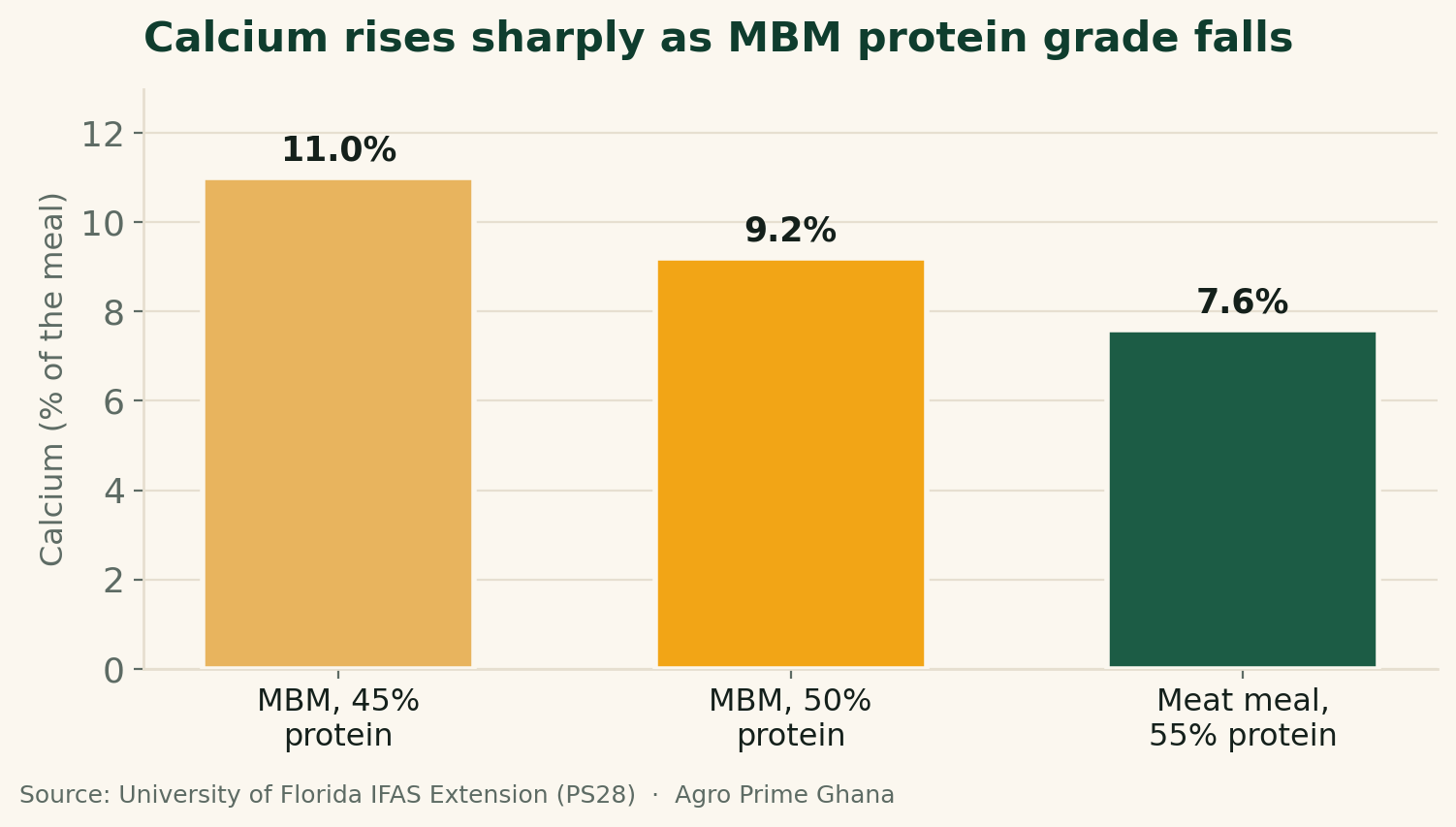
The difficulty is that the calcium and phosphorus climb as the protein grade falls. University of Florida IFAS Extension figures show MBM calcium rising from about 7.6% in a 55%-protein meat meal to 9.2% in a 50%-protein MBM and up to 11% in a 45%-protein MBM — the bonier the product, the more calcium per kilo. Because excess calcium in a young bird's diet locks up other minerals and harms growth, that rising calcium is precisely what caps how much MBM you can safely use. The extension service is blunt about the reason: inclusion is limited "because of the high calcium, phosphorus, and lysine content of the meal." MBM's mineral richness is both its selling point and its ceiling.
How much bone meal or MBM to include
The practical inclusion rate for meat-and-bone meal is low — typically under about 5% of the diet. University of Florida IFAS Extension states that "meat and bone meal is typically limited to less than 5% of the diet," because its concentrated calcium, phosphorus and lysine unbalance the ration if you use more; within that band it can replace part of your plant protein while contributing to the mineral supply. Pure bone meal, used as a mineral source rather than for protein, is added in even smaller amounts and must be counted in your overall calcium and phosphorus budget so you do not over-supply.
The critical point is to account for their calcium and phosphorus in the whole ration, not treat them as "just protein." Add MBM and then pile on your usual limestone or oyster shell without adjusting, and you easily push total calcium too high — a damaging mistake, especially in broilers and growers. If you mix your own feed, build these meals into the calculation deliberately, as covered in our guide to making poultry feed, and balance the amino acids too: Feedipedia notes the limiting amino acids in MBM-and-cereal poultry diets are methionine and cystine, so a methionine source is usually still needed.
| Product | Crude protein | Calcium | Phosphorus | Mainly used for |
|---|---|---|---|---|
| Bone meal | Low | Very high | Very high | Calcium & phosphorus mineral supply |
| MBM (45% grade) | ~45% | ~11% | High | Protein + minerals; bonier, lower protein |
| MBM (50% grade) | ~50% | ~9.2% | ~4.9% | Balanced protein + mineral source |
| Meat meal (55%) | ~55% | ~7.6% | Lower | Higher-protein, less mineral load |
The quality problem: why MBM varies so much
No two batches of meat-and-bone meal are truly identical, and this variability is one of the biggest challenges of using it. Because MBM is made from whatever meat-and-bone raw material a renderer processes, the ratio of meat to bone — and therefore the protein, calcium and phosphorus — shifts from batch to batch: a "55%" bag and a "45%" bag are genuinely different feeds. Even within a grade, amino-acid availability depends on how hard the material was cooked — over-processing reduces digestibility, while under-processing risks safety. This is why serious operations test batches or buy on specification, and why a home mixer should treat the label figure as an estimate, not a guarantee.
Adulteration and freshness are the other traps in local markets. MBM's fat can go rancid in the heat, giving an off, tallowy smell and reducing feed value, and lower-value material is sometimes bulked out or mislabelled. A meal that smells rancid, looks unusually pale and chalky (too much bone/ash), or is caked and damp is a poor buy. The difference between a good and a bad batch shows up directly in your birds, so a reputable source is worth paying for.
Field note: know which "bone meal" you're actually buying
The commonest mix-up we see is a farmer buying something sold simply as "bone meal," assuming it is a protein feed, and formulating as if it were 50%-protein MBM — when in fact it is a high-ash, low-protein mineral product. The birds then fall short on protein while getting far too much calcium. Before you build any ration around one of these meals, pin down what it is: ask whether it is bone meal (mineral), meat-and-bone meal (protein plus minerals) or meat meal (mostly protein), and get a protein and calcium figure. A quick check on colour and smell helps too — a good meal is a consistent brown, free-flowing and clean-smelling, not chalky-pale, greasy, rancid or lumpy.
Safety: heat treatment, Salmonella and regulations
Meat-and-bone meal is the ingredient where safety discipline matters most, for two reasons. First, as a rendered animal product it must be properly heat-treated to destroy pathogens; inadequately processed or recontaminated MBM is a classic vehicle for Salmonella, which can seed infection through a flock and the food chain. Good manufacturing and clean, dry, rodent-proof storage keep it safe — one more reason to treat biosecurity and feed hygiene as the same job, rejecting any batch that is damp, mouldy or foul.
Second, there is a regulatory dimension. Feedipedia notes that "feeding meat and bone meal to poultry is restricted or banned in many countries," a legacy of concerns about transmissible diseases in ruminant-derived material. Rules differ by country and by the animal source, so use MBM from a reputable, properly regulated source and be aware of the rules for your market — particularly if you sell into channels with their own feed standards. None of this makes MBM unusable; it makes sourcing and traceability part of using it well.
Bone meal, MBM and the laying hen
Field note: add the calcium sources up before you mix
The mineral mistake we see most often with meat-and-bone meal is double-counting calcium — or rather, not counting the MBM's calcium at all. A farmer adds MBM for protein, then adds the usual limestone or oyster shell on top, and the ration ends up carrying far more calcium than a growing bird should get, which quietly holds back growth and unbalances other minerals. Before mixing, we tot up every calcium source in the ration together — the MBM, the bone meal, the limestone, the shell — and treat the total against what that class of bird actually needs. It takes a few minutes and it is the difference between MBM strengthening a ration and silently unbalancing it.
Bone meal, MBM and the laying hen
For layer keepers, these meals have a useful role that is easy to misread. Their real contribution to a laying flock is phosphorus (and some protein), not the bulk of the calcium a hen needs for eggshells. A laying hen's enormous calcium demand for daily shell formation is best met with large-particle calcium such as oyster shell or coarse limestone, which dissolves slowly and is available overnight when the shell is laid down — a role bone meal's finer calcium does not fill as well. So while MBM or bone meal can supply the phosphorus and mineral base of a layer ration, you should still provide a dedicated calcium source; our guide to calcium for laying hens explains how. Use bone meal for the mineral framework, and oyster shell to build the shell.
Building a balanced ration you can trust
Getting protein, calcium and phosphorus right — without over-supplying one while shorting another — is exactly where home-mixed rations most often go wrong, and meat-and-bone meal sits at the heart of that balancing act. Agro Prime Ghana helps poultry keepers formulate practical, cost-effective feed from locally available ingredients, and supplies day-old chicks, point-of-lay pullets and quality feed to go with the advice. If you are working out how bone meal, MBM, oyster shell and your protein sources should fit together for your flock, message us on WhatsApp at +233 24 915 1503 or book a visit and we will help you build a ration that works.
Where MBM fits in a cost-conscious ration
The economic case for meat-and-bone meal is that it does two jobs in one bag — protein plus available phosphorus and calcium — reducing how much separate protein and mineral supplement you need. Where imported phosphorus sources and protein meals are costly and prices move with the exchange rate, a good, consistent MBM can genuinely trim a feed bill, part of the wider effort at reducing feed cost. But the savings only hold if the quality is real: a cheap, variable or heat-damaged meal that unbalances your minerals can cost far more in lost growth than it saves. Like the other alternative protein sources, MBM rewards the farmer who buys carefully and formulates deliberately.
The bottom line on bone meal and MBM
Bone meal and meat-and-bone meal are useful, established ingredients that bring protein and the two key bone minerals — calcium and phosphorus — into a ration together. Typical MBM offers about 50–55% protein with roughly 9–11% calcium and 4–5% phosphorus at a near-ideal 2:1 ratio, which is why it earns a place in many home-mixed feeds. But use it with knowledge, not habit: keep inclusion under about 5% because its concentrated minerals and lysine unbalance the diet quickly; account for its calcium and phosphorus across the whole ration; balance for methionine; and buy consistent, well-processed, safely-handled material from a source you trust. Treated that way, MBM supplies protein and minerals at once; treated carelessly, it is a variable, risky bag that can quietly undo your feeding programme.
Frequently asked questions
What is the difference between bone meal, meat-and-bone meal and meat meal?
How much calcium and phosphorus does meat-and-bone meal contain?
How much meat-and-bone meal can I put in poultry feed?
Why does meat-and-bone meal quality vary so much?
Is meat-and-bone meal safe for chickens?
Can bone meal supply all the calcium my layers need for eggshells?
Does meat-and-bone meal replace fishmeal or soybean meal?
Why does my meat-and-bone meal smell greasy or off?
Sources & further reading
- Feedipedia (INRAE/CIRAD/AFZ/FAO) — Meat and bone meal (protein ~55%, calcium ~10%, phosphorus ~4.9%, Ca:P ~2:1, ash ~30%, limiting amino acids, regulatory notes).
- University of Florida IFAS Extension — Meat and Bone Meal in Poultry Diets (grade-by-grade calcium figures, <5% inclusion guidance and the reason for it).
- Agro Prime Ghana guides: poultry feed ingredients, calcium for laying hens, and how to make poultry feed.
About Agro Prime Ghana
Agro Prime Ghana Limited runs a poultry hatchery and mixed agribusiness in Kasoa, supplying day-old chicks and supporting poultry keepers nationwide. These guides combine hands-on hatchery and farm experience with current feed-industry references. This article is general educational information, not a substitute for tailored advice from a qualified animal nutritionist, especially on feed formulation, mineral balance and ingredient safety. We supply healthy day-old chicks (broilers & layers), point-of-lay pullets, quality feed and hands-on farm support across Ghana. Ready to start or expand? Book a visit or message us on WhatsApp (+233 24 915 1503) to order chicks, feed or advice.