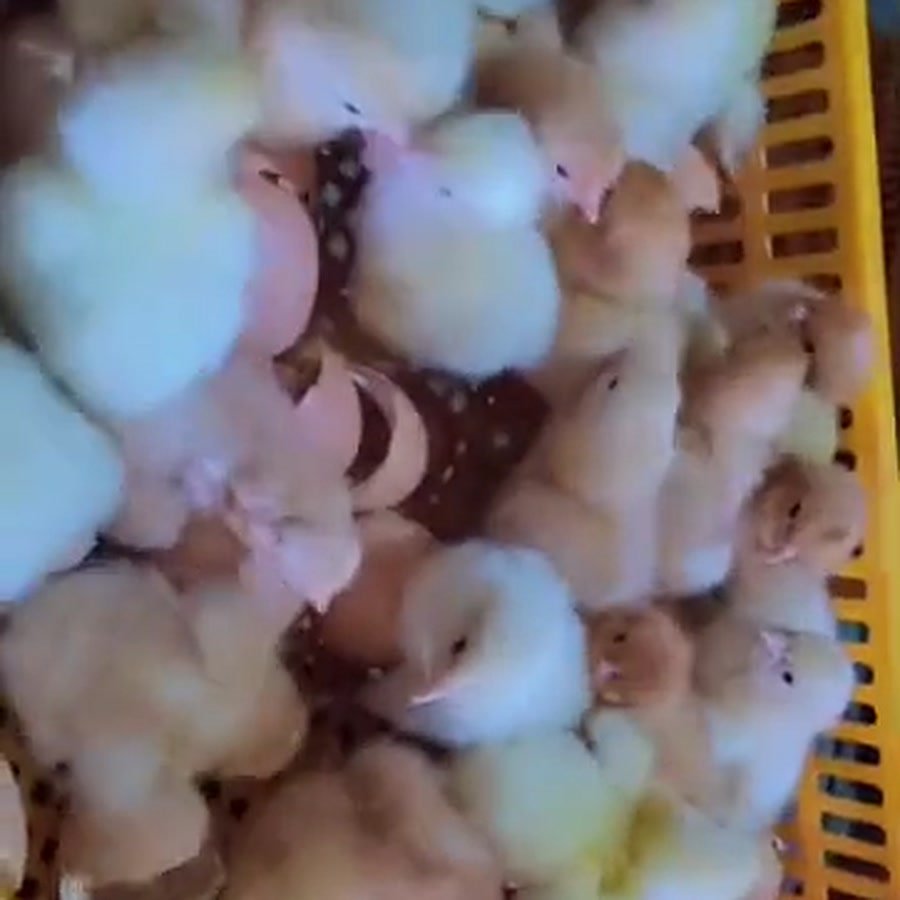
A farmer from Winneba brought us a bucket on a Monday morning. In it were 41 eggs from a 100-egg batch that had produced 39 chicks and a lot of disappointment. He wanted to know what was wrong with his incubator. We laid the eggs out on the bench, candled the lot, and then broke every one of them open in turn. Within twenty minutes we could tell him that his incubator was probably fine: fourteen eggs had never been fertile, nineteen had died in the first week, and only eight had died late. His problem was an old cock and a hot storage cupboard, not the machine.
That exercise, called a break-out or residue analysis, is the most powerful tool a hatchery has, and almost no small farmer in Ghana does it. Unhatched eggs go into the bin and the farmer changes the thermostat by half a degree, or buys a new machine, or blames the eggs, without any evidence. The evidence was in the bucket.
This guide is about reading that evidence. It explains the stages at which embryos die, what each stage points to, how to break out a batch and count what you find, and the specific fixes for each pattern. It assumes chicken eggs in a small or medium incubator; the logic is identical for a hen sitting on a nest and for our own hatchers in Kasoa.
Written from our hatchery floor
This guide reflects day-to-day practice at the Agro Prime hatchery in Kasoa, where we hatch and supply day-old chicks to farmers across Ghana. Always confirm current prices and confirm any medication or vaccination programme with your veterinarian.
What a good hatch looks like, so you know what is bad
Before troubleshooting, set the benchmark. From a healthy breeder flock in mid-lay, with eggs under seven days old stored properly and a well-calibrated machine, expect fertility of 90 to 95 percent and hatch of fertile eggs of 85 to 90 percent, giving a hatch of set eggs around 80 to 85 percent. Small farm incubators in Ghana typically manage 65 to 80 percent of set when things go well. A hatch below 60 percent of set is a problem that needs diagnosis; below 40 percent, something is badly wrong.
The residue of a good batch has a particular shape: roughly 5 to 10 percent clears, 2 to 4 percent early deaths, under 1 percent middle deaths, and 3 to 5 percent late deaths and pipped-not-hatched. Any batch that departs from that shape is telling you which stage is failing.
Step one: candle and count before you blame anything
If you have not been candling, start. Candling at day 7 separates infertile eggs from early deaths and gives you a fertility figure; candling at day 14 and 18 picks up middle and late deaths. The candling guide covers the method. Once the hatch is over, gather every unhatched egg, including the ones removed at candling if you kept them, and every dead or cull chick, and sort them.
Then break out. Work outside, over newspaper, with gloves if you have them. Crack each egg into a dish and look. Clears show a yolk with a small white blastodisc and no development. Early deaths show a tiny embryo, a blood ring or a small dark spot. Middle deaths show a recognisable embryo with feathers beginning, often with a strong smell. Late deaths show a fully formed chick that did not pip or pipped and stopped. Note the position of the head, whether the yolk has been absorbed, whether the chick is wet and sticky or dry and shrink-wrapped, and any deformities. Tally each category as a percentage of eggs set.

Pattern one: too many clears (infertile eggs)
If 15 percent or more of the eggs are clear at candling and show no development on break-out, the problem is fertility, and fertility lives in the breeder pen. Look at:
- Male ratio. One cock to 8 to 10 hens for light breeds, one to 7 or 8 for heavy ones. Too few or too many males both lower fertility.
- Male age and condition. Cocks over two years, obese cocks, lame cocks or cocks with sore feet mate poorly. Heavy broiler-type males in particular become infertile with age and weight. Overgrown spurs and long toenails injure hens, who then avoid mating.
- New males. A cock introduced last week has not yet produced fertile eggs; allow two to three weeks. Conversely, eggs stay fertile for two to three weeks after a cock is removed.
- Flock age. Very young pullets and hens past 60 to 65 weeks give lower fertility.
- Heat. Prolonged heat above 32 to 35 °C in the pen reduces semen quality in cocks; fertility in Ghanaian breeder flocks often dips in February and March. See our heat stress guide.
- Disease and nutrition. Chronic disease, heavy worm or mite burdens, and deficiencies of vitamin E and selenium reduce fertility in both sexes.
Pattern two: early deaths (days 1 to 7, blood rings)
Early deaths are the most common cause of a poor hatch on small farms in Ghana, and most of them happen for reasons that occur before the egg reaches the incubator or in the first two days inside it. On break-out you see a blood ring or a tiny embryo with pigmented eyes but no more.
The causes, in the order we find them:
- Old eggs or eggs stored hot. Eggs kept over ten days, or stored at 28 to 35 °C, produce blood rings in quantity. The egg selection and storage guide is the fix.
- Rough handling and transport. Eggs shaken in a vehicle, dropped, or stored point-up. Detached air cells on candling confirm it.
- Temperature too high in the first week. Even a short period above 39 °C in days 1 to 3 kills embryos. A thermostat overshoot on a freshly loaded machine, or a machine in a hot room with afternoon sun on it, is often responsible.
- Temperature too low or fluctuating. A power cut on day 2 or 3 that lets the eggs cool to room temperature for many hours; a machine placed under a fan or beside a window.
- No turning or poor turning. Eggs not turned in the first week produce embryos stuck to the shell membrane and early deaths.
- Breeder nutrition. Deficiencies of vitamin A, E, biotin or riboflavin in the hen cause early deaths that no incubator fix will correct.
- Egg-transmitted disease. Mycoplasma, pullorum and fowl typhoid in the breeders raise early and mid deaths.
| Break-out finding | Stage | Most likely causes | First things to check |
|---|---|---|---|
| Clear egg, white dot on yolk, no development | Infertile | Male ratio, male age or condition, heat, flock age, disease | Count cocks; check their feet and weight; date eggs |
| Blood ring; embryo pinhead to 15 mm | Day 1–7 | Old or hot-stored eggs, rough transport, early temperature spike, no turning, breeder vitamins | Storage dates and temperatures; thermometer check; turning log |
| Feathered embryo, strong smell, cloudy | Day 8–17 | Contamination, power cut or temperature event, breeder nutrition, ventilation | Events log for that week; egg cleanliness; vents |
| Full-size chick, not pipped, yolk absorbed or not | Day 18–21 | Humidity wrong, low temperature, poor ventilation, malposition, breeder nutrition, disease | Weight loss record; air cell size; hatcher humidity; vents |
| Pipped, dry, membrane papery, stuck | Pip to hatch | Low hatcher humidity, lid opened during hatch, low temperature | Water pans; lid discipline; harmattan humidity |
| Pipped, wet, sticky with albumen | Pip to hatch | Humidity too high during incubation, temperature too low, old eggs | Weight loss; air cell size at 18 days |
| Hatched early, small, unhealed navels | Hatched | Incubator running hot | Calibrate thermometer |
| Hatched late, large, soft, big-bellied | Hatched | Incubator running cool; old eggs | Calibrate thermometer; egg age |
The table gives the commonest causes in our experience; most poor hatches involve two or three overlapping factors rather than one.
Pattern three: middle deaths (days 8 to 17)
Middle deaths are rare in a well-run batch, under 1 or 2 percent, so when they climb they nearly always point at a specific event or a contamination problem. On break-out these embryos are recognisable, with feather germs or down, and often smell foul. Ask what happened in that week. A power cut that ran for eight hours on day 11? A day when the turner motor failed? A morning when the machine was left open for cleaning? An incubator moved to a new room? Any of these will show up as a spike of deaths at the corresponding age.
If there is no event, look at contamination. Dirty eggs, washed eggs, a rotten egg that burst in the machine, or an incubator not cleaned between batches, all seed bacteria that penetrate the shell as the chorioallantois develops, and the embryo dies in the second week. Egg-transmitted mycoplasma and salmonella do the same. The remedy is egg cleanliness, thorough cleaning and disinfection of the machine between batches, and a look at the breeder flock's health. Our hatchery hygiene guide gives the cleaning routine.
Pattern four: late deaths and dead in shell (days 18 to 21)
Late deaths are fully formed chicks that never pipped, or pipped internally and stopped. This is the pattern that hurts most, because these chicks were a day or two from the brooder, and it is also the pattern most often caused by the incubator and the hatch management rather than the eggs.
Break-out is informative here. Check three things on each chick: the position of the head, the state of the yolk, and the state of the membranes.
- Malpositions. The normal position is head under the right wing, beak toward the air cell. Head between the legs, head under the left wing, head in the small end of the egg, feet over the head, or beak away from the air cell are malpositions. Occasional ones are normal; many of them point to eggs set small end up, inadequate turning, very large or misshapen eggs, or high temperature in the second week.
- Unabsorbed yolk. A large yolk sac still outside the abdomen at day 21 means the chick was behind schedule: temperature too low, humidity too high, or old eggs. A chick with a small, absorbed yolk that still failed to pip points instead at hatcher conditions or weakness.
- Membranes. Dry, papery, tough membranes adhering to the chick mean humidity was too low at hatch. Excess fluid, a wet chick and a small air cell mean humidity was too high throughout, and the chick effectively drowned at the internal pip.
Other causes of late death include carbon dioxide build-up in a sealed hatcher, a hatcher running too hot, breeder deficiencies of vitamin B12, biotin, riboflavin and manganese, and egg-transmitted disease.

Pattern five: pipped but not hatched
Chicks that break the shell and die with their beak sticking out are almost always a hatch-day management problem, and the two versions look different.
The dry version is a chick glued in place by a membrane that has dried into parchment around it, sometimes literally shrink-wrapped. The humidity in the hatcher was too low when the shell was pipped, most often because the lid was opened repeatedly to look or to remove early chicks, or because the water pans ran dry, or because a small machine in a harmattan room simply could not hold humidity. In our Kasoa hatchery, hatch humidity is the one setting we watch by the hour from December to February, and in small machines we add wet sponges rather than rely on the built-in channels.
The wet version is a chick that pipped and then lies sticky, coated in un-dried albumen, exhausted. Humidity was too high during the 18 days of incubation, the egg did not lose enough water, the air cell is small, and the chick had too much fluid to deal with at the pip. This is also the pattern for eggs incubated at slightly too low a temperature or for very old eggs. The fix is on the setter side: lower humidity in days 1 to 18 until the weight loss reaches 11 to 13 percent, as described in our temperature and humidity guide.
Helping a chick out of the shell
Most chicks that need help were going to die anyway, and pulling a chick out before its blood vessels have closed causes it to bleed to death. Help only when a chick has been pipped for over 24 hours with a visibly dry membrane and no progress, and then only by moistening the membrane and gently enlarging the pip hole, stopping at any sign of blood. Better still, fix the humidity and never face the choice.
Read the chicks that did hatch, too
Small early chicks with unhealed navels and red hocks mean the machine ran hot; big, soft, late chicks mean it ran cool or the eggs were old. Crooked toes, wry necks and cross beaks point to breeder nutrition. Cull any chick that cannot stand, drink and walk; our guide on choosing healthy day-old chicks shows what a good one looks like.
Ghana-specific hatchability killers
Three local factors deserve their own mention, because they come up in almost every troubleshooting conversation we have.
Power supply. A power cut is the number one incubator problem in Ghana. A well-insulated machine full of eggs holds useful warmth for two to four hours; after that the embryos cool and, depending on the day, either die or are delayed. Embryos in the first three days and the last three days are the most vulnerable. Every serious hatchery needs a backup: a generator, an inverter with batteries sized for the machine, or at minimum a plan to wrap the incubator in blankets and keep the lid shut. Never open the lid to "check" during a cut. Our solar and backup power guide covers sizing an inverter for an incubator.
Harmattan. From December to February, dry northern air pushes relative humidity in rooms down to 20 to 30 percent in the afternoon, and a small incubator's water pan cannot keep up. Eggs lose too much water, air cells run large, and hatches show dried, stuck chicks. Increase water surface area, add wet sponges, keep the incubator room's door closed, and consider running the room humidifier if you have one.
Heat. From February to April, rooms with metal roofs pass 35 °C in the afternoon. An incubator cannot cool; it can only heat. If the room is above the set point, the eggs run hot and hatch early with weak chicks, and you will find a cluster of middle and late deaths after a hot week. Site the incubator in the coolest room, away from the western wall, with a fan moving air around (not into) the machine.
A worked example from our bench
Back to the farmer from Winneba and his 41 eggs. The residue broke down as 14 clears, 19 early deaths, 3 middle deaths and 5 late deaths, giving a fertility of 86 percent, an early-death rate of 22 percent of fertile eggs, and a hatch of fertile of 45 percent. The early deaths dominated. We asked about his eggs: collected over twelve days from a compound pen of 12 hens and one cock of unknown age, stored in a cupboard in a room with a tin roof, and set straight from the cupboard into a machine that had been switched on that morning. Every one of those is on the early-death list. We advised him to add a second young cock, collect three times daily, store eggs in his air-conditioned bedroom for no more than seven days, pre-warm them, and run the machine for a full day before setting. His next hatch was 74 of 100. The incubator was never touched.

Frequently asked questions
Why did my eggs develop but not hatch?
Why are my eggs infertile even though I have a cock?
How do I do a break-out analysis of unhatched eggs?
Can a power cut ruin a batch of eggs?
What causes chicks to die inside the shell after pipping?
Should I help a chick that has pipped but not come out?
Bring your unhatched eggs, not just your questions
Agro Prime runs commercial setters and hatchers in Kasoa and supplies vaccinated day-old chicks and fertile eggs across Ghana; we are happy to look at your candling and break-out numbers and point you at the fix. WhatsApp or call +233 24 915 1503, email support@halaalfarmsghana.com, or book a visit to the hatchery.