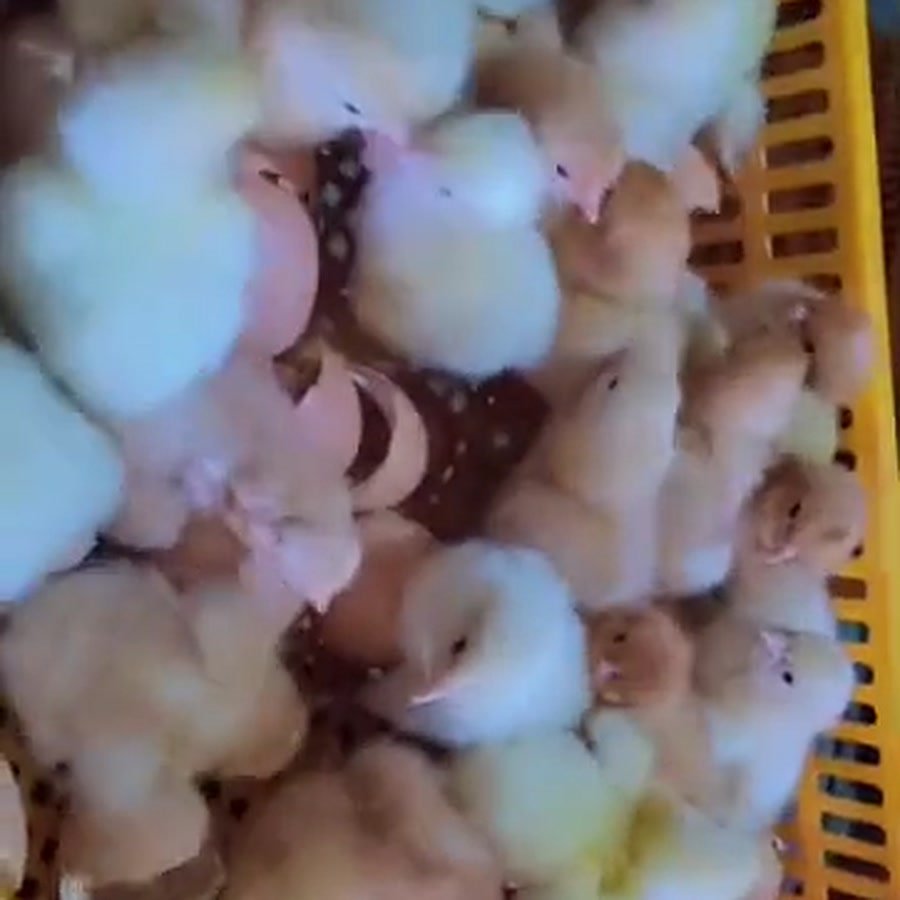
Every hatching season a farmer arrives at our Kasoa hatchery with a crate of eggs collected from the family compound over the past three weeks, some the size of a pigeon egg, some caked in mud, some so old the air cell wobbles when you tilt them, and asks why his last hatch was 30 percent. The honest answer is that the hatch was decided before the eggs ever reached a machine. No incubator can repair an egg that was laid by an underfed hen, left in a hot nest for a day, washed in cold water and stored for a fortnight in a kitchen.
Commercial hatcheries know this so well that egg selection and storage have their own department, their own room and their own thermometer. The embryo is alive from the moment of lay, and the days between lay and setting are part of its life. Treat them carelessly and the hatch drops before the first day of incubation begins.
This guide covers the part of hatching that happens before the incubator: the breeder flock that produces the egg, how to choose which eggs to set, how to collect and handle them, how to store them in a Ghanaian climate without a cold room, how long they keep, and how to bring them into the incubator so they hatch together.
Written from our hatchery floor
This guide reflects day-to-day practice at the Agro Prime hatchery in Kasoa, where we hatch and supply day-old chicks to farmers across Ghana. Always confirm current prices and confirm any medication or vaccination programme with your veterinarian.
Start with the flock: fertility is made in the pen
An egg can only be as good as the hen and cock that made it. Before you think about storage, three things in the breeder pen decide whether the eggs are worth setting.
The male ratio. For light layer-type breeders, one cock to 8 to 10 hens keeps fertility above 90 percent. For heavy broiler-type breeders, one to 8 or so, because heavy males tire and injure hens. For local fowl on free range, one to 6 to 8 is common because they mate less efficiently. Too few males and fertility drops; too many and they fight, over-mate the hens and fertility drops anyway. Replace males that are lame, overweight or old; a cock past two years of age is often the reason fertility slides.
The age of the hens. Eggs from pullets in the first four to six weeks of lay are small, with proportionally more white, and hatch poorly and produce small chicks. Eggs from hens beyond about 60 to 65 weeks of age have thinner shells and larger pores, lose water too fast and hatch poorly too. The sweet spot for hatching eggs is roughly 26 to 55 weeks of age. In our own supply arrangements we do not take eggs from a breeder flock in its first month of lay, and we watch shell quality closely toward the end.
Breeder nutrition and health. A breeder ration is not a layer ration; it carries more vitamins A, D3, E, riboflavin, biotin and manganese, because deficiencies in the hen show up as embryo deaths, malpositions and deformed chicks rather than as any sign in the hen herself. A flock with chronic respiratory disease, mycoplasma, fowl typhoid or heavy worms produces eggs that hatch badly and chicks that die in the first week. Our fowl typhoid and pullorum guide explains why egg-transmitted diseases matter to a hatchery.
Which eggs to set: the selection rules
At the collection table, sort ruthlessly. Eggs for the incubator are chosen; eggs for the kitchen are what is left.
- Weight and size. Set eggs between about 50 and 65 grams for layer and dual-purpose breeds, 55 to 70 for broiler breeders. Very small eggs produce small, weak chicks; very large ones are often double-yolked or from old hens and hatch poorly. Uniform size means a uniform hatch time.
- Shape. A normal oval with a clear large end and small end. Reject round eggs, long torpedo eggs, eggs with ridges, and eggs with a lumpy or wrinkled shell; the embryo orientates by shape and the shell structure affects water loss.
- Shell quality. Reject cracked, thin, chalky, rough or mottled shells. Hold each egg to the light or tap two together gently; a cracked egg gives a dull sound. Hairline cracks let bacteria in and water out.
- Cleanliness. Set only clean eggs. Slightly soiled eggs can be dry-brushed or scraped with fine sandpaper; heavily soiled eggs should not be set. Do not wash with water, and never with cold water, which draws bacteria in through the pores. If you must sanitise, use a proper egg sanitiser at the correct dilution, applied warmer than the egg, and dry quickly.
- Interior. When candling a fresh egg before storage, a good egg shows a small, steady air cell and a yolk that returns to the centre. Reject eggs with a loose, wobbling air cell (old or badly handled), blood spots, or a yolk that sticks to the shell.
In practice this means rejecting 5 to 15 percent of eggs from a good flock and much more from a compound flock. Accept it; the rejects are still food.

Collection: the first hours decide a lot
A hen's body is about 41 °C. The moment an egg is laid, the embryo continues developing until the egg cools below about 20 to 21 °C, a threshold known as physiological zero. An egg left in a nest in a Ghanaian poultry house at 30 to 35 °C keeps developing slowly for hours, and an embryo that develops a little and then cools is far more likely to die in storage than one that was cooled promptly. That is the reason for frequent collection.
Collect at least three times a day, and four in the hot months: mid-morning, midday, mid-afternoon and just before dusk, because most hens lay in the morning and the nest gets hot by noon. Collect into clean, dry trays, pointed end down, not into a bucket where eggs bang together and crack. Keep nest boxes clean with fresh litter so eggs come out clean and do not need any treatment. Collect floor eggs separately and do not set them; they are dirty, often cracked, and in our records they hatch 15 to 25 points worse than nest eggs.
Move collected eggs out of the poultry house and into the egg store within an hour of collection. Do not stack full trays in a warm passage until evening. Handle gently: an egg dropped a few centimetres onto a hard tray may not crack but can rupture the yolk membrane or dislodge the air cell, and both kill the embryo.
Storage temperature and humidity: the numbers
The ideal storage conditions for hatching eggs are 15 to 18 °C and 70 to 80 percent relative humidity, with the temperature lowered toward 12 to 14 °C if eggs will be stored more than a week. This is cooler than any room in Ghana and warmer than a refrigerator, which is why both of the common farm solutions are wrong.
A hot room at 28 to 32 °C is too warm. The embryo keeps ticking over slowly, unevenly, and dies in storage or early in incubation; eggs stored at 30 °C for a week may lose a quarter of their hatchability. A domestic refrigerator at 3 to 5 °C is too cold; below about 8 to 10 °C the embryo suffers cold injury, and condensation on the cold shell when it comes out invites bacteria. Neither is acceptable for more than a day or two.
| Storage period | Target temperature | Target humidity | Turning during storage | Expected hatch effect |
|---|---|---|---|---|
| 0–3 days | 18–20 °C | 70–75% | Not needed | Best; near full hatch potential |
| 4–7 days | 15–18 °C | 70–80% | Optional, once daily | Small loss, ~0.5–1% per day after day 3 |
| 8–14 days | 12–15 °C | 75–80% | Recommended, once daily | Loss of ~1–1.5% per day; hatch delayed by hours |
| Over 14 days | 12–14 °C | 75–80% | Essential | Heavy loss; chicks weaker; not recommended |
Figures are practical ranges from hatchery experience; losses are larger for eggs from old or very young flocks and in hot Ghanaian rooms without cooling.
Storing eggs without a cold room in Ghana
Most Ghanaian farmers do not have an egg cold room, and a small incubator business cannot justify one. Here is what works on a small scale, in order of effectiveness.
An air-conditioned room set to 16 to 18 °C is the closest thing to a real egg store, and a small window unit in a small store room is not expensive to run for a few days. Keep the eggs away from the direct blast of the unit and put a bowl of water in the room for humidity, since air conditioners dry the air.
The coolest room in the house, on the ground floor, on the shaded side, with a tiled floor and thick walls, will often hold 24 to 27 °C in the rainy season and is acceptable for up to four or five days. Keep the eggs off the floor on a rack, out of any sunlight, away from the kitchen and away from strong smells like kerosene and paint, which pass through the shell.
Evaporative cooling helps in the dry months. A clay pot inside a larger clay pot with wet sand between them, or trays of eggs draped with a damp cloth in a breezy, shaded spot, can drop the temperature by several degrees and lifts humidity at the same time. This is old technology and it works, but check the cloth stays damp and does not touch the eggs directly.
A cooler box for short trips
For a day or two, or while transporting eggs, a cooler box with frozen water bottles wrapped in cloth works well. Keep the bottles from touching the eggs and check that the temperature beside them does not fall below about 12 °C. What does not work is the top of a cupboard under a hot tin roof, where afternoon temperatures pass 35 °C.
The seven-day rule
Hatchability of chicken eggs stored under farm conditions falls slowly for about seven days and then quickly. If you cannot store below 20 °C, aim to set every egg within seven days of lay and never beyond ten. Older eggs also hatch later and produce weaker chicks, so mixing a two-week-old egg with a two-day-old egg in the same tray spreads the hatch over days and hurts both. Date every tray on the day of collection.
Position and turning during storage
Store eggs with the pointed end down and the large end up. This keeps the air cell at the top, where it belongs, and the yolk centred in the albumen. Eggs stored pointed end up or on their sides for more than a few days have the yolk float against the shell membrane and the embryo stick, which is a common source of early deaths and malpositions. Egg trays with the points of the cups downward are designed for exactly this.
For eggs held longer than about seven days, turning once a day helps prevent the yolk settling against the shell. The simplest method is to tilt the whole stack of trays: prop one end of the stack on a block one day and the other end the next, giving an angle of about 45 degrees each way. Some hatcheries also warm the eggs briefly to incubation temperature for a few hours during long storage, a technique called short periods of incubation during egg storage, which can recover part of the lost hatchability, but it needs care and a spare machine and is beyond most small farms.

Transporting fertile eggs
Many farmers buy fertile eggs from a hatchery or another farm rather than producing their own, and the trip from there to the incubator is another chance to lose the hatch. Eggs should travel in proper trays, pointed end down, packed so they cannot shift, in the coolest part of the vehicle and never in a boot that has been in the sun. A cardboard box of loose eggs on the seat of a trotro for three hours in March will arrive with cracked shells and detached air cells. We have seen a delivery that spent a day sealed in a hot vehicle before reaching us produce a batch full of blood rings, with fertility itself entirely normal.
After the journey, let the eggs rest pointed end down for 12 to 24 hours before setting, so the air cell settles and the contents recover from vibration. Candle before setting if the journey was long, and reject any egg with a mobile or ruptured air cell. If you are buying eggs, ask the seller how old they are, how they were stored and from which flock, and see our guide to buying from a hatchery for questions worth asking.
Bringing eggs to the incubator: pre-warming
Do not move eggs straight from a cool store into a 37.5 °C incubator. Two things go wrong. First, condensation forms on the cold shell, which is called sweating, and the moisture draws bacteria in through the pores. Second, the incubator's temperature drops for hours as it warms a large mass of cool eggs, and in a small machine full of eggs this can be a serious slump that delays and spreads the hatch.
Instead, bring the eggs into the incubator room and let them come up to room temperature, 24 to 28 °C, over 6 to 12 hours, out of drafts and sun. Commercial hatcheries do this in a dedicated pre-warming room at about 25 °C for 6 to 8 hours. On a farm, a table in the incubator room, covered with a clean cloth, does the job. Set the eggs in the machine only once they feel warm to the touch and the incubator has been running at set temperature for at least a day.
Set eggs of similar age and size together. If you have collected over a week, either set all seven days' eggs together and accept a slightly wider hatch window, or hold the first days' eggs a little cooler so the difference in stage is minimised. Never top up a running batch with new eggs unless the incubator is designed for multi-stage setting; the humidity change at day 18 will come at the wrong time for the newer eggs, as explained in our day-by-day incubation guide.
A Kasoa example: what selection and storage did to one batch
A layer farmer near Kasoa who kept a small breeder pen of Sasso-type cocks over local hens asked us to hatch two crates of his eggs in one of our machines. One crate was collected over the previous four days, sorted for size and shape, stored in an air-conditioned bedroom and dated. The other crate was "extra" eggs saved over the previous two and a half weeks, unsorted, from a cupboard in the same house. We set them side by side in the same tray. The fresh crate candled at 92 percent fertile and hatched 83 percent of set. The old crate candled at 88 percent fertile, so the cocks were doing their job, but hatched 46 percent of set, with heavy blood rings at day 7 and a hatch that dragged into day 22. Same flock, same machine, same day. The only difference was what happened to the eggs before they were set.

Frequently asked questions
How long can fertile eggs be kept before putting them in the incubator?
Can I keep hatching eggs in the fridge?
Should fertile eggs be washed before incubation?
Which way up should hatching eggs be stored?
How many cocks do I need for fertile eggs?
Why are my eggs fertile but not hatching?
Want fertile eggs that are already sorted and fresh?
Agro Prime supplies fertile hatching eggs and day-old chicks from our Kasoa hatchery, sorted, dated and stored properly before they leave us, and we advise farmers setting their own eggs on storage and pre-warming. WhatsApp or call +233 24 915 1503, email support@halaalfarmsghana.com, or book a visit to see how our egg room is run.