Watermelon is the classic quick-cash crop: a fast-growing, thirsty, sun-loving fruit that can go from seed to a field of heavy, sellable melons in just a couple of months, and that sells briskly in a hot country with strong demand for a cool, sweet, refreshing fruit. Grown well and — crucially — timed and sold well, watermelon can deliver an attractive return in a short time. But it is also perishable, bulky to move, dependent on good pollination, and vulnerable to a few pests, so the money is made by those who plan the market as carefully as they grow the crop. This guide covers how to grow watermelon successfully in Ghana and how to sell it for profit.
Key takeaways
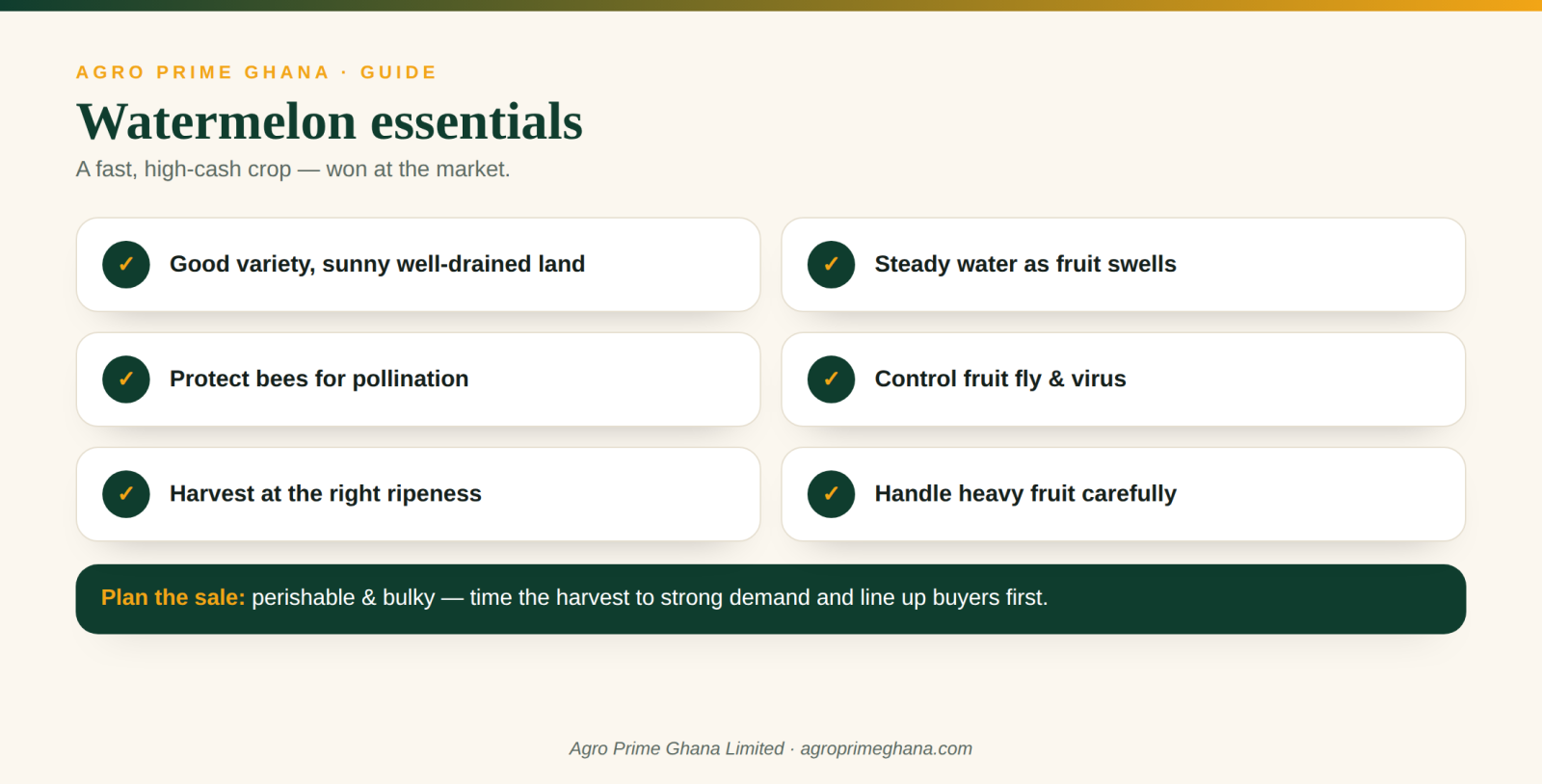
Watermelon is a fast, high-cash crop — often ready in around two to three months — with strong demand for a refreshing fruit. Grow a good variety on well-drained, sunny land with steady water, and ensure good pollination (bees) for well-formed fruit. The keys to profit are market timing and handling: the fruit is perishable and bulky, so plan your buyer and selling window (festive and hot-season demand is strong) and handle the heavy fruit carefully. Watch for pests like fruit fly and aphid-borne viruses.
Why watermelon is a strong cash crop
Watermelon's appeal is speed and cash. It is fast-maturing, often ready in around two to three months, so it turns land and money into income quickly — a big advantage for farmers wanting a rapid return or a crop that fits a short window. Demand is strong and reliable: in Ghana's hot climate, sweet, refreshing watermelon sells briskly to households, markets, roadside sellers, juice makers and event caterers, with demand spiking in hot periods and around festivals and celebrations. The fruit is high-yielding and can be high-value when good, well-sized, sweet melons hit a strong market. Together these make watermelon one of the better quick cash crops available. The catch is that it is perishable, heavy and bulky to transport, and can glut a local market if everyone harvests at once, so the reward goes to farmers who grow good fruit and, just as importantly, plan where and when they will sell it.
Varieties, land and planting
Watermelon starts with choosing a good variety and the right field. Select a variety suited to your market and conditions — some are larger, some smaller and sweeter, some more disease-tolerant or better travelling — using good-quality seed (often hybrid seed for uniform, high-quality fruit). Watermelon needs warm, sunny conditions, well-drained soil, and plenty of space for its sprawling vines, so choose an open, sunny, well-drained field and prepare it well, planting at the recommended spacing to give the vines room. It dislikes waterlogging, which causes disease and poor roots. Plant into warm soil at the right time so the crop grows fast and, ideally, matures into a period of strong demand. Good seed of a suitable variety, on sunny, well-drained, well-spaced land, gives the crop the vigorous start it needs to produce heavy, quality fruit in its short season.
Water, feeding and pollination
Watermelon is a thirsty, hungry, insect-pollinated crop, and three things drive good fruit:
- Steady water. Watermelon needs consistent moisture for good growth and fruit development, especially as fruits swell; irrigation is often essential, particularly in the dry season. (Water management near maturity also affects sweetness and cracking.)
- Good feeding. It responds to fertile soil and balanced feeding for strong vines and well-filled fruit.
- Pollination. Watermelon depends on insect pollination, mainly by bees, to set well-formed fruit; poor pollination gives few, small or misshapen melons. Protecting and encouraging bees (and avoiding harming them with careless spraying) is genuinely important to yield.
Getting water, feeding and especially pollination right is what turns a healthy field of vines into a heavy crop of large, well-shaped, sweet melons.
Pests, diseases and care
Watermelon faces several pests and diseases that need managing to protect the crop and its appearance (which matters for a fruit sold on looks). Key threats include fruit flies, whose larvae ruin fruit from inside; aphids, which spread damaging virus diseases; and fungal diseases such as downy and powdery mildews and other leaf and fruit diseases, worse in humid or wet conditions. Left unmanaged these reduce yield and spoil the fruit's marketability. Control rests on the familiar integrated approach: good variety choice and tolerant varieties where available, clean well-drained fields and good spacing for airflow, crop rotation (not following watermelon or related cucurbits on the same land), regular scouting, and correct, safe use of appropriate treatments at the right time — while taking care not to harm the bees the crop depends on for pollination. Keeping the crop healthy and the fruit clean and unblemished directly affects how well and for how much it sells. Attentive, integrated pest and disease management is part of growing marketable watermelon.
The decisive factors: market timing and handling
This is where watermelon profits are truly made or lost: market timing and handling. Watermelon is perishable (it does not keep long once ripe) and heavy and bulky (expensive and awkward to transport), and because many farmers grow it, a local market can glut and prices can drop when everyone harvests together. So planning the market is essential: aim to harvest into a period of strong demand — the hot season, festive periods and celebrations lift prices — and line up your buyer or market before harvest (traders, a contract, event caterers, juice makers, or a good roadside/market outlet), knowing you must move a large volume of perishable fruit fairly quickly. Handling matters too: harvest at the right ripeness (a real skill in watermelon), and handle the heavy fruit carefully to avoid bruising, cracking and splitting, which ruin it fast, using proper loading rather than throwing melons. Because the fruit is bulky and perishable, transport and logistics to a good market are a real part of the business. A field of excellent melons sold into a glut, or bruised in transport, loses money; a decent crop harvested into strong demand and moved carefully to a ready buyer can be very profitable. Grow well, but plan the sale just as carefully.
The economics of watermelon
Watermelon can offer a strong, quick return but with clear risks. Its costs are seed (hybrid seed can be a notable cost), land preparation, water and irrigation (often essential), fertiliser, pest and disease control, and — significantly — harvesting and transporting a bulky, heavy, perishable crop. Against modest-to-moderate costs and a short season, a good crop sold into strong demand can be very rewarding given watermelon's high yield and brisk sales. The main risks are all on the market and handling side: gluts crashing prices, perishability forcing quick sales, transport costs and damage, and pollination or pest failures reducing the crop. These are managed by timing the harvest to strong demand, arranging buyers in advance, handling and transporting the fruit carefully, and protecting pollination and crop health. Because the fruit must be sold quickly and in volume, watermelon rewards farmers who treat the market and logistics as seriously as the growing. Know your costs, plan your selling window and route to market before planting, and watermelon is one of the better short-term cash crops a Ghanaian farmer can grow.
Common mistakes to avoid
- No market plan, harvesting a bulky, perishable crop into a glut with no ready buyer.
- Ignoring pollination, so poor bee activity gives few, small or misshapen fruit.
- Careless handling, bruising, cracking or splitting heavy fruit that then spoils fast.
- Harvesting at the wrong ripeness, sending under- or over-ripe melons to market.
- Irregular watering, giving poor growth, low sweetness or cracked fruit.
- Neglecting fruit fly and virus control, spoiling the crop and its appearance.
Frequently asked questions
Is watermelon farming profitable in Ghana?
How long does watermelon take to grow?
Why is pollination important for watermelon?
How do I sell watermelon profitably?
What pests and diseases affect watermelon?
Does watermelon need a lot of water?
How do I know when to harvest watermelon?
Do I need to irrigate watermelon in the dry season?
The bottom line on watermelon farming
Watermelon is one of the best quick-cash crops a Ghanaian farmer can grow — fast to mature, high-yielding, and briskly demanded as a cool, sweet fruit in a hot country. Growing it well means a good variety on sunny, well-drained, well-spaced land, steady water and feeding, healthy pollination by bees, and attentive control of pests and diseases like fruit fly, aphids and mildew that would otherwise spoil the crop and its all-important appearance. But watermelon's profit is decided as much at the market as in the field: because the fruit is perishable, heavy and bulky, and local markets glut easily, success depends on timing the harvest into strong demand — the hot season and festive periods — arranging buyers in advance, and handling and transporting the fruit carefully. Grow good melons, protect your pollinators, and plan the sale as seriously as the crop, and watermelon rewards the farmer with a fast, strong return few crops can match in so short a time.
Grow a fast, high-cash crop
Agro Prime Ghana Limited runs a hatchery and agribusiness in Kasoa. Quick cash crops like watermelon diversify income and reward good planning. Talk to us about building a resilient, profitable farm: book a visit or message WhatsApp (+233 24 915 1503).