
The same live bird can sell for GH₵75 to GH₵80 in a quiet month and for more than GH₵100 when Christmas, Easter or Eid lifts demand. A farm that places all of its birds on one day has to sell them into whichever of those months arrives, all at once. Staggered placements are a way of choosing your calendar instead of letting the calendar choose you.
This guide explains how to spread placements across the year, what that does to your income and your cash, and where the plan tends to go wrong. The sums are illustrations built from the figures we work with in Kasoa, not forecasts for any particular farm.
Why one big batch is a single bet
Placing 1,000 birds in one go feels efficient. You buy feed once, schedule one clean-out, and arrange one sale. The trouble is that all of your income then depends on one date. If the batch runs slow, or the market softens in the week you sell, the year's cash waits on the same few days.
There is a second risk that many new operators only notice after it happens. Disease does not read a calendar. A problem that reaches a batch in its fourth week touches every bird in it at once. If that batch is your only income for the season, you have nothing else to lean on until the next placement. Spreading placements will not stop disease, but it means no single outbreak decides your whole year.
A staggered plan does not require a large farm. It requires a clear list of dates, a realistic gap between them, and enough cash to keep that gap, which is what the rest of this guide tries to put in place.
The rhythm of one placement
A standard batch takes six to seven weeks to reach market weight, which is about 2.3 to 2.55 kg live. Payout follows the final sale within days, and the whole cycle from placement to payout runs about eight weeks, clean-out included. That gives you a clear unit to plan around. Each placement produces its own sale window roughly eight weeks after it starts, and every other decision in this guide hangs from that number.
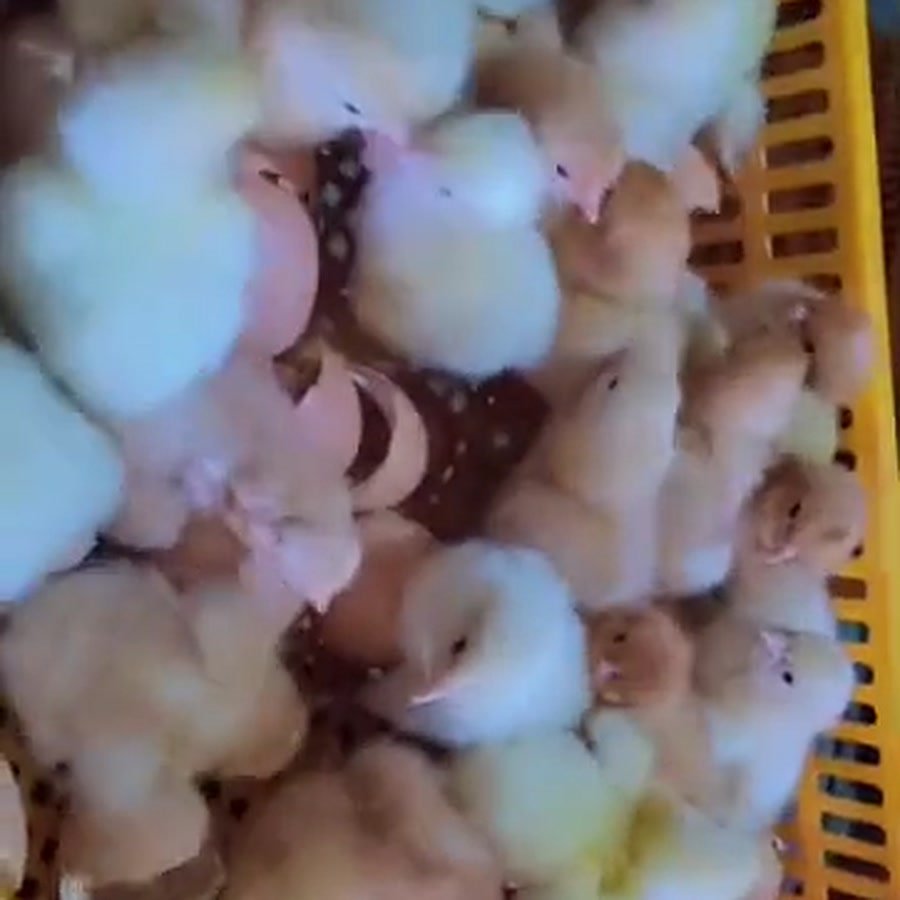
The hatchery runs a hatch every Thursday at 7:00 in Kasoa, so a weekly rhythm is a natural way to plan. You do not have to place every week. You do have to decide how far apart your placements sit, because that choice sets how often cash goes out and how often a sale lands.
Weights decide when a batch is really ready. Birds that are short of market weight in week six need another week, and that moves the sale window. Weigh a sample at the same point each week, so the market-ready date rests on what the birds actually weigh rather than on the date on the calendar.
A calendar for three houses
Take three houses, each set to place 1,000 chicks. Placing them two weeks apart, on Thursdays in weeks one, three and five, gives you three sale windows instead of one. The table sketches that plan. Market-ready dates use the six to seven week range, and payout assumes about eight weeks from placement to cash.
| House | Placed in | Market-ready | Payout (about) | Birds to sell at 3 to 5 per cent mortality |
|---|---|---|---|---|
| House A | Week 1 | Weeks 7 to 8 | Week 9 | 950 to 970 |
| House B | Week 3 | Weeks 9 to 10 | Week 11 | 950 to 970 |
| House C | Week 5 | Weeks 11 to 12 | Week 13 | 950 to 970 |
Compare that with a single placement day. Instead of 2,850 to 2,910 birds leaving in one month, roughly 950 to 970 leave in each of three windows about two weeks apart. At the quiet-month price of GH₵75, each window is worth about GH₵71,000 to GH₵73,000 in gross sales, before any cost comes off. The practical effect is a steadier stream of money to pay for feed, labour and the next placement, rather than one large receipt that has to stretch across months of costs. That is the real benefit of the calendar, and it is easy to undervalue until a cash gap shows up.
Notice what the table does not show. It does not show the staff time that each sale window takes, from weigh-in to loading, and that time does not stack neatly when two windows fall in the same fortnight. A sale planned in advance, with the buyers, the transport and the weigh-in agreed the week before, is far easier to run than one arranged at the last minute. Work out how many people a sale takes before you plan a third house.
The cost side spreads the same way, and that is where many first-time plans get caught out. Each placement needs roughly GH₵65,600 to GH₵71,600 of batch capital for 1,000 birds, using feed at member and list prices. Three placements across five weeks therefore ask for roughly GH₵196,800 to GH₵214,900 on three separate dates, instead of the same sum on one day.
What happens when one batch runs late? Its sale window slides, and the next placement may need to slide with it, or it will sell into the same weeks as the batch ahead of it. This is why the gap matters so much. A two-week gap leaves a week or so of room for a delay. A one-week gap leaves almost none.
Sketch the calendar before the chicks
Our partner page is the place to test a placement date against the cash it needs and the sale prices you expect. The batch calculator there lets you run that check before you commit. If you want to see the operation first, a farm visit can be arranged Monday to Saturday from 7am to 6pm. Open the calculator or read the partner details.
Choosing the gap between placements
Two weeks is an example, not a rule. The right gap depends on how long a house needs for clean-out and restocking, how much capital you can put out at once, and how many sale windows you can handle. A gap shorter than your clean-out time is not really a gap, because the house is still busy when the next flock is due.
Sale capacity matters as much as cash. Each window needs buyers lined up, transport on the day and a clean weigh-in. Three windows in one month are harder to handle than one, even when the total bird count is the same, so the gap you choose should leave room for the sales you can actually make.
A wider gap smooths the year further but leaves houses idle or stretches the calendar. A narrower gap bunches sales and cash. Most farms end up somewhere in the middle, and the best interval is usually the one that matches how quickly you can sell and how quickly you can refill, not the one that looks neatest on paper.
Cash sets the floor. If you cannot find roughly GH₵65,000 to GH₵72,000 for a placement without borrowing against the batch ahead, the gap is too short for your position, whatever the calendar says. Plan the first two placements around the cash you hold, and treat the third as a stretch rather than a promise.
Reading the calendar against the market
Staggering pays because prices move with the calendar. Quiet months sit around GH₵75 to GH₵80 a live bird. Christmas, Easter and Eid take prices above GH₵100. If one of your three windows lands on a festive peak and the others fall into quieter months, you earn a blend of prices rather than one price, and the year steadies. Our Christmas broiler market guide for Ghana covers what the festive window looks like from the farm side.
Be careful not to plan around a peak as though it is certain. Prices in a festive month can come in below the figure you hoped for, and a quiet month can hold firmer than expected. Plan the calendar around ranges. A placement that only works at the top of the range is a placement that will disappoint.
A useful habit is to write down, each year, which weeks were quiet and which were festive for your own sales, then compare that with the market figures. Your own buyers and your own sale dates are the real test of the calendar. A farm that keeps that record will see its calendar improve every year.
Where a staggered plan goes wrong
Counting the calendar from the placement date rather than the sale date is the most common mistake. A farm sets a placement, adds the growing period, and assumes the birds will be ready for a festive window that actually closed a week earlier. Work backwards instead. Choose the sale window you want, subtract six to seven weeks of growing, and make sure the house is cleaned and rested before that placement day.
Clumping money is the second mistake. Teams that plan staggered sales often buy feed for all their batches in one visit because it feels efficient, and that ties up cash and storage for weeks. Buy feed in step with each placement instead. For how cash moves through a single batch, from chicks to payout, our guide to poultry cash flow and break-even in Ghana goes through the sequence step by step.
The third mistake is treating the calendar as fixed. Hatch dates, feed deliveries and the weather all move, and rainy spells or the dry, dusty harmattan can change how a house behaves in its first weeks. Build a few days of slack into each placement, and move the next one only when the current batch has actually cleared.
Staggering spreads risk, it does not remove it
A later placement can still fail. Mortality of 10 to 20 per cent is a poor-management or disease outcome, and at 20 per cent it can erase the profit of the whole cycle. Spreading batches means one bad cycle does not decide your year, but each bad cycle still costs its chicks and feed. No calendar guarantees a sale price either. If someone tells you that staggering locks in a monthly return, treat that as a warning sign, not a feature.
Keeping the calendar honest
A staggered plan is only as good as its records. For each house, write down the planned placement date and the actual one, along with the planned market-ready date and the real one. After two or three cycles those gaps tell you more than any projection. If every batch runs a week late, your interval is too short for your clean-out, or the growing period is longer than the plan assumes.
The partner reports work the same way. Each Thursday brings a photo, a weight, the feed used and the mortality count for the batch, so the calendar is checked against real figures every week rather than once at the end. A plan that is checked weekly can be corrected while there is still time to change it. Keep the records short enough that you will actually fill them in, because a complete record kept for three weeks beats a perfect one abandoned in week four.
Track mortality by placement, too. If the birds placed in week five lose more than those placed in week one, the calendar may not be the cause. Look at the feed batch, the weather during that cycle and the routine on those days before you change the dates.
Your first staggered calendar
Start small if this is new. A first plan with two placements, two to three weeks apart, teaches you more about your clean-out and your buyers than a plan for five houses on paper. Once two cycles have run on time, add the third placement and widen the calendar only as far as your cash and your sales allow.
Write down what each cycle taught you before you place the next. Note which dates held, which slipped, and why. That short list is worth more than any projection when you decide the gap for the following year.
If you want the numbers for a specific placement before you commit, the partner page lays out the profit-share model, the reporting and the payment route. Payments only go to the Agro Prime Ghana Limited company account, and the written agreement is signed before any chicks are placed.
To see how the hatchery side of this works from start to payout, read how the hatchery partnership model works in Ghana.


