
Ask the person selling you an investment one question before anything else: what did my last cedi actually buy? If the answer is a growing balance on a phone screen, a dated promise, or a list of people who joined before you, you are not looking at a business. You are looking at a record that someone else keeps and controls.
This article is about two arrangements that can look alike from the outside. One is a Ponzi scheme, which pays earlier investors with money from later ones. The other is a profit-share, where you back a real activity and get paid from what that activity earns. We run a profit-share ourselves, so weigh what follows with that in mind. We have tried to treat our own offer the way we would want a stranger to treat it: warning signs first, and every claim checked against the numbers.
What a Ponzi scheme actually does
A Ponzi scheme pays earlier investors using money from later investors. The payments look like returns, and they often arrive on time, which is why these schemes can run for months or even years. Nothing in those payments depends on a product being sold, a crop being harvested or a bird being fed. The only figure that has to keep rising is the number of new people paying in.
The collapse is simple arithmetic. When new deposits slow down, the payments stop, and the people who joined last lose most or all of what they put in. A few earlier investors who withdrew in time walk away with what looks like a profit, but much of it was other people's principal. Versions of this pattern have surfaced in Ghana under different names, and they keep returning because the early payments are real cash that looks exactly like income.
Not every scheme looks shabby from the outside. Some have a proper office, a branded shirt, a printed brochure and a WhatsApp group with hundreds of members. A physical presence tells you the business exists. It does not tell you where the cedis for your return come from, and that is the only question that really matters.
The fixed-return promise
The most reliable warning sign is a return that does not move. Real businesses that sell birds, eggs, feed or building materials have good months and bad ones. Feed prices shift between seasons. Disease can hit a house without warning. Buyers pay late. An offer that promises the same figure every month, whatever the market does, is describing a payment schedule rather than the result of any trade.
Watch the wording closely. A return stated as a fixed percentage per month, or a guaranteed amount for every cedi deposited, is the usual shape. Sellers sometimes soften it with words like "targeted", "projected" or "expected". If the money still lands on a set date no matter what happens on the ground, the softer word changes nothing. The Securities and Exchange Commission has warned the public against schemes that promise fixed returns, and that warning deserves to be taken literally rather than treated as a formality.
A promise of guaranteed profit is not a sign of a strong business. It is a sign that the seller has decided the risk should belong to you.
Why the two get confused
Both models pay people for putting money in, and both borrow the same vocabulary: return, growth, payout, partner. A brochure can describe a scheme and a genuine profit-share in almost identical language. That is why the comparison has to rest on what sits underneath the words. Who owns the activity? Who carries a loss? Where does the cash physically go?
A useful test is to ask who would still be paid if the activity stopped tomorrow. In a scheme, the honest answer is often the earliest investors, paid from whoever joined after them. In a profit-share, payouts depend on sales that have actually happened, so an activity that stops produces no further payouts. Those are very different pictures, and neither one depends on how confident the seller sounds.
The other signs that usually arrive together
Fixed returns rarely travel alone. Look for a cluster of signs, because any single one may have an innocent explanation, while a cluster is much harder to explain away.
Recruitment rewards come first on most lists. If you earn more for bringing in a cousin, a church member or a colleague, money is flowing from the new people to the old ones. Pressure to reinvest is the next sign. A seller who wants you to roll your returns straight back in, before you have seen a single payout from a real activity, is buying time for the structure to keep going.
Then look at the payee. Money sent to a personal mobile money number, or into an individual's bank account, rather than to a named company account, makes it hard to trace where the funds went. A genuine operator can tell you which company account receives payments, and that name should appear in the paperwork.
Documents matter too. A scheme that offers nothing in writing, or a single sheet that is vague about what you own and what happens if the business fails, has skipped the hardest part of the deal. Ask who signs the agreement and whether you will receive a copy. Finally, notice how the seller handles difficult questions. Reluctance to show a site, a batch or the people who run it, or a sudden turn to personal stories when you ask about numbers, tells you more than any brochure.

What a real profit-share has to show
A profit-share is a different arrangement. You are backing a specific activity, and what you receive comes from what that activity earns after its costs are paid. That means the operator can lose money on your behalf, which is exactly why a genuine profit-share has to be specific, written and checkable.
At Agro Prime Ghana, the batch-partnership model is built around one farm activity: a broiler batch that we raise and sell. Partners finance a batch from 500 birds, with 1,000 recommended, under a written profit-share agreement signed before the chicks go into the house. Capital is returned first. Profit is then split as the agreement states. Every Thursday, partners receive a photo, the flock weight, the feed used and the mortality count, so the activity can be watched while it runs rather than only after it ends.
Hatching happens every Thursday from 7am in Kasoa, with a 98% average hatch rate, and chicks are delivered to all 16 regions. Farm visits run Monday to Saturday, 7am to 6pm, so you can see the house, the birds and the records for yourself. Partners living abroad get a live video walk-through and can send money by international transfer.
Reading a profit-share agreement
A written agreement is where vague promises become specific, so read it slowly. Start with the definition of costs. A good agreement lists what is deducted before profit is calculated, such as chicks, feed, vaccines, labour and utilities, and it says whether any management fee is taken. If that list is open-ended, the profit can always be made to disappear.
Next, look at losses. The agreement should say who bears a shortfall, how mortality is treated, and whether capital is returned when a batch sells below cost. Vague language here is the most common source of disputes in informal arrangements, and it is usually the part a seller would rather not discuss.
Then check timing and payment. The agreement should name the paying company, the payment method and how many days after the final sale payouts are made. Ask what happens if you want to leave early, and whether that exit has to wait until the batch is finished. The batch agreement we use returns capital first, sends reports every Thursday and pays out days after the final sale. Compare any offer, ours included, against these same questions.
Reading the two side by side
The table below puts the two models against the questions a careful reader should ask. It is a simplified picture, and some legitimate businesses will sit awkwardly between the columns. Use it as a checklist for any offer you receive.
| Question | Typical fixed-return scheme | Typical profit-share agreement |
|---|---|---|
| Where does the return come from? | New deposits, or an activity you cannot inspect | What a named activity earns after its costs |
| What happens after a bad result? | Payments continue until inflows stop, then they collapse | The payout shrinks or stops, as the agreement says |
| Is the return fixed? | Yes, usually stated as a monthly figure | No, it depends on real costs and sale prices |
| What proof do you receive? | A balance on a screen, or dated promises | Records on a set schedule, such as weekly reports |
| Where is the money paid? | Personal accounts or wallets | The company account named in the agreement |
| Is there a written agreement? | Often none, or a vague sheet | Signed before any money is placed |
Read the table from the bottom up if that helps. The paperwork and the payee are the easiest things to check, and a seller who resists either is telling you something. The return itself is the hardest to verify, which is why the other rows matter so much. They are what let you see the activity while it is still happening.
Test the offer against real numbers first
Before you decide on any batch, open the calculator on the partner page and enter your own assumptions. Try a realistic mortality rate and a quiet-month sale price as well as a festive one. If the result only looks good in the best case, you have learned something useful. Use the partner calculator to see how the cost and price figures in this article combine.
Honest arithmetic for a single batch
The figures behind a broiler batch are not secret, and they are not a promise either. A day-old Cobb 500 or Ross 308 chick costs from GH₵20 at our hatchery. Each bird eats about 4.2 kg of feed from day one to market. At the GAPFA member price of GH₵400 to GH₵410 for a 50 kg bag of starter, feed works out at roughly GH₵34 per bird if you apply the starter price across the whole cycle. That is a simplification, because grower feed is priced differently, but it shows why feed is more than half of the total batch cost.
Brooding heat, litter, vaccines and vitamins, labour and utilities add about GH₵12 per bird. Those costs put break-even in a typical batch at roughly GH₵70 to GH₵81 per bird. Quiet months tend to sell live birds at around GH₵75 to GH₵80, so the margin in those months is thin. Christmas, Easter and Eid can push prices above GH₵100. Mortality is the other lever, and it moves the result more than most readers expect.
In a normal cycle the typical net profit is GH₵12 to GH₵20 per bird sold. Taken at face value, that is GH₵12,000 to GH₵20,000 across a 1,000-bird batch, on capital of roughly GH₵65,000 to GH₵80,000 from chick to market. This is a calculation built on typical figures. It is not a forecast for your batch, and a single quiet month can change the picture.
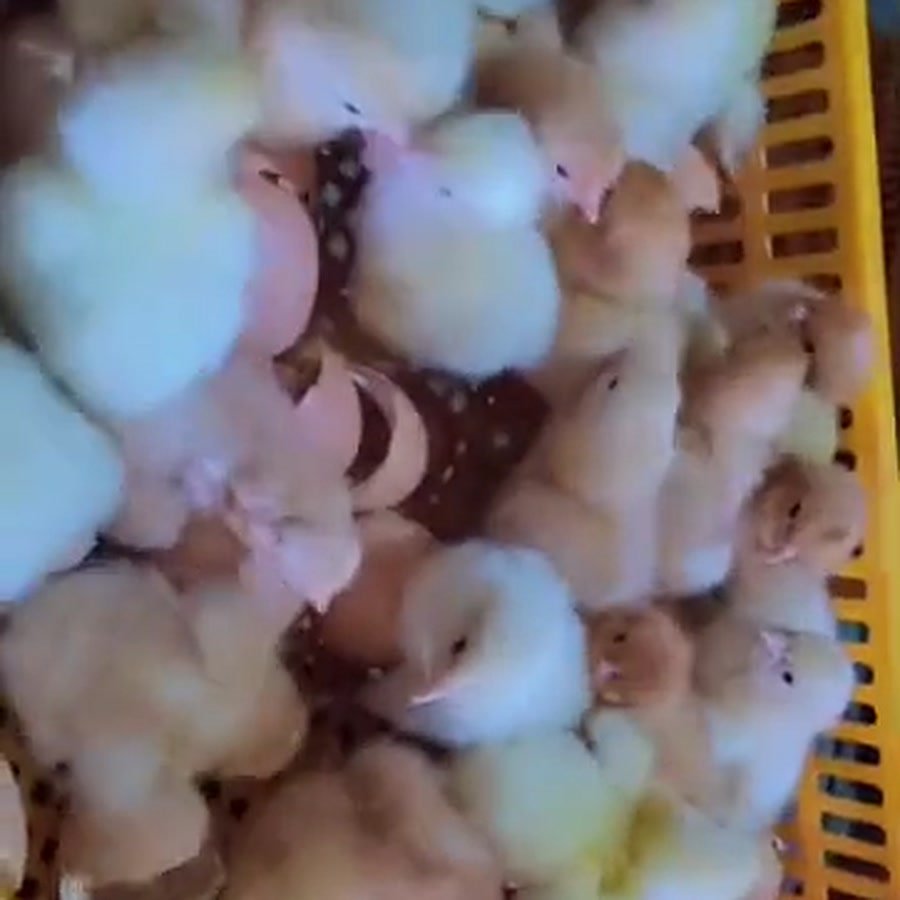
Mortality is the number that breaks plans
A well-managed house typically loses 3–5% of its birds. Poor management or disease can push losses to 10–20%, and at the top of that range the loss can wipe out the whole cycle's profit. No honest operator can promise you a return that survives a bad batch. If the offer in front of you promises one, the promise is the warning.
Questions to ask any operator, including us
Ask for the agreement before any money moves, and read the sections on losses and early exit as carefully as the sections on profit. Ask which company account receives your payment, and check that the account name matches the company named in the contract. Ask what happens if a batch sells below break-even, and whether the answer is written down or only spoken across a table.
Then ask to see the operation. A serious operator should welcome questions during a farm visit, and should be willing to answer the same questions again in writing. The partnership WhatsApp line is +49 151 68495881, in English or German, and the general email is support@agroprimeghana.com.
If you are new to batch farming, read our guide to day-old chicks in Ghana first, so the chick cost and placement timing make sense before you look at any return figure. Our guide to whether broiler farming is profitable in Ghana covers the same arithmetic from the farmer's side.
If you have already paid someone
Stop adding money first, however convincing the next payout sounds. Then gather everything you have: any agreement or photo of paper, every mobile money transaction reference, bank slips, screenshots of messages, and the names and numbers of the people you dealt with. Keep them in one folder, and do not delete the messages, even when you feel embarrassed about how you came to pay.
Next, put your questions in writing. Ask the recipient what the money was used for, what the activity is, and when you will get your capital back. A reply that refuses to answer, or that asks for more money before releasing your payout, is a finding in its own right. Consider reporting to the Securities and Exchange Commission, and speak to a lawyer if the amounts are significant. Recovering funds from a failed scheme is slow, and the earlier you document what happened, the stronger your position.
Before you pay anyone
The rule is simple even when the details take work. Money that goes into a real activity should be traceable to that activity, documented in writing and paid to a company account you can verify. Returns that arrive regardless of results, promises in fixed percentages, and payouts routed through people you are asked to recruit are the markers of a scheme, whatever the brochure calls itself. A genuine profit-share can disappoint you. What it should never do is hide the bad news.
When you are ready to look at our batch terms, the full plan, the agreement and the calculator are on the partner page. Read the loss sections first.
For the wider model behind batch partnerships, read how the hatchery partnership model works in Ghana.


