
Feed is more than half of what goes into a broiler batch. A grower who cannot pay for feed cannot raise birds, which is why so many outgrower schemes open with a promise to supply chicks and feed. The promise is real in some schemes and vague in others, and the difference usually sits in the paperwork rather than the sales pitch.
An outgrower scheme is an arrangement in which a company or cooperative supplies inputs and technical support to independent growers, then buys the finished produce at an agreed price. The model appears in crops and in poultry across Ghana. It appeals to newcomers because it tackles two of the hardest barriers at once: the capital needed for inputs, and a buyer willing to take the product when it is ready.
We run a day-old-chick hatchery in Kasoa, so our view of this model comes from the chick and feed end of the chain. We are not an outgrower scheme ourselves, and the batch partnership we offer is a different arrangement, which we describe near the end. If you are still deciding whether broiler farming suits you at all, our guide on whether broiler farming is profitable in Ghana covers the basic case before you look at any scheme.
The benefits, stated plainly
The first benefit is access to inputs without a large upfront payment. A grower who could not buy 1,000 chicks and 4.2 tonnes of feed in one go may be able to start with a smaller flock when the scheme supplies inputs on credit. That is useful, but the credit has a price, and it is usually recovered from the final sale.
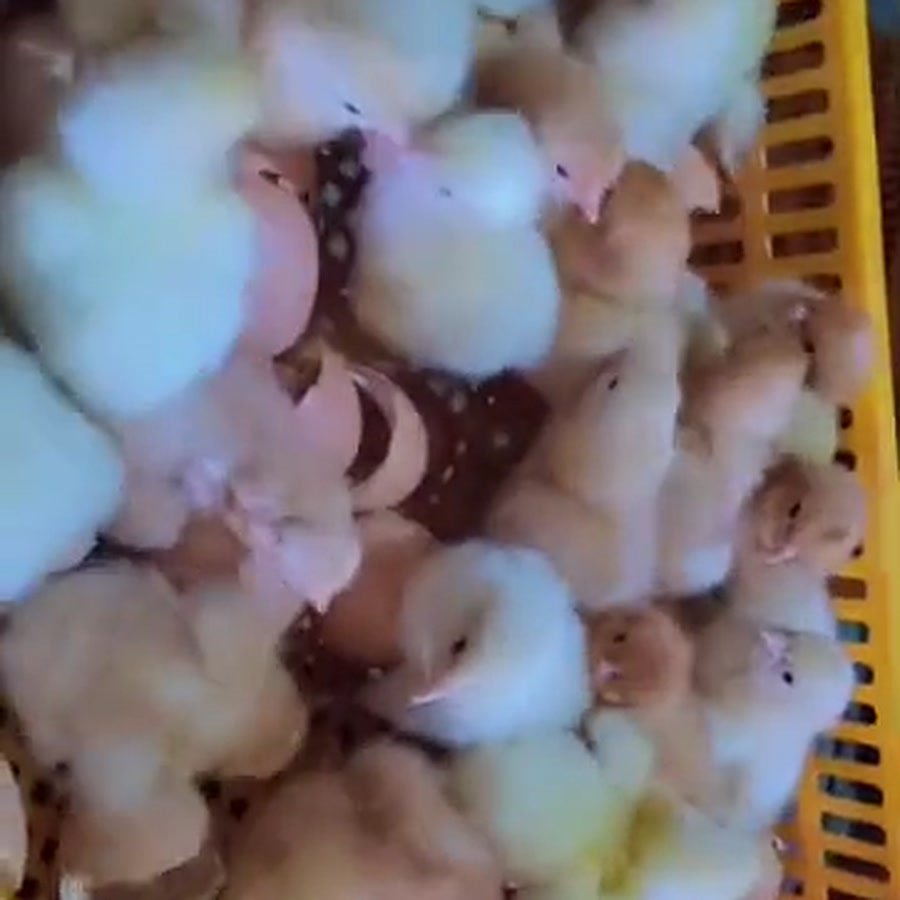
A second benefit is a buyer. Many independent growers find raising birds easier than finding a steady market for them. A scheme that collects finished birds on set days removes much of that worry, particularly in months when traders are slow to call back.
Technical support is the third. A field officer who visits the house, checks the brooder set-up and helps with vaccination timing can shorten the learning curve considerably. The value of that help depends on whether the advice is sound and on whose interest the officer is paid to protect.
A fourth benefit is less often mentioned: the discipline of records. A scheme that asks for weekly weights and mortality counts teaches a new grower to keep the numbers that decide profit. Growers who never kept such records often learn their own costs only when the final statement arrives.
How a cycle usually runs
A typical cycle starts with placement. Chicks and feed arrive at the house, ideally with a written schedule for vaccination and field visits. The first weeks are the most sensitive, because brooding and early feeding set how evenly the flock grows. Weekly weights are the scheme's way of checking that growth, and they are also the grower's best early warning.
Through the middle weeks the work is steady rather than dramatic: litter, ventilation, water, feed intake and a daily count of dead birds. A scheme with a good field team will spot a drop in intake before the house does. A scheme with a thin team tends to react only once the losses show up in the statement.
Collection and settlement come last. Birds are weighed, graded and loaded, and deductions are applied. This is the step where most disputes happen, which is why the earlier steps need to be written down. A grower should have seen every weight and every count before the truck arrives.
What the benefits are worth
Put a figure on each benefit and it becomes clearer what the scheme is really selling. Credit for chicks and feed is worth the markup or interest you pay on it. A guaranteed buyer is worth whatever price discount the buyer expects in return. Field advice is worth what it saves you in losses, which is why the mortality clause matters so much.
None of this makes an outgrower scheme a bad idea. It means the benefits need to be weighed against the costs in the same document, using the same sums, before anyone signs.
Outgrower schemes suit some growers better than others. A grower with a house already built, dependable labour and the time to check the flock every day is in a stronger position than someone starting from bare land with no experience. A newcomer should expect a slower first cycle and should ask whether the scheme offers training before the first chick arrives.
The fine print
Deductions and the final statement
Most outgrower income is what remains after deductions. Inputs, transport, drugs, a levy for the field officer and sometimes a share of any loss may all come off the sale. The headline price on the contract tells you little on its own. Ask for a sample final statement from an earlier cycle, showing the gross sale, every deduction and the net paid.
If the scheme cannot show one, do not assume the arithmetic works in your favour. A scheme that is proud of its figures usually has them ready to hand over.
Who owns the inputs and the birds
Ask who owns the chicks, feed and equipment until the birds are sold. In some schemes the grower holds the birds but the scheme holds title to the feed and drugs. In others the scheme keeps the birds and the grower works as a paid manager of the house. Each arrangement changes who can be blamed for a loss and who can sell the output elsewhere.
The answer also settles what happens if the scheme stops buying or falls behind on payment. Ask in writing whether you may sell to another buyer in that case, and how many days late a payment can be before that right applies.
Mortality and who carries it
A well-managed house usually loses 3% to 5% of birds in a cycle. Poor management or disease can take losses to 10% or 20%, and at 20% the profit from the whole cycle can disappear. Some schemes charge the grower the full input cost of every dead bird. That puts almost all of the disease risk on the grower, including losses that began with the chick or the feed.
Ask who decides whether a bird died of disease, neglect or a weak chick. If the scheme is the only judge, the grower is left arguing with the party that holds the records.
Exclusivity and rejected lots
Many schemes ask growers to sell only to them. That can be reasonable when the scheme provides real inputs and a dependable collection schedule. It becomes a problem when the buyer can reject a batch for weight or condition at its own grading, with no witness and no appeal, and then pay a lower price for the rejected lot.
Warning signs in any outgrower offer
Walk away from any scheme that promises a fixed monthly return, a guaranteed profit per bird or a payout that does not depend on the sale price. Real poultry income moves with feed prices, mortality and the market. A scheme that cannot explain its own cost sheet, or that asks for payment into a personal account, has not earned your trust, however good the sales talk sounds.
Disputes and who settles them
Every scheme says it will treat growers fairly, and most mean it. The question is what happens when a grower and the scheme disagree about a weight, a count or a deduction. Some agreements name a joint meeting, a neutral third party or a particular court. Without a clause like that, the grower usually has to argue from memory against the party holding the records.
Ending the arrangement
Find out how the scheme can end, and what happens to birds, feed and equipment on the day it does. Some schemes keep equipment or inputs you paid for. Others keep a claim on the proceeds of the next cycle. Agree the exit terms before the first chick arrives, while both sides still want the deal.
Put the two models side by side
If an outgrower offer still leaves questions open, lay its terms next to the batch model we use. The partner page has a calculator where you can change the chick price, feed price, mortality and sale price, and it sets out the written profit-share terms in full. A visit to the Kasoa farm, Monday to Saturday from 7am to 6pm, shows how chicks and feed are handled before any money moves.
Working through one batch
The table shows what a 1,000-bird batch costs on paper, using only the figures in our fact pack. Most outgrower disputes begin at this stage, when a grower sees the cost build-up for the first time and works out which party it belongs to.
| Item | Basis | Amount (GH₵) |
|---|---|---|
| Day-old chicks | 1,000 birds at GH₵20 | 20,000 |
| Feed at GAPFA member prices | 4,200 kg, or 84 bags at GH₵400 to GH₵410 | 33,600 to 34,440 |
| Feed at De Heus list prices | 4,200 kg, or 84 bags at GH₵451 to GH₵472 | 37,884 to 39,648 |
| Other costs | About GH₵12 per bird | 12,000 |
| Total with GAPFA feed | Chicks, feed and other costs | 65,600 to 66,440 |
| Total with De Heus feed | Chicks, feed and other costs | 69,884 to 71,648 |
| Sales at 4% mortality | 960 birds at GH₵80, a quiet-month price | 76,800 |
| Sales at 20% mortality | 800 birds at GH₵80, a quiet-month price | 64,000 |
The table leaves out labour, transport, vaccines beyond the standard set and any interest on credit. Those costs are real. A scheme that bundles them into one deduction should show each one separately, with a receipt or a reference for each.
Two things stand out. The cost of chicks and feed is set the day the batch starts, while the sale price is not. And at 20% mortality the sales line falls below the cost of the batch, so whoever carries the bill is out of pocket before any deduction for the scheme's own services. The feed line charges all 4,200 kilograms even though dead birds eat less, which keeps the example on the cautious side.
Our typical break-even sits between GH₵70 and GH₵81 per bird, and a quiet-month price of GH₵80 leaves little room for error. Peak months at GH₵100 or more, around Christmas, Easter and Eid, are where a good cycle usually comes from. A flat price that ignores the calendar hands that upside to the buyer. For the timing side, our piece on poultry cash flow and break-even in Ghana works through how money moves across a cycle.
Keep a folder for every cycle. Save the placement schedule, each weekly note, every deduction line and the final statement. A grower with a complete folder can check the arithmetic in an afternoon. A grower without one usually has to take the scheme's word for it, and that is a weak position to negotiate from.
Questions to put to any scheme
Before you join, ask for written answers to a short set of questions. Who sets the chick and feed prices, and when do they change? How is mortality measured, and who signs the count? What is the grading method, and who may witness it? When is payment due, and through which channel?
Then match each answer to the clause that says it. A verbal answer is not a term, and a term you cannot find in the document is not one the scheme is bound by.
A good scheme answers these in writing without fuss. If the answers arrive by phone, or change each time you ask, treat that as the answer.
Ask, too, how the scheme plans for a weak market. If prices fall in a glut month, does the scheme delay collection, cut the price, or pass the loss to growers through a holding charge? Each choice moves money between the two parties, and the grower is rarely consulted before it happens.
Keeping the benefits and the fine print together
Outgrower schemes can give a grower access to inputs, a buyer and advice that would take years to build alone. The benefits are real when the terms match the promise. The fine print is where that match gets tested, in the deduction schedule, the mortality clause, the grading method and the exit terms.
Our own model is a batch partnership, not an outgrower scheme. Readers finance a batch of at least 500 birds, with 1,000 recommended. The profit is shared under a written agreement signed before placement, capital comes back first, and weekly photos, weights, feed and mortality figures arrive every Thursday. Payments go only to the Agro Prime Ghana Limited company account.
Hold both models up to the same sums, and do not sign anything until the numbers make sense on paper.
Review the batch partnership terms
For a wider comparison of partnership models, read how the hatchery partnership model works in Ghana.


