Walk through a village near Dodowa and you will still find chickens scratching around compounds the way they always have, half-wild, tough, and slow to grow. Now walk onto a small farm keeping Noilers and you see something in between: birds that forage like local fowl but grow and lay far better. That middle ground is exactly why dual-purpose breeds have taken off in Ghana.
Noiler and Kuroiler are not commercial broilers and they are not village fowl. They sit deliberately between the two, and understanding that is the key to keeping them profitably. Farmers who treat them like Cobb broilers are disappointed, and farmers who treat them like free scavenging fowl leave money on the table. Managed for what they actually are, they are one of the best options for the peri-urban and rural farmer in Ghana today.
Quick answer
Noiler and Kuroiler are hardy dual-purpose crossbreeds that give reasonable meat and a good number of eggs, tolerate semi-scavenging, and resist disease better than delicate commercial broilers. They grow slower than broilers but sell into the premium local-chicken market. Best for farmers who want a tough, flexible bird rather than a fast one.
What "dual-purpose" really means here
Dual-purpose means the bird earns from both meat and eggs instead of specialising in one. A Cobb broiler is bred to pack on breast meat fast and lays poorly; a Lohmann layer is bred for eggs and makes thin eating. Noiler and Kuroiler give you a cockerel worth selling for meat and hens that lay a respectable number of eggs, so a single flock produces two income streams.
That flexibility suits how many Ghanaians actually farm. You are not committing everything to a six-week meat sprint or a year-long egg operation. You keep a hardy flock, sell cockerels and surplus birds as meat, sell or eat the eggs, and let hens brood replacements. It is a more forgiving model, and forgiveness matters when you do not have a climate-controlled house.
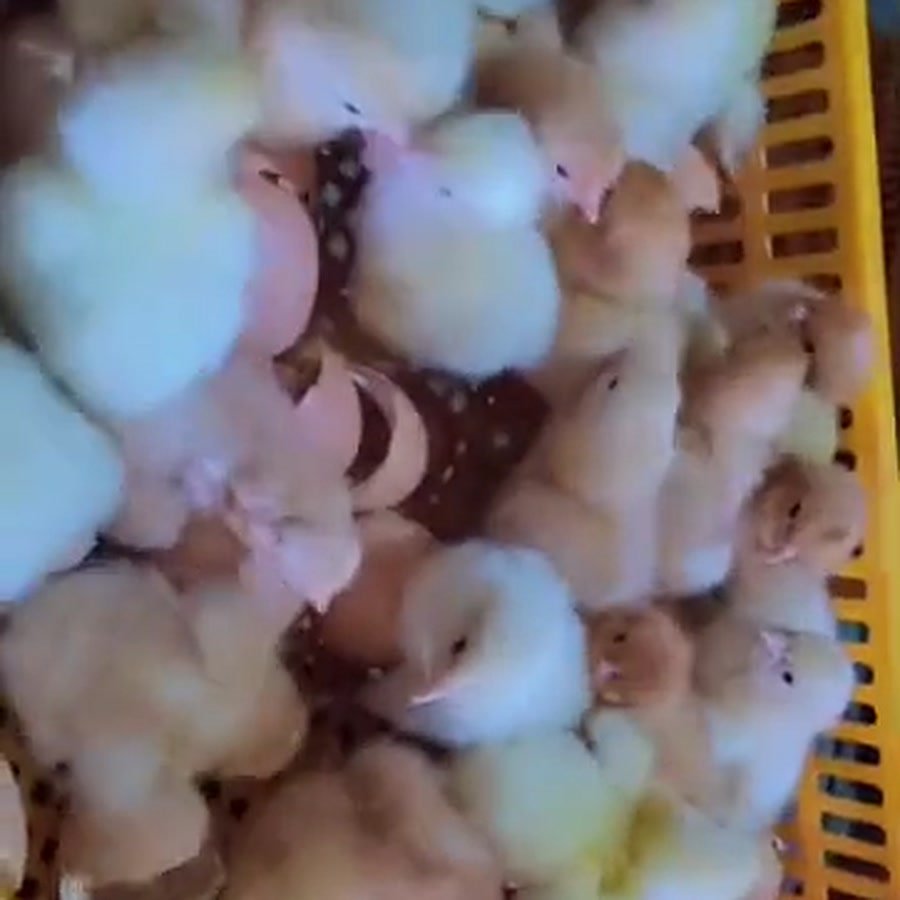
Noiler vs Kuroiler: are they the same?
People use the names loosely, but they are different crossbreeds developed with the same idea. Both aim for hardiness, decent meat, and useful egg numbers, and both handle semi-scavenging and local conditions far better than commercial broilers. In practice, on a Ghanaian farm, the management is nearly identical, and either will serve the same purpose. What matters far more than the label is buying genuine stock from a reliable source, because plenty of "Noilers" sold cheaply are just mixed local crosses riding on the name.
| Trait | Noiler / Kuroiler | Commercial broiler (Cobb/Ross) |
|---|---|---|
| Growth speed | Slower, steady | Very fast (~6 weeks) |
| Eggs | Good, useful numbers | Poor |
| Hardiness | High, disease-tolerant | Low, needs tight management |
| Scavenging | Yes, forages well | No, must be fed fully |
| Feed dependence | Lower, can supplement | Total, on formulated feed |
| Market | Premium local chicken | Cold store, caterers |
| Best housing | Simple, open, semi-free | Controlled, intensive |
The real advantage: the local-chicken premium
Here is where dual-purpose birds pay. Many Ghanaian buyers pay noticeably more for "real chicken", the firmer, tastier local-type bird, than for imported frozen or intensively raised broiler. For weddings, funerals, festive dishes and discerning households, that texture and taste matter, and a Noiler or Sasso fills that demand where a soft commercial broiler cannot. If you sell into that market, slower growth is not a weakness, it is the product.
The flip side is honest: they take longer, so your feed and time per bird go up, and you must have that premium buyer, otherwise you are just raising a slow chicken for a fast-chicken price. Before you scale, work through how to sell chicken and eggs in Ghana and confirm the market is there. It also helps to compare against the alternatives in our best chicken breeds for Ghana guide before committing.
Feeding and managing them without wasting the advantage
The trick with dual-purpose birds is to feed enough to grow them well while still using their ability to forage. Give a good starter for the first weeks, just like any chick, because early nutrition still builds the frame. After that, you can supplement with kitchen and farm scraps, greens and controlled scavenging to bring your feed cost down, which is a big part of why these birds make sense on a tight budget. That balance is the difference between a profitable Noiler flock and one that costs as much to feed as broilers with none of the speed.
Hardy is not invincible
Dual-purpose birds resist disease better, but they are not immune. Newcastle disease in particular still sweeps through village and semi-scavenging flocks and can wipe them out. Vaccinate against Newcastle and follow a basic programme; hardiness buys you margin, not a pass. See the poultry vaccination schedule for Ghana.

Who should actually keep Noiler and Kuroiler?
These birds suit the farmer who wants flexibility over speed. If you are in a peri-urban or rural area, cannot run a tightly controlled broiler house, want lower feed dependence, and can reach buyers who value local chicken, they are an excellent fit. They are also a gentler entry point for beginners, since they forgive the small management errors that would flatten a commercial broiler flock.
They are the wrong choice if you are chasing pure meat volume for a cold store on a fixed six-week cycle, or pure egg output for a table-egg contract. For those, specialised broilers and layers win. Match the bird to your goal. If you are just starting out, our guide on starting a poultry farm on a small budget in Ghana shows how dual-purpose birds fit a lean beginning.

Start with genuine stock
The biggest way farmers get burned with Noiler and Kuroiler is buying cheap "look-alike" crosses that are really just mixed local fowl sold under the name. You pay for the breed's advantages and get an ordinary chicken. Buy from a hatchery that can vouch for the parent stock.
Frequently asked questions
How long does a Noiler take to reach market weight?
How many eggs will a Noiler or Kuroiler hen lay?
Do Noiler and Kuroiler still need vaccination?
Can I keep them fully free-range?
Thinking about dual-purpose birds?
Agro Prime Ghana supplies genuine dual-purpose and other day-old chicks from Kasoa with nationwide delivery, and we will help you decide whether Noiler-type birds fit your market and setup. Book a visit at /book, chat with us on WhatsApp at +233 24 915 1503, or email support@halaalfarmsghana.com to plan your flock.