
Between a quiet month and the Christmas run, the live price of one broiler can move by GH₵20 or more. Our quiet-month price sits around GH₵75 to GH₵80 a bird, and the festive peak goes past GH₵100. The festive number is the one people remember. The quiet one tells you what bad timing does to your money.
This guide is about the downside. Most investment conversations spend their minutes on the upside and give the risk a sentence at the end. Here we reverse that. The question is simple: if things go wrong in a particular way, how much of my money is gone, and what is left? The honest answer is not one figure. It is a small set of figures, one for each way a batch can go wrong, and you should be able to read each one without a calculator on the table.
Start with the capital at risk
For a 1,000-bird batch, the capital from day-old chick to market is roughly GH₵65,000 to GH₵80,000. That range covers chicks at GH₵20 each, about GH₵12 a bird for brooding heat, litter, vaccines and vitamins, labour and utilities, and the feed, which is the largest line and more than half of the total.
Being at risk is not the same as being lost. A good sale returns more than the capital, a poor one may return less, and the gap between those two results is what this guide measures. Treat the full amount as exposed, then work out how much of it you could lose without changing how you live.
Write the lower figure on a page and circle it. That is the amount that leaves your account and goes into the house on placement day. Everything else in this guide describes what can happen to it. If that single number would strain you, the rest of the analysis is academic, and the batch is simply too large for you right now.
Mortality decides how many birds you sell
You pay for every chick you place, but you only sell the birds that reach market. A well-managed house keeps mortality at 3 to 5 per cent. Poor management or disease can push it to 10 to 20 per cent. At 20 per cent, the profit from the whole cycle can be wiped out, so the figure to watch hardest is the one most people ignore until it is too late.
The arithmetic here is simple, and it is worth doing with your own pencil. Moving from 4 per cent mortality to 20 per cent means 160 fewer birds reach market out of 1,000 chicks. At a quiet-month price of GH₵78, that is roughly GH₵12,500 in sales that never happen, while every chick was still paid for at placement.
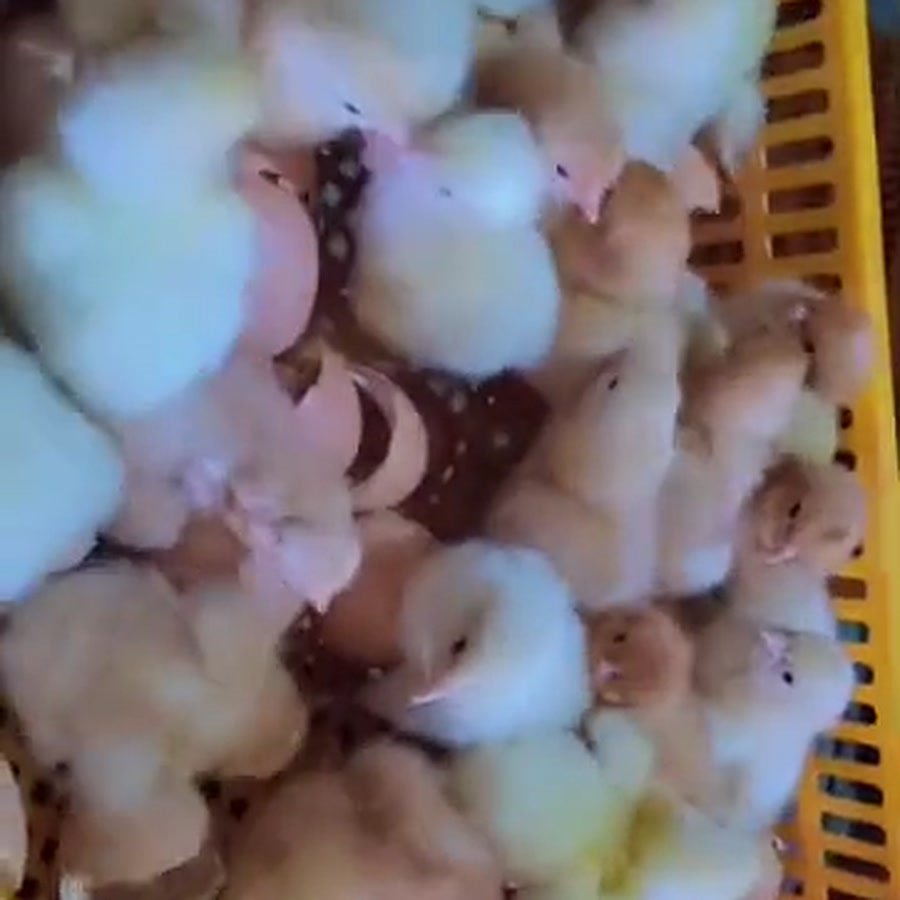
Ask the farm, or any operator, how they handle disease before you pay anything. Which vaccines go in on day zero? Which are added for a particular flock? What happens when birds start dying in the second week, and who makes that call? Written answers to those questions tell you far more than any projection, because a projection can only assume the birds behave. If you want to see how the hatchery handles birds from the first day, the hatchery page walks through the process.
Price is the part nobody controls
A quiet month gives you around GH₵75 to GH₵80 a live bird. Christmas, Easter and Eid can lift it past GH₵100. You do not choose the month your birds reach market, and the timing of placement is itself a decision that determines which market you meet. The Christmas broiler market guide shows how the festive run shapes prices from one season to the next.
Break-even in a typical batch sits around GH₵70 to GH₵81 a bird. When the quiet price is only a little above that, a modest drop in price, or a handful of extra deaths, is enough to turn the result negative. That is why the quiet month is the test to run first, not the festive month you hope for.
Think of the gap between the quiet price and break-even as your margin. A margin of a few cedis per bird leaves little room for a month with weak demand, a late sale or a few extra deaths in the third week. When you read a plan, ask for the margin in cedis per bird, rather than relying on a vague feeling that the batch should do well.
Feed is the quiet threat
Feed runs to about 4.2 kilograms per bird, day old to market. At the GAPFA member price of GH₵400 to GH₵410 for a 50 kilogram broiler starter bag, that is roughly GH₵33 to GH₵34 a bird. At the De Heus list price of GH₵451 to GH₵472, the same bird costs roughly GH₵38 to GH₵40. On a 1,000-bird batch, that gap is somewhere between GH₵4,300 and GH₵6,000 of capital, and it is committed before you have sold a single bird.
Feed prices do not sit still between suppliers or across seasons. You can plan for the price on the day you place the batch, but you cannot take it back once the cycle starts. Ask which price your plan uses, and check whether it is the list price or a member price that may not apply to you.
Check the cost sheet line by line
Before you trust any total, read each line on the cost sheet and ask what it covers. A line that says operations with no detail is a question waiting to be asked. Chicks should name the breed, the price per bird and the vaccines given on day zero. Feed should name the brand and the bag price used in the plan. Other costs should be listed, not folded into one figure.
Then ask what is missing. Delivery, vet visits if a flock needs one and the work of clean-out between batches are all real costs. A sheet that leaves them out has not finished its job. Ask for a corrected version, and keep both copies so you can see what changed.
Run one batch through six outcomes
The table takes one 1,000-bird batch and changes two things at a time: how many birds survive, and what they sell for. Capital is held at GH₵65,600, the low-end figure using the GAPFA feed price, unless the row says otherwise. Every row is an illustration built from the figures above. None of them is a forecast.
| Scenario | Birds sold | Price per bird | Revenue | Capital | Result |
|---|---|---|---|---|---|
| Base: 4% mortality, quiet month | 960 | GH₵78 | GH₵74,880 | GH₵65,600 | GH₵9,280 |
| Festive: 4% mortality, Christmas price | 960 | GH₵100 | GH₵96,000 | GH₵65,600 | GH₵30,400 |
| Rough: 10% mortality, quiet month | 900 | GH₵78 | GH₵70,200 | GH₵65,600 | GH₵4,600 |
| Poor: 20% mortality, quiet month | 800 | GH₵78 | GH₵62,400 | GH₵65,600 | −GH₵3,200 |
| Poor but festive: 20% mortality, Christmas price | 800 | GH₵100 | GH₵80,000 | GH₵65,600 | GH₵14,400 |
| Feed high: 4% mortality, quiet month, De Heus feed | 960 | GH₵78 | GH₵74,880 | GH₵71,648 | GH₵3,232 |
Read the rows as a map rather than a verdict. The base row comes out at about GH₵9,300, or roughly GH₵9.70 per bird sold. That is below the GH₵12 to GH₵20 typical net profit in a normal cycle, because this sheet uses a single quiet price and holds every cost flat. Real batches have their own costs, so treat the simple sheet as a guide to direction.
Holding costs flat is a simplification. Birds that die early eat less feed, which softens the feed line a little. A disease outbreak, on the other hand, brings vaccines, treatment and extra labour that the table leaves out. Those two effects do not cancel neatly, which is why the table is for direction and not for prediction.
Two things stand out. The same birds produce very different results depending on the month they sell in. And the poor quiet-month row is the only one that loses money, while the feed-high row sits close enough to zero that a bad week of feed buying would be felt. Nothing in that table is dramatic. That is the point.
If you want another case, change one thing at a time. Keep the price and mortality the same and move only the feed price, or keep the mortality and move only the sale price. Changing several things at once makes it hard to see which one did the damage, and each row here is built so you can read its effect on its own.
Put your own downside into the calculator
Open the calculator on the partner page and set the mortality and the sale price yourself. Start with 20 per cent mortality in a quiet month, because that is the row you most need to understand. When the result looks right to you, check it against the written batch plan. If you want to see the house with your own eyes, book a farm visit any day from Monday to Saturday between 7am and 6pm.
What the agreement has to answer
A written profit-share agreement should answer the question this guide keeps returning to: what happens when the batch does not do well? The offer we make states that capital comes back first, out of the sale, and that profit is then split as agreed. That order matters. Ask what it means in practice if the sale does not cover the full capital, and ask who carries any shortfall. The answer belongs in the signed document before placement, in plain words, and not in a conversation after the birds have gone.
Ask about reporting as well. Partners receive a photo, a weight, the feed used and a mortality count every Thursday. That means a bad trend shows up in week three, while you still have options, rather than only at payout. A report that arrives only at the end tells you the result after the fact, which is useful for next time but no help for this batch.
Check the payment route too. Payments go only to the Agro Prime Ghana Limited company account. If anyone asks you to send money for a batch into a personal account or a personal mobile money number, stop, and confirm with us at support@agroprimeghana.com before you transfer anything.
A guaranteed return is a red flag
Ghana's Securities and Exchange Commission warns the public against schemes that promise fixed returns. Be cautious of any plan that promises a set payout every month, or a return that holds regardless of what happens to the birds. A real batch carries real risk, and an honest offer tells you so before you pay. If someone tells you the risk does not exist, that is the moment to walk away.
Decide what you can afford to lose
Once you know the downside, set your limit before you look at the upside. Use money you could do without for the full cycle, which runs about eight weeks from placement to payout. Add whatever buffer your own bills require. A batch is not a savings account, and it should never be the place where you keep money for rent, school fees or a medical bill.
Size the first placement so that a poor row in the table is uncomfortable but not damaging. If you cannot describe that outcome to yourself in a sentence, the batch is too big for now. A smaller start, such as a 500-bird batch with roughly GH₵32,800 in capital, lets you live through one full cycle and check our reports against what you see with your own eyes.
Then plan for a second bad outcome, not just the first. The mortality row is one event. Real life brings others: a family emergency that needs cash in the middle of a cycle, or a sale that lands later than planned. Your money plan should still hold together if the batch arrives late, because lateness is one of the outcomes a careful investor expects.
Talk the figures through with someone who has no stake in the batch, a family member or an accountant. They will ask the questions you would rather skip, and those are the ones worth answering before any money moves.
Take the downside with you
The question is not whether a batch can make money. It can, and the festive row shows what that looks like. The question you need to answer is whether you can absorb the row where it does not. Work that out first, with your own figures in hand, and only then look at the batch itself.
Test the downside on the partner page
For a worked plan built on the same numbers, read how to write a poultry business plan for Ghana.


