
Ghana eats far more chicken than it raises. The figures usually quoted from MoFA and USDA put national demand for broiler meat near 400,000 tonnes a year, local production around 58,000 tonnes, and imports above 180,000 tonnes. Those numbers do not add up neatly, so read them as orders of magnitude rather than a ledger. They still point in one clear direction.
The question of exporting comes up as soon as a farm starts to grow. Someone asks whether the surplus could go abroad, whether neighbouring countries would buy, and whether a hatchery could ship chicks across a border. These are reasonable questions. This article tries to answer them with the figures we have, and says plainly where we have no figures at all.
Three different things people mean by export
When people ask about exporting poultry, they usually mean one of three things. They may mean live day-old chicks sold to a farm across a border, live adult birds, or dressed and frozen meat. Each one has different costs, different risks and different buyers, and a plan that mixes them up tends to fail in the details.
Live birds are heavy and perishable, and they can spend hours on a truck before they reach a market. Dressed meat avoids that problem but needs slaughter to a proper standard, a cold chain and a buyer who can pay for both. Chicks are light but fragile. Each form asks a different question, so this article takes them in turn rather than pretending one answer covers all three.
Start with the surplus, because one is not visible
Nothing in the figures points to a surplus of broiler meat. Imports of more than 180,000 tonnes sit alongside domestic production of around 58,000 tonnes, which means imports alone are more than three times local output. A country in that position is buying the chicken it cannot yet raise at home.
That does not rule out a future export trade. It does mean the first buyer for Ghanaian broiler meat is still the Ghanaian consumer, and the first competitor is the imported frozen product that already fills the cold stores. Any export plan that skips the home market starts from the wrong end.
I could not find reliable, current export volume figures for Ghanaian broiler meat, and the figures this article works from do not include any. So it does not put a number on exports. Anyone who quotes one without a named source is guessing.
Live chicks are a different problem
Day-old chicks look like the easiest product to send anywhere. They are small, they are light and they are in demand. In practice they are among the most fragile things a hatchery sells. A chick that has just left the incubator needs warmth, air and feed soon after arrival, and a long journey across a border multiplies every risk on that list.
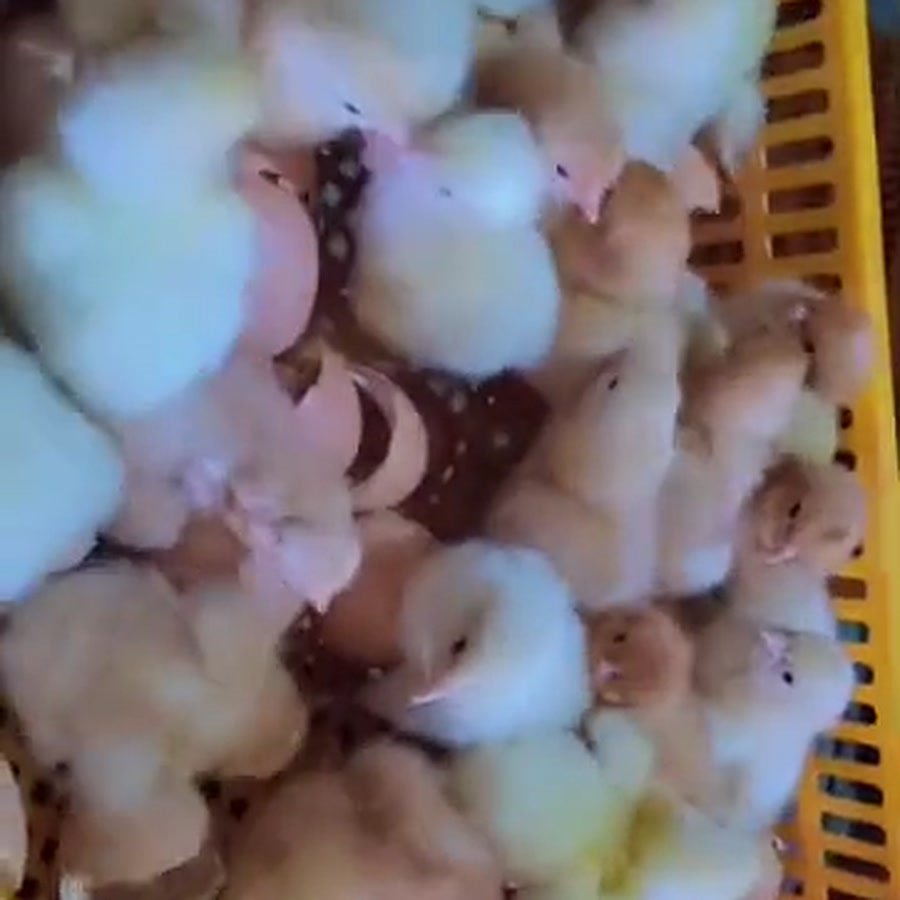
At Agro Prime, we hatch every Thursday from 7:00 in Kasoa and deliver to all 16 regions of Ghana, which is already a logistics job that keeps us honest. Our chicks start from GH₵20, and details are on our day-old chicks page. Moving chicks within Ghana already takes planning for timing, weather and vehicles. A foreign market adds veterinary paperwork, longer transit and a second set of health rules, and each one is a point where a shipment can fail.
Consider a simple case. A shipment of 1,000 chicks crosses a border and arrives with losses higher than a well-managed farm would accept at home. The buyer pays for the birds that survived, the seller carries the cost of those that did not, and the paperwork for the next shipment starts again from zero. Repeat that a few times and the trade is finished before it has had a chance to pay.
Health status is the hard gate. Export markets usually ask for proof of disease status, and an outbreak in your area can close a route overnight. Vaccinating on day zero and keeping logs helps, but a vaccine record is not an export certificate. Check the current requirements of any destination with the relevant authorities before you buy a single box.
Records matter here too. Keep the hatch dates, the vaccine notes and the mortality log for each batch. Any health question at a border starts with those documents, and a farm that cannot produce them loses the argument before it begins.
What the cost sheet says
Export thinking tends to start with the price abroad. It should start with the price at home, because cost decides who can afford to sell at all. Feed is more than half of the total cost of a batch, and that is where a farm feels every movement in the market.
A 50 kg bag of broiler starter sells for GH₵400–410 at GAPFA member prices and GH₵451–472 on the De Heus list. The gap between those two prices is roughly GH₵40 to GH₵70 a bag. A bird eats about 4.2 kg from day-old to market, so the same gap moves the feed cost of each bird by only a few cedis. Small per bird, large across a thousand birds, and very large across a year of volume.
| Cost line | Per bird (GH₵) | Basis |
|---|---|---|
| Day-old chick | from 20 | Agro Prime starting price |
| Feed | about 34 | 4.2 kg at GAPFA member starter prices (illustrative) |
| Brooding, litter, vaccines, labour, utilities | about 12 | Typical batch average |
| Simple sum before losses | about 66 | Sum of the lines above |
| Break-even per bird sold | 70 to 81 | Typical batch, with mortality included |
The gap between the simple sum and break-even is mostly mortality. Birds that die still cost money, and that cost is spread across the birds that reach market. Between a well-managed loss of 3 to 5 percent and a poor one of 10 to 20 percent, the break-even moves a long way. Any export price has to clear that number, not the cost of a chick. We covered the wider profit question in whether broiler farming is profitable in Ghana, and it is worth reading before you go further here.
The price bar is set at home too. Birds sell for about GH₵75 to GH₵80 in quiet months and GH₵100 or more at Christmas, Easter and Eid. Any export price has to beat those domestic figures once transport, cold storage, duties and plant costs are added. A buyer abroad who pays less than the local market will not get steady volume from a farm that can sell at home.
Cost the home market before you plan a foreign one
A sensible first step is a batch you can cost line by line. The calculator on our partnership page takes your feed price, your sale price and your mortality assumption, then shows the outcome for a 1,000-bird batch. Farm visits run Monday to Saturday, 7am to 6pm, if you want to see the numbers on the ground. Begin at the partner calculator.
Where a small house fits in the picture
A single house is a small supplier by any measure. A 1,000-bird batch needs roughly GH₵65,000 to GH₵80,000 of capital from chick to market. A house that runs five or six batches a year would move somewhere between 5,000 and 6,000 birds in that time, before losses. Those figures show how far a small house sits from the volume an export conversation would need.
Typical net profit in a normal cycle is GH₵12 to GH₵20 per bird sold. If a batch sold every bird it started with, which is a generous simplification, that works out to GH₵12,000 to GH₵20,000 for 1,000 birds. Losses and weather both have a say, so treat that as a ceiling rather than a plan. Profit at that scale pays for the next batch and perhaps a second house. It does not pay for a cold store, an export licence or a refrigerated truck.
What to measure before any export conversation
Before a farm talks to a foreign buyer, it should be able to say how its batches perform at home, in numbers it has written down. A broiler is ready for market at around six to seven weeks, at roughly 2.3 to 2.55 kg live. A batch that consistently reaches that weight, with mortality in the 3 to 5 percent range, has something to offer. A batch that swings between good and poor cycles does not, whatever the buyer is told.
The cycle matters as well. A placement to payout runs about eight weeks once clean-out is included, and a house can run five or six batches a year. Those are the rhythms a serious buyer will ask about. If the house cannot keep to them at home, a longer supply chain will only magnify the gaps.
Keep a simple sheet for each batch: chick numbers, dates, live weights at sale, feed bags used, deaths and their causes. That sheet is the honest starting point for any buyer conversation, domestic or foreign, and it costs nothing but discipline. If you cannot price a batch with confidence at home, you cannot price a shipment abroad.
A realistic order of work
A realistic path starts with the home market and works outward. First, supply Ghanaian buyers consistently, batch after batch, with records a serious buyer will accept. Second, build the volume and traceability a processor would need before it could consider dressed or frozen product. Third, look at regional markets only once the first two steps hold.
Neighbouring West African markets are the usual first thought, and they deserve a proper look. Whether they are open to Ghanaian poultry depends on animal health rules, transport times, duties and price, and all four change. Check the current rules for each destination with the Veterinary Services Directorate before you spend money on a route.
Value addition is the other door. Cutting, packing and freezing birds can earn more per bird than selling live, but it asks for a cold chain, a plant that meets food standards and a buyer willing to sign a volume contract. Those are real capital decisions, and a farm should take them only when the batch base is stable.
For a farm that has an export idea in mind, the practical year looks something like this. Run a few clean batches at home, keep the records, and find the weakest line in your own cost sheet. Talk to a veterinary adviser about what the destination market would require. Only then does a foreign contact deserve a serious call. Keep that order even when an eager intermediary wants to skip it.
Walk away from promised export buyers
Some schemes sell the idea of a ready foreign buyer, a secured offtake or a fixed-return poultry investment with no sign of a real trade behind it. Ghana's Securities and Exchange Commission has warned the public about fixed-return schemes. A real buyer signs a contract with volumes, prices, delivery dates and penalties, and even then the trade carries risk. If you cannot see written terms and the company account your money would go to, do not pay.
What a serious answer looks like
The short answer is that exports come later, not first. Some products may find buyers abroad under the right rules, but the home market is still short of chicken, and the figures give no reason to think otherwise. Get the batch profitable, keep the records clean, and the export question turns into one you can answer with your own numbers.
A farm that waits for the export question to answer itself usually ends up with neither the home business nor the export contract. Build the first, and the second becomes a question you can actually weigh.
If you want to test those numbers before you plan anything further, the partnership page is the place to start. The batch agreement is written and signed before placement, and reports come every Thursday. Payments only ever go to the Agro Prime Ghana Limited company account, and our partnership WhatsApp is +49 151 68495881, in English or German.
Run your numbers on the partner page
If the chick side of this question interests you, read how the hatchery partnership model works in practice.


