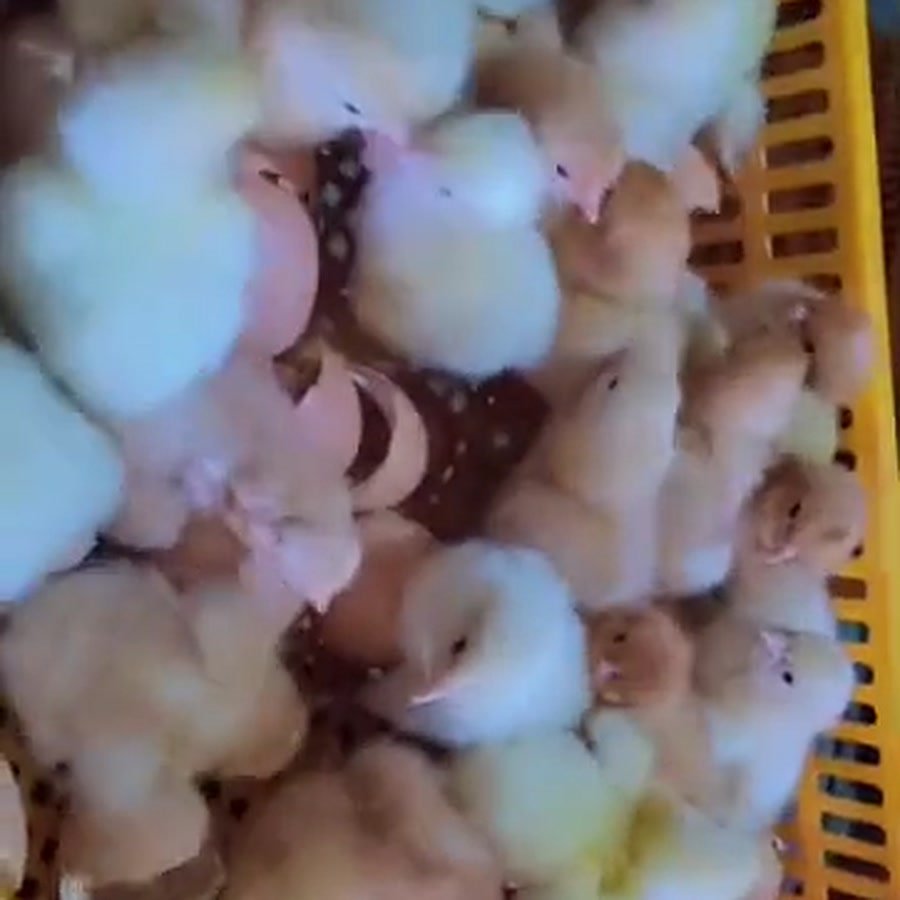
The hatch runs every Thursday at seven in the morning in Kasoa. By the time the first trays are being sorted, the eggs have done most of their work, and the crew is looking at what came out and what did not. Nobody rushes this part. A chick that leaves the hatcher weak carries that weakness into the house, and it stays with the bird through every week of the cycle.
Most buyers only see the crate at the end of that process. They judge the chick by how it looks in the box, which is a fair place to start but not the whole story. Chick quality is set by the breeder flock, the eggs, the incubation and the first hours after hatch. By the time the crate reaches you, only the last of those is visible, so it pays to know what to look for.
What a 98% hatch rate does and does not tell you
Our average hatch rate is 98%. That number tells you how many eggs set in a tray became chicks. It does not tell you how any single chick will grow, and it cannot tell you whether the bird in your hand is the strong one or the weak one from the same tray.
Think of the hatch rate as a count and chick quality as a judgement. A good hatchery makes that judgement before the crate leaves the building, but you should still make your own. The first days after delivery are where a weak chick shows itself, and a careful buyer keeps a written record of what was in the crate on arrival.
Reading a crate on arrival
You do not need a laboratory to check a crate. Look at the birds before you sign anything. You want chicks that are up on their feet and moving toward the sound of people, not huddled in a corner or lying with their heads down. Look for a fairly even spread of size. If half the crate is noticeably smaller than the rest, the eggs probably did not all hatch at the same moment, and the smaller birds often stay behind the others.

Check the navels and the feathers. A chick that has dried and closed properly looks clean, with no wet or sticky patch and no swelling. Feathers should be dry and fluffed rather than clumped. Eyes should be bright. A few birds with a dull eye or a damp navel in a large crate is not a disaster, but it is worth asking why, and worth writing down so you can raise it with the hatchery the same day. Our hatchery page explains how the incubators are run, which helps when you ask about the eggs.
Then listen. A crate of healthy chicks makes a busy, steady sound. A crate that is quiet, with flat and listless birds, has often spent too long in transit or in heat. Ask how long the chicks were boxed before they reached you, and check the box for crushing or damp.
Vaccination on day zero
Chicks from our hatchery are vaccinated at day zero. Marek's disease vaccination is the standard first step, and depending on the batch, Newcastle and Gumboro vaccines may also be given at the hatchery. Ask for the vaccination record with your order and keep the paper with the batch file. If a problem shows up in week two or three, the first question a vet will ask is what the birds were given and on which day.
A vaccine does not turn a weak chick into a strong one. It protects a healthy bird from diseases that move quickly through a house. A chick with a poor start that then meets an outbreak has two problems at once, and the combination costs far more than either would alone.
What a few points of mortality cost you
This is where chick quality shows up in the accounts. A well-managed batch usually loses 3% to 5% of its birds. A batch hit by poor management or disease can lose 10% to 20%. On a 1,000-bird placement, the gap between those outcomes is not small.
The table below is an illustrative calculation, not a forecast. It starts from 1,000 chicks placed, values each live bird at GH₵75, which is our quiet-month planning figure, and counts only the birds that reach market. It leaves out every cost, so it shows revenue alone.
| Mortality | Birds sold from 1,000 placed | Revenue at GH₵75 per bird |
|---|---|---|
| 3% | 970 | GH₵72,750 |
| 5% | 950 | GH₵71,250 |
| 10% | 900 | GH₵67,500 |
| 20% | 800 | GH₵60,000 |
The gap between 3% and 20% is GH₵12,750 in revenue. Costs do not fall when birds die. The chick, the feed eaten before the bird died, the heat and the labour are all still on the books. That is why a batch with heavy losses can erase its profit, and why a cheap chick with a poor start is rarely the saving it looks like on the invoice.
The cheapest chick is not always the cheapest batch
Chicks from an unknown source, sold below the going price with no vaccination record, are a common place for heavy losses to begin. A price that looks too good in the first week can show up later as deaths in week three. Ask for the hatch date, the vaccination record and a clear answer about where the eggs came from before you pay. None of this guarantees a result. It does give you something to check when a batch goes wrong.
From the crate to the house
Agro Prime delivers to all 16 regions, which means some chicks spend a long road journey in a box before they reach a house. Packing matters. The box should keep the birds warm without trapping heat, and it should not sit in a hot vehicle any longer than it has to. Ask how the chicks will be packed before you agree delivery, and check the box the moment it arrives. Our day-old chicks page sets out how orders and delivery run.
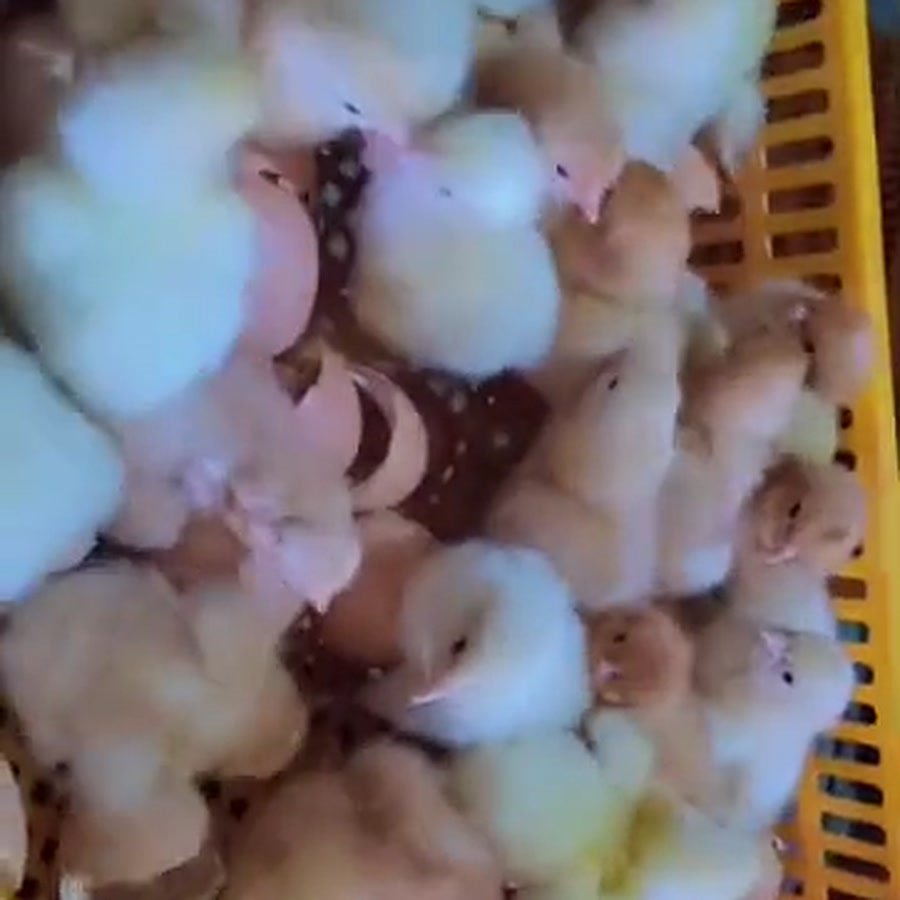
Your house has to be ready before the crate is opened. Brooding heat, dry litter, clean water and feed placed where small chicks can reach it are the first things a chick needs. In our planning figures, brooding heat, litter, vaccines and vitamins, labour and utilities together come to about GH₵12 per bird. That money buys a good start, and it is wasted if the chicks arrive to a cold, damp floor.
When the box is opened, lift the chicks out gently and count them as they go under the brooder. Compare that count with the order while the delivery driver is still there. Dip each beak into the water so the birds learn where the drinkers are, and keep them in the warm corner rather than letting them pile up in a draught. The first half hour tells you a little, and the first day tells you more.
Harmattan mornings and the brooder
Between roughly December and February, the harmattan brings dust off the Sahara and cold, still mornings along the coast. For a chick in a brooder, the dry air dries out litter faster, dust settles on feed and drinkers, and the night temperature can fall further than a day-old bird expects. Keep the brooder sheltered from draughts, but do not seal it so tight that the air goes stale.
Dust is the quieter risk. Feed left open for a morning collects grit, and chicks that peck at a dusty tray take in more than feed. Cover the feed, sweep the house, and check the drinkers twice a day. None of this is expensive. It is the kind of attention a day-old chick cannot ask for, so you have to give it.
The first week, checked every day
The first week is when you learn most about your chicks. Check the brooder at night and again in the early morning, because a chick that is chilled overnight can be lost before anyone notices. Make sure every bird can find water and feed without help. Pick up a few chicks from different corners of the house and feel whether they are warm to the touch.
Water comes first. A chick that drinks well keeps its body temperature up, and a chick that does not will fall behind the rest of the crate quickly. Place the drinkers within a few steps of the brooder, check that the water is fresh and not too cold, and keep an eye on the birds that stand away from the group. Feed comes second. Scatter a little on a clean flat tray at the start so the birds learn what it is, and top it up often rather than filling the pan in one go, which only adds waste and dust.
Count the dead birds every day and write the number down. A daily count tells you far more than a total at the end of the week. When the count begins to climb, you want to know on the same day, while there is still time to adjust the heat, the water or the feed, and to call the hatchery about what was vaccinated.
Run your own chick count through the calculator
The calculator on our partnership page works through a batch in cedis, so you can test your own assumptions and see what a change in mortality or sale price does to the result. If you would rather go through it with a person, the batch plan on the same page explains what we report every Thursday.
Where the money goes in a batch
Feed is more than half of the total cost of a batch. A 50 kg bag of broiler starter costs GH₵400 to GH₵410 at GAPFA member prices, while the De Heus list price runs GH₵451 to GH₵472. At member prices the bag works out to roughly GH₵8 a kilo. A bird that eats 4.2 kg from day one to market therefore costs about GH₵34 in feed alone.
Put the other costs beside it. The chick is GH₵20 from Agro Prime, and the other costs come to about GH₵12 per bird. Add those together and you reach the mid-sixties per bird before a single death is counted. Mortality is what turns that into a real number. Our planning break-even for a typical batch sits between about GH₵70 and GH₵81 per bird sold, so every bird lost in week four adds its share of cost to the birds that reach market.
The breakeven guide works through the same per-bird arithmetic with the cash timing added, which is often the part people leave until too late.
Feed prices do not sit still, which is why you should ask your supplier for the price on the day you buy rather than rely on a figure from last season. A bag bought at member rates in a quiet month and a bag bought at list price in a busy month can change the margin on a whole batch. Keep the receipts, and record the price paid per bag in the batch file so the next batch is planned on what you actually spent.
What to write down on the day you buy
Before you pay for chicks, write down the hatch date, the number of birds on the order, the vaccines given and the name of the person who packed the crate. Take a photo of the crate on arrival and count the birds before the driver leaves. If something is wrong, you want a record that says so on the same day, not a memory of it a fortnight later.
Keep the same habit for the feed bags, the vaccines you buy and the mortality count. A batch file that holds those records shows what the birds really cost you, and that is the figure the next batch should be planned against.
Before the next Thursday
The chick is the one part of the batch you cannot change once it leaves the hatchery. The house, the feed programme, the daily count and the timing of the sale are still in your hands, and a careful operator protects the margin in those places. Start with the crate. Look at it properly, write down what you see, and ask the same questions you would ask about any other input you are paying for.
If you want to see how a batch like this would look in your own numbers, the partnership page is the place to begin.
Open the batch partnership page
For the wider economics of a broiler house, read whether broiler farming is profitable in Ghana.


