The coconut palm is often called the tree of life, and along Ghana's coast it earns the name. A single long-lived palm yields refreshing coconut water, rich flesh for oil and copra, and husks and shells with dozens of uses — and demand for coconut water and coconut oil is booming, both at home and for export. Once established, a coconut plantation produces for decades with modest care. But coastal coconut in Ghana lives under a serious shadow: Cape St Paul Wilt disease, a lethal killer of palms that shapes how the crop must be approached. This guide covers how to grow coconut successfully in Ghana, the multiple products it offers, and how to manage its greatest threat.
Key takeaways
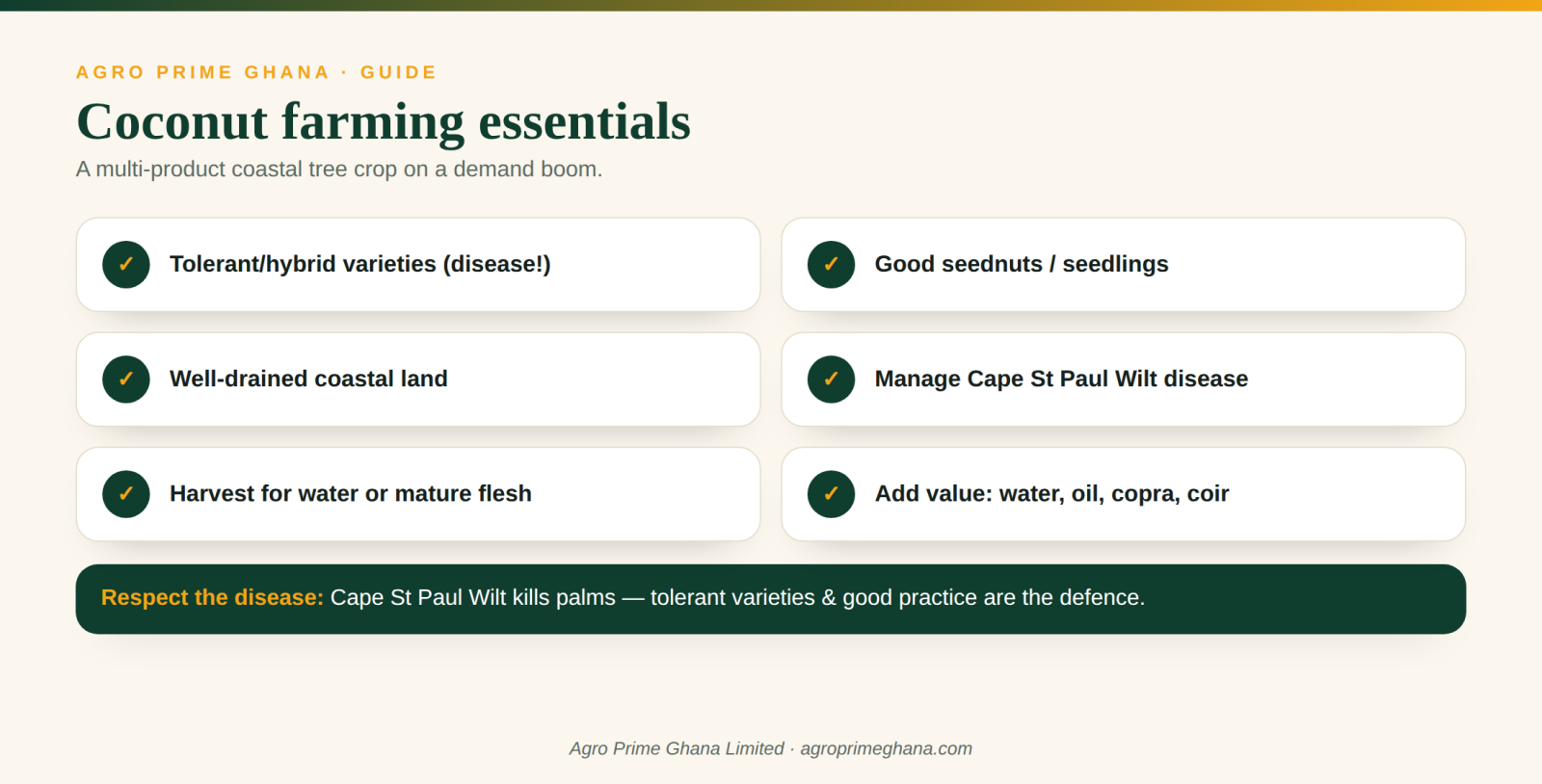
Coconut is a long-lived coastal tree crop yielding many products — coconut water, flesh, oil, copra, husk and shell — into booming demand for coconut water and oil. Plant good seedlings (dwarf and hybrid types bear earlier), establish on suitable coastal land, and manage the long crop with modest care. The defining threat is Cape St Paul Wilt disease (a lethal yellowing–type disease) that kills palms; managing it — including planting more tolerant/hybrid material and good practice — is central. A multi-product, high-potential crop.
Why coconut is a valuable crop
Coconut earns its "tree of life" reputation through versatility, longevity and rising demand. It is a multi-product crop: one palm yields refreshing coconut water (increasingly popular and high-value), rich flesh for coconut oil and copra, and husks and shells used for fibre (coir), fuel, charcoal, craft and more — so little of the coconut is wasted. Demand is strong and growing: fresh coconut and especially coconut water and coconut oil are booming in local and export markets as health-conscious consumers seek them out, giving coconut real and rising value. It is a long-lived perennial that, once established, yields for many decades — a durable asset — and it needs only modest care once mature. It suits Ghana's coastal zone, where it has long been grown. The major shadow over the crop is disease (Cape St Paul Wilt), which must be respected and managed. But for a farmer in the coastal belt, coconut is a high-potential, multi-product, long-lived crop riding a wave of growing demand for its water and oil — one of the more promising perennials available in that zone.
Varieties and planting material
Coconut farming starts with variety and planting material choices that shape the plantation's future. There are broadly tall types (large, long-lived, later to bear, traditionally grown) and dwarf types (earlier to bear, often used for coconut water and in breeding), plus hybrids (crosses combining desirable traits — often earlier bearing and, importantly, sometimes greater tolerance to disease). Choose a variety suited to your market and purpose — for instance, dwarf or hybrid types for earlier bearing and coconut water — and, crucially in Ghana, give real weight to disease tolerance given the Cape St Paul Wilt threat discussed below, since planting more tolerant/hybrid material is a key defence. Use good, healthy planting material (well-selected seednuts or seedlings) from a reliable source. Plant on suitable, well-drained coastal land at the proper spacing (palms grow large and need room), and care for the young palms as they establish. Because coconut is so long-lived, the variety and planting material you choose — especially with disease tolerance in mind — shape the plantation for decades, so this choice deserves careful thought.
Establishing and managing the plantation
Coconut is relatively low-maintenance once established, but good establishment and care improve its long productive life:
- Establish well. Plant healthy seedlings on suitable, well-drained coastal land at proper spacing, and care for the young palms — weeding, protecting, watering while establishing — through the early years.
- Weed and maintain the plantation, keeping it clean, especially while young.
- Manage fertility where appropriate, as coconut responds to good nutrition (including certain nutrients important on coastal soils) for steady nut production.
- Monitor for pests and, above all, disease, acting on any signs of Cape St Paul Wilt promptly as covered below.
Once mature, coconut demands relatively modest ongoing care and yields steadily for decades, which is part of its appeal. The main vigilance required is watching for and managing disease, since that — more than routine husbandry — is what most threatens a coconut plantation in Ghana.
The defining threat: Cape St Paul Wilt disease
Any honest guide to coconut in Ghana must center on Cape St Paul Wilt disease (CSPWD), the crop's most serious threat. It is a lethal yellowing–type disease that kills coconut palms, causing yellowing, nut drop and the death of the palm, and it has devastated coconut in parts of Ghana's coast over the years, making it the defining challenge of the crop in the country. Because it is so destructive and difficult, coconut farming in the affected zones must be approached with this disease firmly in mind. Management focuses on prevention and resilience rather than cure: planting more tolerant or resistant varieties and hybrids (a key strategy, and a major reason variety choice matters so much), following recommended good practices and phytosanitary measures (including removing and destroying infected palms to reduce spread, per official guidance), and staying alert to early signs so action can be taken quickly. Research and replanting programmes with tolerant material have been central to keeping coconut viable in Ghana. For the farmer, the practical lessons are clear: take the disease seriously, prioritise tolerant/hybrid planting material, follow official guidance and control measures, monitor the plantation, and act promptly on infected palms. Coconut remains a worthwhile, high-potential crop in Ghana — but only when Cape St Paul Wilt is respected and managed as the central risk it is.
Harvest, products and value addition
Coconut's harvest is as versatile as the crop, and how you use and add value to it shapes the returns. The nuts are harvested at the stage suited to their use — young/immature for coconut water (harvested earlier, when the water is at its best), or mature for the flesh used in oil, copra and cooking — and harvesting the tall palms safely and regularly is part of the work. From there, coconut offers multiple products and real value-addition opportunities: coconut water (fresh or processed/packaged) is booming and high-value; coconut oil and copra (dried flesh) serve strong food, cosmetic and health markets; and the husk and shell yield coir fibre, fuel, charcoal, craft materials and more. Selling fresh nuts is one option, but processing and value addition — producing packaged coconut water, coconut oil, or products from the husk and shell — captures much more of the crop's worth and taps directly into the booming demand for coconut water and oil. Even the by-products (husks, shells) that are often discarded have uses and markets. For a farmer, cooperative or entrepreneur, the strategic opportunity in coconut lies not just in growing the nuts but in using and adding value to the crop's many products, especially the high-demand water and oil. Matching your harvest and processing to the most valuable markets — riding the coconut water and oil boom — is how coconut's full potential is realised.
The economics of coconut
Coconut's economics combine a durable, multi-product, rising-demand crop with the overhang of disease risk. On costs, coconut is a long-term investment — good (ideally tolerant/hybrid) planting material, suitable coastal land, and years of care before full bearing — but relatively low-maintenance once mature, keeping ongoing costs modest. Income builds as the palms mature and then continues for decades, and the crop's multiple products (water, oil, copra, husk, shell) and booming demand for coconut water and oil give strong, diverse and rising returns, especially with value addition. The great risk to weigh is Cape St Paul Wilt disease, which can kill palms and must be managed through tolerant planting material and good practice — a real factor in planning a plantation in affected zones. The keys to coconut economics are therefore: choose tolerant/hybrid varieties and good planting material with the disease in mind, establish and manage the long-lived crop on suitable coastal land, manage the disease risk seriously, and — to capture full value — process and add value to the crop's many products, riding the strong demand for coconut water and oil. As a long-lived, multi-product crop on a rising demand wave, coconut is a high-potential earner in Ghana's coastal belt for the farmer who manages its central disease risk and reaches for its value-addition opportunities.
Common mistakes to avoid
- Ignoring Cape St Paul Wilt disease, planting susceptible material and failing to manage the crop's defining threat.
- Overlooking tolerant/hybrid varieties, which are a key defence and can bear earlier.
- Selling only raw nuts, missing the far greater value in coconut water, oil and other processed products.
- Wasting husks and shells, which have real uses and markets.
- Poor establishment or nutrition, weakening palms on coastal soils.
- Not acting promptly on infected palms, letting disease spread.
Frequently asked questions
Is coconut farming profitable in Ghana?
What is Cape St Paul Wilt disease?
How do I manage Cape St Paul Wilt disease?
What products can I get from coconut?
Which coconut variety should I grow?
How long before coconut palms produce?
Is coconut water worth focusing on?
Where does coconut grow in Ghana?
The bottom line on coconut farming
Coconut truly is a tree of life for Ghana's coast: a long-lived palm that yields a wealth of products — refreshing coconut water, rich flesh for oil and copra, and husks and shells with many uses — into demand that is booming, especially for coconut water and oil. Once established, it produces for decades with modest care, making it a durable, high-potential asset for coastal farmers. Growing it well means choosing good planting material with two things in mind — the market (dwarf and hybrid types for earlier bearing and coconut water) and, above all, disease tolerance — because the defining reality of coconut in Ghana is Cape St Paul Wilt disease, a lethal killer of palms that must be managed through tolerant/hybrid varieties, good phytosanitary practice, and prompt action on infected palms. Respect and manage that threat, establish and maintain the long-lived crop on suitable coastal land, and reach for the crop's rich value-addition opportunities in coconut water, oil and by-products, and coconut rewards the coastal farmer with one of the most versatile, high-demand and enduring crops available.
Grow a versatile, high-demand coastal crop
Agro Prime Ghana Limited runs a hatchery and agribusiness in Kasoa. Multi-product tree crops like coconut offer diverse, growing income for the coastal farmer. Talk to us about planning a resilient farm: book a visit or message WhatsApp (+233 24 915 1503).