Beekeeping is one of the most rewarding and surprisingly low-labour ways to earn from the land in Ghana. Once a hive is established and colonised, bees largely look after themselves, foraging free nectar and pollen and repaying you with honey, beeswax and other valuable products — while pollinating nearby crops for free. Start-up is modest, running costs are low, and honey enjoys strong, year-round demand. For a farmer with a quiet corner of land, beekeeping (apiculture) is a genuinely passive-leaning income. This guide covers how to start and run beekeeping in Ghana.
Key takeaways
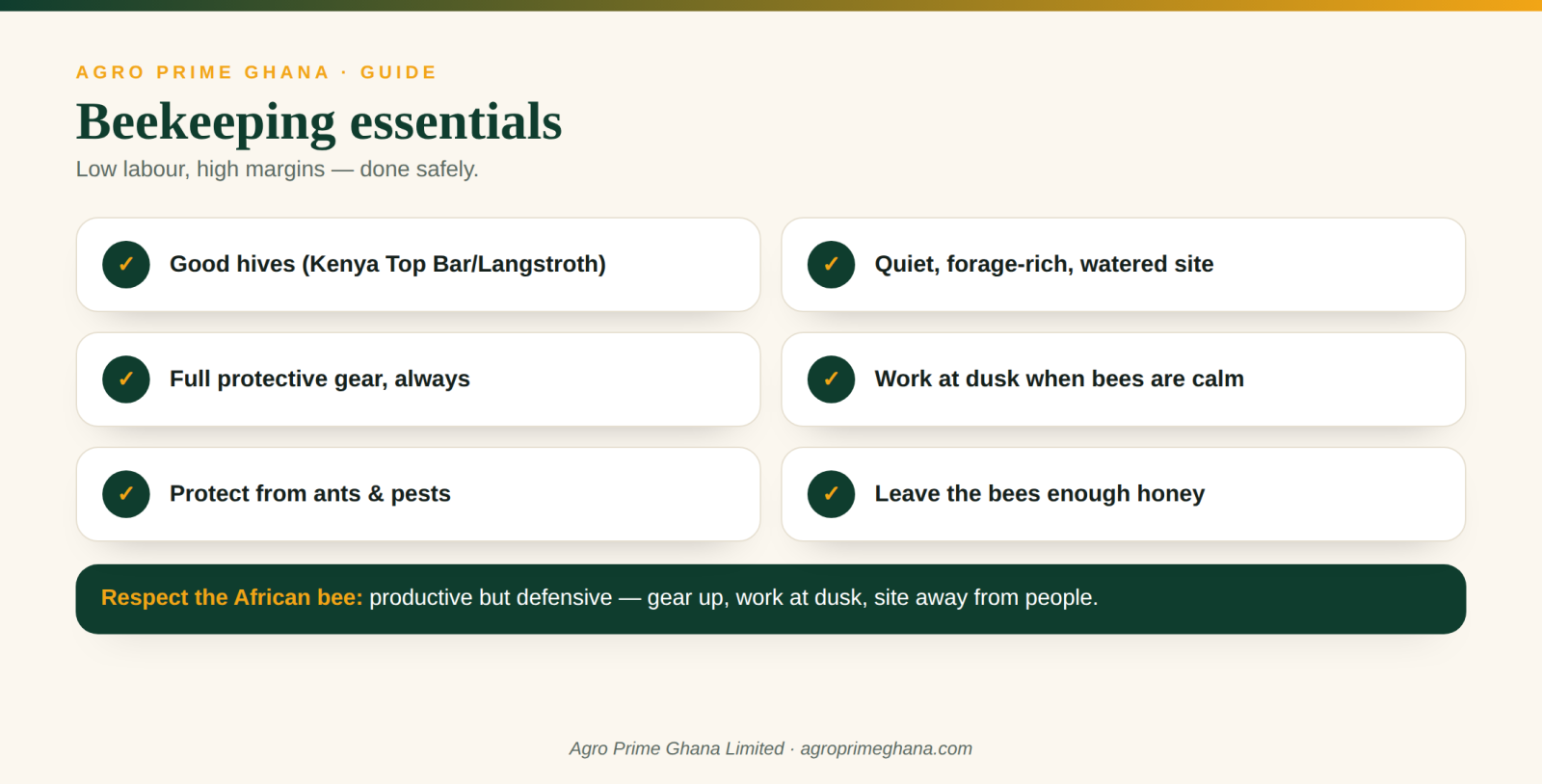
Beekeeping is low-cost and low-labour once colonies are established: bees forage free nectar and repay you with honey and beeswax. Set up good hives in a quiet, forage-rich, water-near site, attract or catch local bee colonies, and manage them lightly through the year. Ghana's African honeybees are productive but defensive, so protective gear and working at dusk are essential. Honey has strong, steady demand and excellent margins.
Why beekeeping pays in Ghana
Beekeeping has a rare combination of advantages. The daily labour is minimal — once a hive is colonised, the bees forage for themselves and need only periodic checks, so beekeeping fits easily around other farming or work. The inputs are cheap: after the hives, the bees work for free on wild and crop nectar. The products are valuable and in demand — pure honey sells strongly and steadily, and beeswax and other bee products add further income. And there is a hidden bonus: bees pollinate nearby crops, quietly boosting the yields of fruits, vegetables and other plants around your apiary. Ghana's climate and vegetation support strong honey flows, and demand for genuine, unadulterated honey consistently outstrips supply. For land-owning farmers, few ventures offer so much return for so little ongoing effort.
Getting started: hives and equipment
Your core investment is the hive. Three types are common:
| Hive type | Notes |
|---|---|
| Kenya Top Bar (KTB) | Popular in Africa: affordable, easy to build and manage, good for beginners |
| Langstroth (box) hive | Modern movable-frame hive; higher yield potential and easier honey extraction, more costly |
| Traditional / log hives | Cheapest, but hard to manage and inspect and damage the colony at harvest — not recommended |
Most new beekeepers do well starting with Kenya Top Bar hives, which balance cost and manageability, and moving to Langstroth hives as they scale. Beyond hives you need essential protective gear — a bee suit or veil, gloves and a smoker — plus simple harvesting equipment. Do not economise on protective equipment: Ghana's bees demand it.
Siting your apiary
Where you place the hives strongly affects your success. A good apiary site has plenty of nearby forage (flowering trees, shrubs and crops to supply nectar and pollen through the seasons), a water source close by, and quiet surroundings away from people, livestock and heavy traffic — because defensive bees and passers-by are a bad mix. Place hives in partial shade, sheltered from strong wind and flooding, raised off the ground and protected from ants and other pests. Siting hives away from homes, paths and animals keeps both people and bees safe, and a forage-rich, well-watered location keeps colonies strong and productive.
Getting your bees
Unlike other livestock, you often do not buy bees — you attract them. The common approach in Ghana is to bait your hives to catch wild swarms: set up clean, attractive hives (a little beeswax rubbed inside helps) in a good location during the swarming season, and passing colonies move in on their own. You can also transfer an existing colony or buy an established colony from another beekeeper. Ghana's bees are African honeybees, which are abundant and readily colonise well-placed hives, so patience and good hive placement usually get your apiary populated at little cost. Once a colony settles, leave it to establish before expecting honey.
Managing colonies through the year
Beekeeping's light labour still needs a rhythm. Inspect colonies periodically — not too often — to check the colony is healthy, queen-right (laying well), building comb and storing honey, and free of pests. Keep hives clean and defend against the main enemies: ants (use grease bands or stands in water/oil), wax moths, small hive beetles and honey badgers. Ensure forage and water are available through the dry season, and understand your local nectar flow — colonies build up and store honey when flowers are abundant, and you harvest around those flows. Avoid disturbing colonies unnecessarily; calm, well-sited, pest-protected bees are productive bees. This periodic, seasonal management is the whole workload — a fraction of what daily livestock demand.
Harvesting and processing honey
Harvest honey when combs are well filled and capped, taking care to leave the colony enough stores to survive, especially before a dearth. Work at dusk or in low light when bees are calmer, in full protective gear, using a smoker to settle the colony. Remove only ripe, capped honeycomb, then extract cleanly — by crush-and-strain for top-bar combs, or by spinning frames in an extractor for Langstroth hives — and filter and store the honey in clean, food-grade containers. Cleanliness matters: hygienic harvesting and handling give clear, pure honey that fetches the best price and lasts. Never harvest all the honey — leaving the bees enough keeps the colony alive and productive for the next flow.
Products beyond honey
Honey is the main product, but a good beekeeper sells more than one thing. Beeswax, rendered from the combs after extraction, is valuable and used in cosmetics, candles, polishes and crafts, and even for baiting new hives. Propolis and other hive products have their own niche markets. And the pollination service your bees provide lifts the yields of nearby fruit, vegetable and other crops — a real, if invisible, return for a farmer with an integrated operation. Capturing these extra products and benefits, rather than treating honey as the only output, is what lifts a beekeeping enterprise from a nice side-earner to a genuinely profitable one.
Working safely with African bees
This is the part every Ghanaian beekeeper must respect. Our bees are African honeybees — hardy, productive and excellent honey producers, but far more defensive than European bees, and capable of stinging in numbers if disturbed. This is manageable, not a reason to avoid beekeeping, but it demands discipline. Always wear full protective gear — suit or veil, gloves and boots — when working colonies; use a smoker properly to calm the bees; and work at dusk or after dark when they are less active and less defensive. Site apiaries well away from homes, paths, tethered animals and neighbours so that a defensive colony cannot harm passers-by. Move calmly and avoid crushing bees, which releases alarm scent. Treated with respect and the right gear, African bees are safe to keep and superb producers; treated carelessly, they will teach hard lessons. Never let children or untrained people near working hives.
The economics
Beekeeping's appeal is high margins on low, mostly one-off costs. Your main investment is the hives and protective and harvesting equipment; after that, the bees forage for free and running costs are minimal, and the main input is your periodic time. Against that, honey sells strongly and steadily at good prices — genuine, pure honey is always in demand and often in short supply — with beeswax and other products adding income, and pollination boosting nearby crops. Because ongoing costs are so low, each hive that produces honey is largely profit, and an apiary scales cheaply by adding more baited hives. Keep simple records of hives, harvests and sales so you know your real returns, the same discipline behind good farm record keeping. Few ventures combine such low labour and running costs with such reliable demand.
Starting small and scaling your apiary
Beekeeping rewards a patient, staged start. Begin with a few hives rather than many, so you can learn to handle bees, read a colony, protect against pests and harvest cleanly on a manageable scale before committing more. Baited hives colonise at little cost, so an apiary can grow cheaply: each season you set out more well-placed hives, catch more swarms, and split strong colonies into new hives, steadily building numbers from your own bees. Because running costs are so low and each producing hive is largely profit, reinvesting early honey income into more hives compounds nicely over a few seasons. The discipline is to grow at the pace of your skill and your forage — more hives than your area's flowers can feed, or than you can manage well, gives weak colonies and poor harvests. Start small, master the craft on a handful of hives, then scale into the forage and confidence you have built. This gentle, self-funding growth is part of what makes beekeeping such an accessible venture.
Common mistakes to avoid
- Skimping on protective gear, then getting badly stung by defensive African bees. Always suit up.
- Siting hives near homes, paths or animals, risking harm to passers-by from defensive colonies.
- Harvesting all the honey, starving the colony and losing it before the next flow.
- Neglecting pests — ants, wax moths and hive beetles — which can destroy colonies.
- Disturbing colonies too often, stressing bees and hurting production.
- Poor harvesting hygiene, giving cloudy, contaminated honey that fetches less.
Frequently asked questions
Is beekeeping profitable in Ghana?
How do I get bees for my hives?
Is beekeeping dangerous with African bees?
How much work is beekeeping?
What hive should a beginner use?
When can I harvest honey?
Where should I place my hives?
What can I sell besides honey?
The bottom line on beekeeping
Beekeeping is close to unique in farming: modest one-off costs, very little ongoing labour, free-foraging livestock, valuable products and strong demand, plus a free pollination boost to your other crops. The keys to success are straightforward — set up good hives (start with Kenya Top Bar) in a quiet, forage-rich, well-watered site; attract local colonies by baiting well-placed hives; manage lightly and protect against pests through the year; harvest ripe honey hygienically while always leaving the bees enough; and above all respect Ghana's defensive African bees with full protective gear, dusk working and safe siting. Sell honey, beeswax and other products, keep records, and add hives to scale cheaply. Do that, and beekeeping becomes one of the highest-margin, lowest-effort ways for a Ghanaian farmer to earn from the land — a quiet, productive complement to any farm.
Add a low-labour venture to your farm
Agro Prime Ghana Limited runs a hatchery and agribusiness in Kasoa. Beekeeping is a cheap, low-effort way to diversify farm income and pollinate your crops. Talk to us about building a resilient, diversified farm: book a visit or message WhatsApp (+233 24 915 1503).