
The number that should stop you is rarely the biggest one. It is the regular one. A fixed percentage every month, paid on the same date, with the promise that your money is safe. Anyone who has watched a relative lose savings to a scheme like this will recognise the shape straight away. It looks like income. In practice it is a debt that someone has to keep paying, and that is where the problem starts.
This guide is about recognising that shape before the money leaves your account. We write it from a business that sells day-old broiler chicks and runs a batch partnership, so we know the difference between an honest profit-share and a fixed-return promise. We will describe both plainly, including where our own offer carries risk.
The shape of a fixed-return promise
Fixed-return schemes tend to share a few features. Their promised return is high, regular and stated in advance. Pooled money moves in a way the investor cannot see. In many cases the promoter is paid from new deposits rather than from the product the investment claims to produce. The product itself, whether a farm, a plot or a trading system, is hard to find, and visiting it is discouraged or simply not offered.
The pressure is part of the design. You will hear that places are limited, that the next intake closes on Friday, that a cousin has already joined, or that a bonus is paid for bringing in friends. None of these things proves on its own that a scheme is fraudulent. Taken together, they are a pattern that deserves a full stop before you send anything.
Listen for borrowed vocabulary too. Words like interest, dividend and deposit make an offer sound like a bank or a listed company. A farm that sells birds is neither of those, so an offer that dresses a farm in banking language has a reason for doing so. Video testimonials and photographs of cash or cars are also easy to produce and cost nothing to share, which means they prove very little on their own.
What the regulator has already said
The Securities and Exchange Commission has repeatedly warned the public about unlicensed schemes that promise fixed returns. Its concern is not only with obvious fraud. Many of these schemes are simply not licensed to take investors' money, and that alone should make you pause before paying.
Before you pay anyone, check the firm against the SEC's published information and ask it to show its licence in writing. A business that is properly licensed will not be offended by the request. A business that avoids the question, or argues that a licence is unnecessary because it is a farm or a club, has answered it for you.
No honest farm promises a fixed monthly return
A poultry batch earns or loses money depending on feed prices, mortality and what the birds sell for on the day. Any offer that promises a fixed monthly percentage has removed those variables from the story, not solved them. Someone else is paying the difference, and that someone is usually the next person to join.
Compare the pitch with the questions
Most scam pitches can be tested with a handful of direct questions. The table below sets the typical sales line beside the question to ask and the kind of answer a genuine operator should be able to give.
| What you hear | What to ask | What an honest answer sounds like |
|---|---|---|
| Earn a fixed percentage every month | What happens to my capital if the birds die or the price falls? | Returns depend on batch costs, mortality and the sale price. The agreement explains how capital is handled if a batch loses money. |
| Your money is safe and guaranteed | Who holds the money, and in whose name is the account? | Payments go to the company account, in the company's name, and nowhere else. |
| Come and see the success for yourself | Can I visit the house, or see the birds live on a date I choose? | Yes, at set visiting times, or by live video for partners who live abroad. |
| Bring in friends and earn a bonus | Is the bonus paid from sold product, or from new deposits? | Profit comes from birds sold, and the agreement says exactly how it is split. |
Notice that the honest answers are less exciting than the sales lines. They describe conditions, dates and documents. A scheme built on a promise has no reason to describe conditions, because the promise is the product.
What a real farm sounds like
A legitimate poultry partnership sounds slower. It starts with a written profit-share agreement signed before the chicks are placed. Capital comes back first, the profit is split as the agreement says, and the return depends on real batch costs and real sale prices. The operator should be able to show the house, the hatch records and the feed invoices, and to explain what happens in a bad batch without changing the subject.
Our own model works this way. A batch is financed from 500 birds upwards, with 1,000 recommended, and the partner receives a report every Thursday with photographs, weights, feed used and mortality. Payments go only to the Agro Prime Ghana Limited company account. Diaspora partners get a live video walk-through and international transfers. None of this makes the arrangement risk-free. It makes it checkable, and checkability is the whole point. For a grounded view of whether broiler farming pays at all, is broiler farming profitable in Ghana works through the arithmetic, including the bad months.
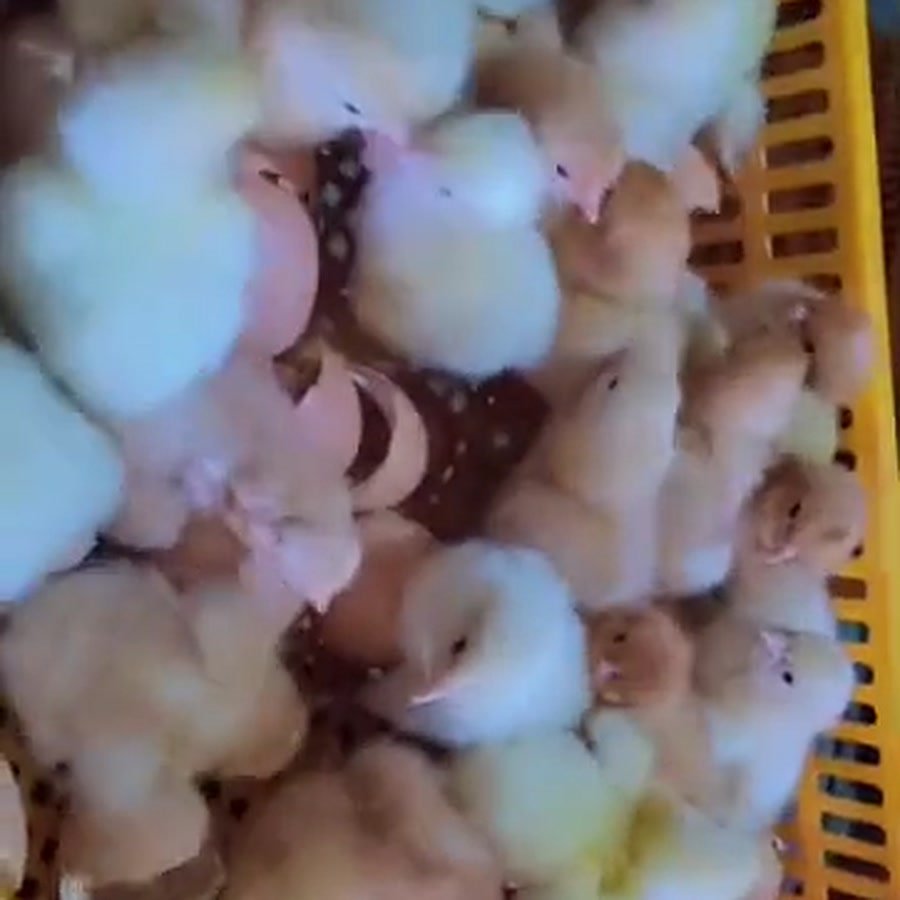
Compare that trail with an offer that has no physical centre at all. If the thing you are investing in cannot be walked into, weighed or photographed by a stranger, you are being asked to trust a story. Trust is not a due-diligence step.
Three things to establish before any transfer
Most of the sorting happens in one short conversation. Start by asking who holds the money and in whose name the account stands. Then ask what happens to your capital if the batch loses money, and ask to see that answer written down. Finally, ask to see the thing itself, the farm or the house, on a date you choose. A scheme that cannot answer one of those questions, or that becomes evasive when you press, has given you its answer.
If you are weighing up borrowing or grants alongside an investment, the guide to poultry loans and grants in Ghana covers the options. Be wary of anyone who asks for an upfront fee to release a loan or a grant, whatever name the request is given.
Written terms are the strongest protection you have. A short agreement that names the company, the account, the capital, the profit split and the reporting schedule is worth more than any amount of reassurance over the phone. Our guide to contract broiler farming in Ghana explains what a sound contract in this sector should contain.
Keep a copy of every document you are shown. If someone says the agreement is still being prepared and asks you to pay first, request a draft the same day. A draft that exists can be read, compared and checked. A draft that never arrives is an answer in itself.

Test our offer the same way
Read the terms on our partner page, open the batch calculator, and then put the hard questions to us in writing. Ask what happens in a bad batch, who receives the payments and when you can visit. An offer that is honest should survive being examined, and ours is meant to be examined. Start at the partner page.
If you have already paid someone
If you have already sent money, act quickly but calmly. Stop any further payments. Gather every message, receipt, transfer reference, account name and phone number, and keep screenshots with the dates visible. Write down who recruited you and what you were told, while you still remember the details clearly. Then report the matter to the Securities and Exchange Commission and to the police, and speak to a lawyer if the amount is significant.
Shame stops many people from reporting, and promoters rely on that silence. Reporting early does not guarantee that money comes back, but it creates a record, and it can stop the next person from being drawn in by the same story. Telling a relative what happened is often the most useful step, because the scheme usually works through people who trust each other.
Patience is the real defence
Scams depend on speed. They offer a short window, a fast payout and a sense that everyone else has already decided. A legitimate farm can wait for you. The batch will still be there next Thursday, the agreement can be read twice, and the report will still show weights and feed. If an offer cannot survive a week of questions, that tells you what you needed to know.
Questions about our partnership can go to our team on WhatsApp at +49 151 68495881, in English or German, or by email to support@agroprimeghana.com. Payments are made only to the Agro Prime Ghana Limited company account, and the agreement is signed before the chicks are placed.
For a wider view of how the hatchery side of the model works, see how the hatchery partnership model works in Ghana.


