
A cost sheet arrives looking like a promise. Two columns, a total at the bottom, tidy lines for everything. Then you find one that reads "Operations GH₵9,000" and nobody has said what operations means. That single line is where most first-time investors stop reading, and it is where they should start.
This guide walks through a broiler batch cost sheet the way someone paying for the batch should read it. You do not need a farming background. You need a calculator, a few quiet minutes, and the willingness to ask for the detail behind each number. The figures below are the ones we work from at Agro Prime Ghana in Kasoa, and wherever we show a calculation we show the working, so you can change the inputs yourself.
Start with the chick line, then ask what the price covers
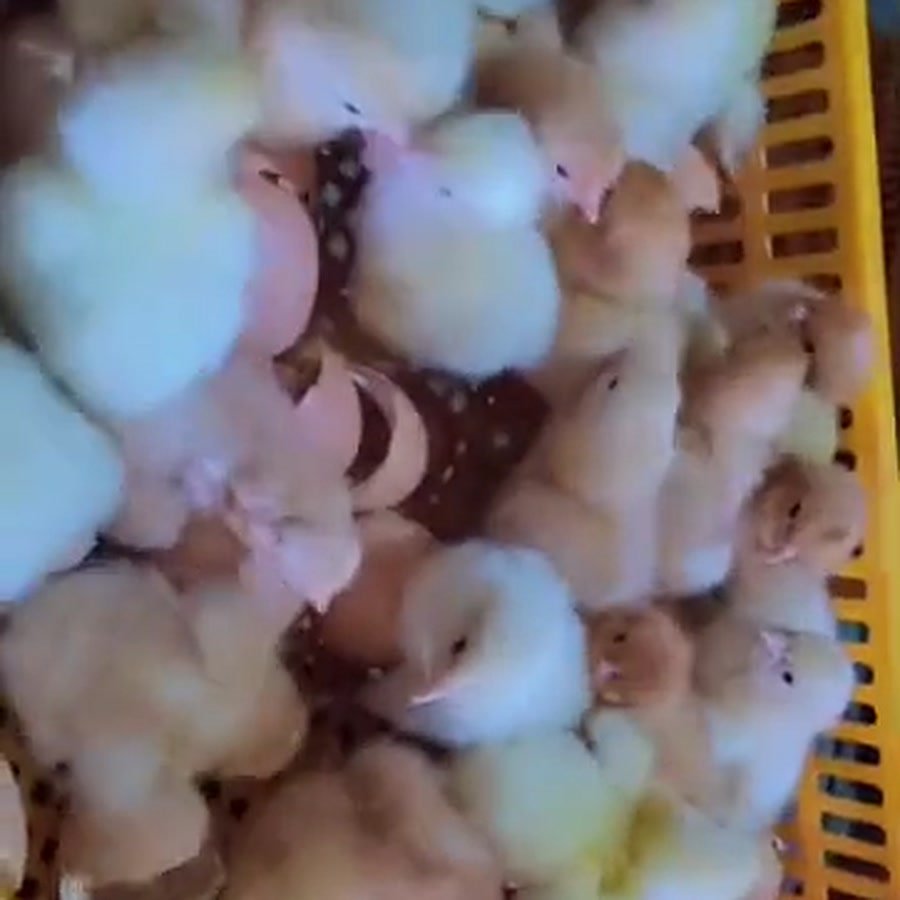
Day-old broiler chicks, Cobb 500 or Ross 308, start at GH₵20 each at Agro Prime. On a 1,000-bird batch that is GH₵20,000 before a single bag of feed is opened. It is the simplest line on the sheet, which is exactly why it attracts the fewest questions. It deserves a few.
Start with what the GH₵20 covers. Marek's vaccine is given at day zero, and Newcastle or Gumboro is added for some batches according to what the flock needs. A sheet should name those vaccines and the day each one went in, and you should be able to keep a copy of that record for your own files.
Then ask about delivery. We deliver to all 16 regions, but a chick price on a sheet does not always say whether transport is included or billed on top. Either arrangement can be reasonable. What matters is that the sheet says which one applies to your region.
Ask about the hatch too. Agro Prime hatches every Thursday at 7:00 in Kasoa, and our average hatch rate is 98%. A hatch rate tells you how many chicks came out of the eggs. It says nothing about how many will reach market, and that second number depends on the house, the feed and the care that follows.
Feed is where the sheet does its quiet work
Feed decides whether a batch works. A broiler eats about 4.2 kg of feed from placement to market. Multiply that by the number of birds and the feed bill becomes simple arithmetic, which means you can check it yourself before anyone asks you to trust it.
Take the broiler starter at the GAPFA member price of GH₵400 to GH₵410 for a 50 kg bag. That is between GH₵8.00 and GH₵8.20 a kilogram. At the De Heus list price of GH₵451 to GH₵472 per bag, the same kilogram costs between GH₵9.02 and GH₵9.44. Per bird, 4.2 kg comes to roughly GH₵34 to GH₵40 of feed, depending on which price the sheet uses.
Bag prices move, so a sheet built on last year's figure or on one round number is hiding a swing. Ask which bag the farm is pricing, when it was bought, and whether the sheet uses the price on the day of placement or an average across the cycle. Either method can be reasonable. The sheet should say which one it used.
Then ask for the bags, not only the total. For 1,000 birds at 4.2 kg each you need 4,200 kg of feed, which is 84 bags of 50 kg. If a sheet shows a single feed figure, ask how many bags it stands for. A farm that answers that quickly is keeping proper records. One that cannot has given you a number without a method behind it.
Storage deserves a question too. Feed that sits in a humid store for weeks loses quality, and poor feed shows up in weight gain rather than on the invoice. Buying in sensible quantities and turning the stock over is part of managing the feed line. A sheet that assumes the cheapest bag and ignores storage has skipped a cost that never appears on a receipt.
Prices can also move during the cycle. If the bag price rises by GH₵20 between placement and the last top-up, the feed line on 1,000 birds rises by about GH₵1,680, because 84 bags at GH₵20 more each comes to that amount. A sheet that fixes the price on day one and never revisits it is not showing how the batch will really finish.
Other costs add up to more than they look
The working figure for everything that is not a chick or feed is about GH₵12 per bird. That covers brooding heat, litter, vaccines and vitamins, labour and utilities. On 1,000 birds it comes to about GH₵12,000. A short list like that can hide a great deal, so a sheet that gives one lump sum is asking you to trust it.
Brooding is the first place to probe. Chicks need steady heat for their opening weeks, and whatever fuel or power the brooder uses is a real line. The bill climbs in the harmattan months, when the nights turn cold and the house has to stay warm for longer. Ask how the brooding cost was estimated and whether it moves with the season.
Litter is the second. Shavings or husk have to be bought and replaced, and a wet, dirty house pushes up the losses you will read about later. A sheet that spends little on litter is not necessarily cheap. It may simply be moving the cost into the mortality line.
Labour is the third. Someone has to feed, check and clean every day, and a batch with no one on site at night carries a risk the sheet has not priced. Ask who does the night checks, how often the house is walked, and whether the labour line covers those hours or only daytime work.
Vaccines, vitamins and water treatments are small per bird but protect everything else. A sheet that trims them to save a few cedis is saving on the line that keeps the birds alive. Ask for the vaccination schedule itself, not only the amount.
Put the lines side by side
The table below gathers the lines in one place, with the question to ask beside each one. Use it as a checklist when a sheet arrives.
| Cost line | Working basis (1,000 birds) | What to ask for |
|---|---|---|
| Day-old chicks | GH₵20 per bird, about GH₵20,000 | Hatch date, vaccines given and on which day |
| Feed | About 4.2 kg per bird, 84 bags of 50 kg | Bag price, purchase date, number of bags |
| Brooding, litter, vaccines, labour, utilities | About GH₵12 per bird, about GH₵12,000 | Each item listed separately, not one lump sum |
| Mortality allowance | 3 to 5% well managed, 10 to 20% under poor management | The rate assumed and the house practice behind it |
| Sale price | About GH₵75 to GH₵80 in quiet months, GH₵100+ at peaks | Which price the sheet uses and the expected sale date |
Add it up before anyone places a bird
Here is the working for 1,000 birds, counting chicks, feed and other costs only. At the GAPFA member price the chicks come to GH₵20,000, the feed to GH₵33,600 and the other costs to GH₵12,000, a total of GH₵65,600. At the De Heus list price the feed line moves to about GH₵37,900 to GH₵39,600, and the total sits between roughly GH₵69,900 and GH₵71,600.
Feed is about half of that total at member prices and a little over half at list prices. The capital a 1,000-bird batch typically needs, from chick to market, falls between GH₵65,000 and GH₵80,000. The gap between the working total and the top of that range is where the costs a sheet can miss tend to sit, so the buffer is not decoration.
One test is worth running on any sheet. Change one line at a time and watch what happens to the total. Move the feed price up, then the mortality rate, then the sale price. A sheet whose logic survives those changes is easier to trust than one that only works at a single set of numbers.
Test your own inputs before you compare farms
Put your bag price, mortality rate and sale price into the calculator on the partner page, then compare the result with the sheet you were sent. If a number does not match, ask the farm which assumption is different. You can also message the team on WhatsApp at +49 151 68495881, or visit the farm Monday to Saturday between 7am and 6pm.
Mortality is the line that moves the most
Mortality is the line most sheets treat as an afterthought. A well-managed batch loses about 3 to 5% of its birds. Under poor management or disease, losses run between 10% and 20%, and at the top of that range the losses alone can erase the cycle's profit.
Dead birds still eat, still need heat and still need someone to check on them, so their cost is not refunded. A simple way to see it is to spread the full cost across the birds that live. At 4% mortality, 1,000 chicks become 960 birds for sale, and GH₵65,600 spread across 960 comes to about GH₵68 each. At 15%, inside the poor-management range, the same cost spread across 850 birds comes to about GH₵77 each. This is a simplification, because a dead bird eats less than a live one, but it shows why the rate has to be written down.
Ask what the rate assumes. The answer should name the house practice behind it: brooding, litter, biosecurity, vaccines given on schedule and daily checks. A sheet that assumes 3% with no reason attached is making a claim you cannot test, and you should treat it that way until the farm shows you how the house is run.
A cost sheet is not a return promise
No honest batch sheet promises a fixed percentage a month. Profit depends on the birds that live, the feed you bought and the price the birds sell for. Ghana's Securities and Exchange Commission has warned the public about schemes that promise fixed returns, and that warning applies here too. If someone offers a fixed monthly return on a broiler batch, ask them to show the costs behind it. If they cannot, walk away.
The sale price decides whether the sheet was honest
The last line is the one people skip, because it is the one they most want to believe. A live bird at market weighs about 2.3 to 2.55 kg after 6 to 7 weeks. In quiet months it sells for roughly GH₵75 to GH₵80. At Christmas, Easter and Eid the price can go past GH₵100 per live bird.
Set that against break-even. In a typical batch the cost per bird sold sits between roughly GH₵70 and GH₵81, once mortality is included. A quiet-month sale therefore leaves a thin margin, and the festive peaks are what lift a batch above that line. For the wider arithmetic behind that, our guide on whether broiler farming is profitable in Ghana sets out the same numbers from another angle.
Ask the farm for two versions of the sale. One uses an ordinary-month price and one uses a festive price. If the sheet only shows the festive one, ask what the batch looks like when the birds leave in an ordinary month. Then ask about the calendar. A batch takes about eight weeks from placement to payout, including clean-out, and a well-run house can turn five or six batches a year. Those are the numbers that decide how fast your capital comes back.
Ask also how the planned sale date sits against the festive calendar. A batch that finishes in a quiet stretch faces the ordinary-month price, and that is the number the sheet should be using for that period. If the sheet quietly assumes a December sale for a batch that will finish in an ordinary month, the whole profit line is sitting on the wrong price.
Before you sign anything against the sheet
A good cost sheet does not need to be exciting. It needs every line named, the bag count visible, the mortality rate written down and the sale price shown for an ordinary month as well as a festive one. If a farm gives you that, you have something to test. If it gives you a total and a confident smile, you have questions to ask again.
Before you pay, show the sheet to someone who has run a batch or who keeps the books for a poultry business. An experienced farmer will spot a missing line in minutes, and an accountant will ask about timing. Neither needs to be a long meeting, and a farm that resists that kind of check is telling you something useful.
Payments for a batch go only to the Agro Prime Ghana Limited company account. Any request to send money to a personal number or an individual's wallet is a reason to stop and check before paying a single cedi.
Open the batch plan and run your own numbers
For the cash timing behind these lines, read our guide to poultry cash flow and break-even in Ghana.


