
Divide 1,000 birds by 100 square metres and you get 10. That single division is where most arguments about stocking density begin, and it is also where a lot of optimism about return quietly goes wrong. A house does not pay you per square metre. It pays you for each bird that survives, reaches weight and sells, minus what it cost to get that bird there.
This article looks at how many birds you can responsibly put on a given floor, what changes when you push that number, and how to test the answer against the cedis. I will not give you a single density figure to copy, because the right number depends on your building. What I can give you is a way to work out the answer for your own house.
Density measures the floor, return measures the cash
Density is simply birds divided by floor area. Return is what is left after you have paid for chicks, feed and everything else over one cycle. Two houses can share a density and differ widely in return, and two houses at different densities can end up in the same place. The link between them runs through survival and weight. You can read more about the wider economics in our guide on whether broiler farming is profitable in Ghana.
A broiler from Agro Prime starts at GH₵20 as a day-old chick. By six to seven weeks it should be market-ready at roughly 2.3 to 2.55 kg live, having eaten about 4.2 kg of feed along the way. With clean-out included, a cycle runs about eight weeks, and a well-run house can turn over five or six batches a year. Each of those figures is a reason to think about floor space in terms of time as well as area.
The more useful question is how much profit one square metre of house earns across a year. That number rises when birds survive and reach weight, and it falls when crowding eats into survival. Density sets the ceiling on how many birds a house can carry. Survival decides how much of that ceiling you actually sell.
What crowding does before anyone notices
Crowding rarely kills birds on the first day. It works more quietly. Air quality usually slips first. More birds put more moisture and heat into the same volume of air, and the litter gets wetter faster. A house that handles its air well at a moderate stocking can struggle once the birds are heavy and the weather turns hot.
Watch the birds as well as the numbers. Birds that crowd into corners, stand with open beaks in the afternoon, or ignore the feeders for long stretches are telling you the house is at its limit. Those signs usually show up before the mortality line moves, so act on them the same day by opening curtains, adjusting fans or moving drinkers, rather than waiting for the weekly count.
Feeder and drinker space comes next. When there are too few places to eat and drink, the stronger birds crowd the feeders and the weaker ones fall behind. The flock spreads out. A wide spread of weights at market means more birds fall short of the range that makes them market-ready, and the average falls with them.
Disease pressure is the most expensive effect. Our figures put well-managed mortality at 3% to 5%, and poor management or disease at 10% to 20%. Crowding does not cause disease on its own, but it lets every problem spread faster, and a house already at its limit has little room to recover when something goes wrong.
Power is a local factor here. When the mains goes off in a packed house, the fans stop and the heat builds quickly. A generator or another reliable backup is part of the stocking decision, because a fan that fails on a hot afternoon is the kind of problem a crowded house cannot absorb.
Late in the cycle, the floor carries the most
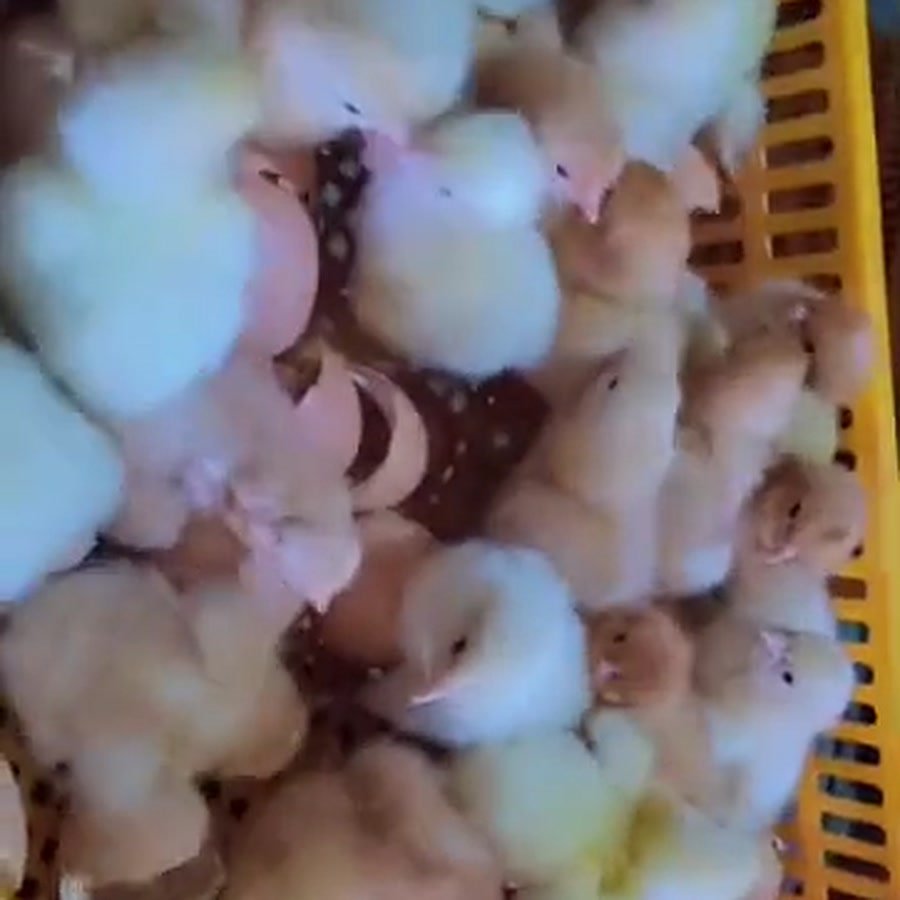
Density is usually discussed as if it were fixed, but the floor changes over the cycle. A day-old chick takes up very little room and eats very little. By the final weeks each bird is heavy, eating well and producing a lot of manure, and the same square metres are carrying all of that at once. The problem you see in the last week was often set up on placement day.
That is why the question is not only how many birds go in on the first morning. Ask what the house will look like in the fifth or sixth week, when the birds are at their heaviest and the weather may be at its worst. A house that feels roomy on day one can feel tight by the end, and a fan or curtain that was enough at the start can fall short.
Plan for the last week before you plan for the first. Work out roughly how much live weight the house will hold at market, how much feed will move through it each day, and how the air will behave in the hottest hours. If any of those three looks unmanageable with the equipment you have, the honest answer is fewer birds, or a longer wait before the next placement.
A worked comparison in one 100 square metre house
The sums below are illustrative. They use one house of 100 square metres and only the per-bird figures we work with: GH₵20 for the chick, GH₵12 for everything except chicks and feed, and 4.2 kg of feed per bird. Feed is priced at the GAPFA member rate of GH₵400 per 50 kg bag, which is GH₵8 per kg, or GH₵33.60 per bird. That gives about GH₵65.60 per placed bird. Each live bird is sold at GH₵80, the top of the quiet-month range.
Scenario A places 1,000 birds, which is 10 per square metre, and assumes 4% mortality. Scenario B places 1,200 birds, which is 12 per square metre, and assumes the extra crowding pushes mortality to 12%. That figure is still inside the 10% to 20% band that poor management brings, so this is a mild version of the problem.
| Item (one house, one batch) | Scenario A | Scenario B |
|---|---|---|
| Birds placed | 1,000 | 1,200 |
| Birds per square metre | 10 | 12 |
| Mortality | 4% | 12% |
| Birds sold | 960 | 1,056 |
| Sales at GH₵80 per live bird | GH₵76,800 | GH₵84,480 |
| Capital at GH₵65.60 per placed bird | GH₵65,600 | GH₵78,720 |
| Net profit | GH₵11,200 | GH₵5,760 |
| Net profit per square metre | GH₵112 | GH₵57.60 |
Scenario B sells 96 more birds, yet it earns about GH₵5,400 less. It also ties up GH₵13,120 more capital, and that money has to be found before the first chick arrives. The extra birds only pay if they survive and reach weight, and the extra losses in B cancel out the gain from the extra birds.
Be fair to the other side of the argument. If better ventilation and enough feeder space let 1,200 birds survive at 4%, scenario B pulls ahead. The sums are not a verdict against density. They show that density pays only when the house can keep the birds alive and growing, and that is a question about your building, not a rule of thumb.
Put your house through the batch plan
Once you know how many birds your house can hold, take that figure to the batch partnership page. Run it through the calculator there and see how far the result moves when your losses or sale price change. Batches start at 500 birds, and we recommend 1,000.
Can you add birds to a house that is already running?
Some people ask whether they can start with a small group and add chicks later, to fill the house gradually. It is a reasonable question from a cash point of view and a poor one from a flock point of view. Chicks of different ages in one house mean birds at different weights, on different feed, carrying different disease loads. Cleaning and disinfecting the house between batches becomes close to impossible while birds are still living in it.
A better approach is to place one full batch, run it through to market, clean out properly and then place the next. That is what the eight-week cycle is designed for. It also keeps your records clean, because every weight, feed and mortality figure belongs to one group of birds that started together.
The same logic applies to a house you already run. If the next batch is larger than the last, check the house before the chicks arrive, not after. Fans, curtains, feeders and drinkers should be sized for the new number, and the floor should be dry and empty when the birds come in.
Ghana's market and the timing of a placement
The demand side is strong. Ghana's broiler demand is around 400,000 tonnes a year, local production is near 58,000 tonnes, and imports run above 180,000 tonnes, according to MoFA and USDA figures. That gap is why buyers exist for a well-run local bird. It does not mean any single house will sell everything it grows at a good price.
Timing matters as much as density. A batch that goes to market around Christmas, Easter or Eid can sell at GH₵100 or more per live bird, against GH₵75 to GH₵80 in quieter months. Our Christmas broiler market guide walks through that calendar. A crowded house that runs into trouble in the rainy season, though, can take the peak premium away before the birds ever reach the buyer.
Local conditions add their own pressure. In the dry season the heat builds in the afternoon, and crowded birds pant, eat less and grow more slowly. Harmattan dust settles on everything. Rainy months keep the air heavy and the litter wet. A house that can handle those months at a moderate stocking is a much safer bet than one that only works in the best weeks of the year.
Working out the number for your own house
Start with what the house can do, not what you would like it to hold. Measure the floor, count the feeders and drinkers, and watch how the air moves at bird height on the hottest afternoon. Ask whether the house can keep the air fresh with the fans and curtains you actually have, including on a bad harmattan day. Only then turn floor area into a target bird count.
Next, work backwards from the weight. At 2.3 to 2.55 kg live, each bird needs a steady supply of feed and clean water to get there. If your house cannot support that for every bird, the number is too high, however much floor you have. Write the number down, then run the sums with a pessimistic mortality figure as well as a hopeful one.
Finally, talk to the people who will work in the house with you. The hatchery team can go through placement numbers when you book, and a local veterinary officer can tell you what they see in houses like yours. Neither of them can promise a return. Together they can tell you whether the number you have chosen is one the house can carry.
Whatever number you settle on, keep a simple daily record: birds found dead, feed given, water checked, and a note on how the air felt at bird height and how the litter looked. Partners on a batch receive weekly photo, weight, feed and mortality reports every Thursday, and the same habit works on your own house. It shows you early when crowding starts to bite, usually well before the losses are large enough to see on the scale.
A density figure is not a return
Be careful with any offer that multiplies birds by a rate and presents the result as income. Density changes survival, weight and cost, and none of those can be promised before the birds are placed. Ghana's SEC warns against fixed-return schemes, and a number of birds per square metre does not make a fixed monthly return safe. A profit share moves with real batch costs and real sale prices, which is why the agreement should be written down before placement.
Let the house set the number
Density is the one decision you can make on paper before the first chick arrives. Make it for the house you have, not the house you wish you had, and test it against survival and cost. A smaller flock that stays healthy and reaches weight usually earns more than a crowded one that never settles.
When the numbers look right to you, open the batch partnership terms
If you are still working out the wider business, our poultry business plan guide is the next read.


