
On a weekday evening a transfer from abroad lands on a phone in Kasoa. It is not a fortune, but it is more cedis than the household has held at one time in years. The questions start before the notification stops sounding. Should it go into gold? Should it be turned into dollars? Or should it go somewhere it can work while everyone sleeps?
Those three answers come up in most Ghanaian families, often in the same group chat and often on the same evening. Each one keeps money in a different way. Gold holds value in a form people trust. Dollars hold value against a weakening cedi, at least when measured in dollars. A farm batch tries to grow the sum, and it can also shrink it. The common mistake is to treat the three as rivals for one job. They do different jobs, and an honest comparison starts there.
Start with the job, not the product
Before you compare anything, write down what the money has to do and when. Some of the cedis may already be promised to school fees in October. A cushion that must not move is another possibility, and so is a stake in something that can wait eight weeks without hurting anyone. A place that suits one of those jobs can be a poor fit for the next.
Three questions cover most of the ground. How soon might you need the whole sum back? How much of it could you lose without changing how your household lives? Are you trying to protect value, grow it, or do a little of both? Answer those plainly and the field narrows quickly.
Gold: a store of value you can hold
Gold has a long record as a place to keep wealth when other things look uncertain. Many families already own some, usually jewellery bought over the years and kept in a wardrobe or a drawer. It needs no battery, no bank and no permission from anyone. For a modest sum kept for a long time, that counts for a lot.
The costs are quieter. Jewellery is priced well above its metal content because of workmanship and the shop's margin, so selling a piece back usually returns less than you paid. Bars and coins carry a smaller premium, but a dealer's buying price and selling price are never the same, and the gap between them comes straight out of your pocket. Purity is the other issue. An offer from someone you met that week is a reason to slow down, and a careful buyer tests the metal before paying.
Storage is a third problem. A safe at home can attract the wrong attention, especially once people know a family keeps something valuable. A bank safe deposit reduces that risk but adds fees, paperwork and visiting hours. Each option trades one worry for another, and none of them makes the gold earn anything.
That last point matters most. Gold pays no interest and no dividend while you hold it. Its cedi price also moves with the world price of the metal and with the exchange rate. When the cedi weakens, gold priced in cedis can climb even if the metal itself has barely changed. That is useful for a saver who fears the currency, but it is protection, not income. Selling later is a separate question, and the price you get on the day may not match the price you read online.
Dollars: protection without a yield
Holding dollars is the plainest form of currency protection. If the cedi falls against the dollar, a dollar kept in a foreign-currency account or as notes keeps its dollar value. A household that expects to pay for imported inputs, school abroad or travel may find that useful. The cedi value of the pile does move. The number of dollars does not shrink.
Dollars carry a downside that mirrors the upside. Dollar balances rarely earn much in a Ghanaian bank, and cash kept at home carries the same theft and loss risk as any other cash. Before you move money, check your bank's rules for foreign-currency accounts. Find out how withdrawals work, whether there are limits, and how easily you can convert back to cedis at a fair rate. A dollar you cannot easily spend or convert has not protected anything. It has only been stored.
Dollars are a store of value with a clear purpose. They suit money you must keep intact and may need in foreign currency. They are not a route to a bigger sum, and anyone who presents them as one is selling something else.
A farm batch: income with its own hazards
A broiler batch is a different kind of holding. You place capital into one specific cycle: day-old chicks, feed, brooding heat, vaccines, labour and utilities. The birds grow for six to seven weeks and reach roughly 2.3 to 2.55 kilograms live. Placement to payout, with the clean-out between batches, usually runs to about eight weeks. The money is working, but it is working on living birds and on a market price that can move against you while the flock is still in the house.
At Agro Prime the terms are written before any chick is placed. Capital comes back first. The profit is then divided as the signed agreement says, and payment goes out by bank or mobile money after the final sale. Every Thursday the partner receives a photo, a weight, the feed used and the mortality figures. Those reports are what separate a batch you can check from money you simply hope will come back.
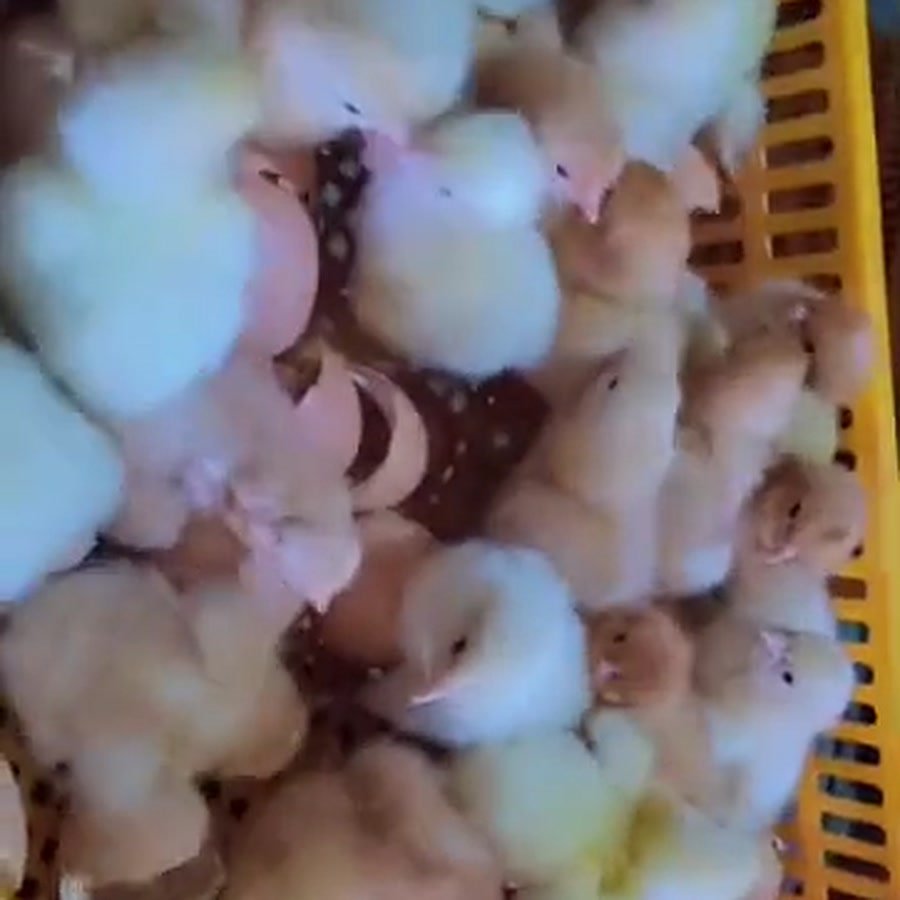
What a 1,000-bird batch asks of your cedis
The table below is an illustration built from the farm's own working ranges. It is not a forecast, and it is not a promise of any return. It shows where the money goes before a single bird is sold. The chick figure is our starting price, the feed figures use the GAPFA member range and the De Heus list price for a 50 kg bag, and the other costs use the rough per-bird figure we work with for brooding, litter, vaccines, labour and utilities.
| Cost line (illustrative) | Basis | Amount (GH₵) |
|---|---|---|
| Day-old chicks | 1,000 birds from GH₵20 each | 20,000 |
| Feed | About 4.2 kg per bird, roughly 84 bags of 50 kg at GH₵400 to GH₵472 | 33,600 to 39,650 |
| Brooding, litter, vaccines, labour, utilities | About GH₵12 per bird | 12,000 |
| Total, chick to market | Sum of the three lines | 65,600 to 71,650 |
Feed is the largest line. In this build-up it comes to just over half the total, which fits the rule of thumb that feed takes more than half of a batch's cost. The total sits in the lower part of the GH₵65,000 to GH₵80,000 working range we quote. Plan around the top of that range rather than the bottom, because feed prices and bird losses rarely stay where you hoped. A bag priced at the member rate in one month can sit at the list price by the next. For what a day-old chick includes, see the day-old chicks page.
On the income side, our working figure for a normal cycle is a typical net of GH₵12 to GH₵20 per bird. Across 1,000 birds, that is roughly GH₵12,000 to GH₵20,000 before any split with the partner. Treat it as an illustration of a good cycle, not a forecast. A poor cycle with 20% mortality can erase the profit altogether.
Sale price matters just as much. In a quiet month a live bird sells for roughly GH₵75 to GH₵80. Break-even for a typical batch sits between about GH₵70 and GH₵81 a bird. That gap is thin, which is why timing matters so much. At Christmas, Easter and Eid, birds can fetch GH₵100 or more, and a batch sold into those peaks has far more room than one sold in a quiet month. The cash-flow and break-even guide shows how these numbers move week by week.
Fixed monthly promises are a red flag
Some schemes, sometimes sold as gold savings clubs, investment groups or guaranteed farms, promise a set payout every month. That payout has to come from somewhere, and when new money slows, the scheme stops paying. The Securities and Exchange Commission has issued public warnings about schemes that promise fixed returns. A legitimate farm partnership cannot promise a fixed return, because its income depends on live birds and real prices. Be wary of anyone who does.
A bad cycle, written out
Numbers in the abstract are easy to nod along to, so here is one bad cycle worked through. Take the same 1,000 birds and the same costs from the table, with mortality at 20%. Eight hundred birds reach market. At a quiet-month price of GH₵75, they bring in about GH₵60,000. That is below the cost of GH₵65,600 to GH₵71,650, so the cycle loses money.
This picture is simplified. We have kept the costs unchanged, because birds that die still eat feed before they go, so the spend does not fall in step with the losses. Treat it as the shape of the risk rather than an exact sum for your batch. The shape is the point. A loss rate that looks small on paper removes the profit when the sale price is ordinary.
Now take the same 800 birds sold into a festive peak at GH₵100. They bring in about GH₵80,000, which clears the cost with room to spare. The birds, the feed and the losses have not changed. Only the sale date has. A partner who understands that is in a far better position to judge timing than one who only sees the headline profit.
Put your own cedis through the calculator
Before you decide where a sum belongs, open the partner page and run a batch through the calculator. Change the feed price and the mortality rate, then watch how quickly the margin shrinks. If the numbers still look sensible, ask us about a farm visit, Monday to Saturday from 7am to 6pm, so you can see the house before any money moves. Start at the partner calculator.
Matching the place to the job
Gold suits the part of your savings you want to keep, and you should be willing to sell it at a worse price than you paid for it. Dollars suit money you need in foreign currency and want to keep intact. A farm batch suits money you can leave in one cycle of about eight weeks, with a clear understanding of what happens if birds die or prices fall. Few households need only one of these. Many need a cushion first and then one of the others for the part they can afford to risk.
Be wary of any adviser who says one of the three is always best. Gold is a weak source of income. Dollars do not grow on their own. A batch can lose money in a bad cycle. Each place has a role and a failure mode, and you should be able to describe the failure in one sentence before any money moves.
A simple test helps. Imagine the place has gone wrong on the first day. With gold, the damage is a lower resale price and a constant worry about where the piece is kept. With dollars, it is the cedis you might have had if you had put the money to work. For a batch, it is a flock that does not survive, a feed bill already paid and a payout that arrives smaller than you hoped. If that last picture feels unbearable, the batch is not money you should use.
Keeping the choice honest
Gold and dollars answer a question about keeping value. A farm batch answers a question about growth, and it asks you to accept more uncertainty in return. Many careful savers hold some of each, sized to what they can leave alone for a long time. A batch should only take cedis that will not be needed before the payout date, which for us is about eight weeks after placement with the clean-out included.
Before any transfer, read the signed agreement closely. Check how capital returns, how the profit is divided, when payments are made and what the weekly reports contain. Send money only to the Agro Prime Ghana Limited company account. Anyone who asks you to pay a personal account, a wallet in a private name or a special account has broken the basic rule, and you should stop there.
If the batch side fits your plan, the full terms and the calculator sit on the partner page. If you are still weighing poultry against other uses of cash, the guide on whether broiler farming is profitable in Ghana covers the same ground from the farm's side.


