
A 50 kilogram bag of broiler starter feed sells for GH₵400 to GH₵410 at GAPFA member prices. The same bag at De Heus list price runs GH₵451 to GH₵472. On one bag, that difference looks small enough to ignore. Across the 84 bags a 1,000-bird batch needs, the gap between the two price lists comes to at least GH₵3,444 and up to GH₵6,048.
Bulk buying is one of the first questions growers ask about feed. The honest answer depends on three tests. The first is whether you will use the stock before it goes off. Second, the cash must be able to sit still without starving the next placement. Third, the saving has to survive once storage, transport and wastage are counted.
What one 1,000-bird batch needs in inputs
Start with the bird. A broiler eats about 4.2 kilograms of feed from day-old to market, so a 1,000-bird batch needs roughly 4,200 kilograms, or 84 bags of 50 kilograms. Feed is more than half of the total batch cost, which is why it deserves more attention than any other input before you place a bulk order.
The table below sets out the main input lines for one batch. The feed rows use GH₵405 a bag, the midpoint of the GAPFA member range, and the chick line uses the GH₵20 starting price. These are illustrative calculations built from our fact pack, not quotes. Your own prices will move with the supplier, the timing and the delivery.
| Input | Quantity for 1,000 birds | Illustrative cost (GH₵) |
|---|---|---|
| Broiler feed at GAPFA member midpoint | 84 bags (4,200 kg) | 34,020 |
| Same feed at De Heus list price | 84 bags (4,200 kg) | 37,884 to 39,648 |
| Day-old chicks at the starting price | 1,000 chicks | 20,000 |
| Brooding heat, litter, vaccines, labour, utilities | About GH₵12 per bird | 12,000 |
| Total with feed at member midpoint | Chick to market | 66,020 |
That total sits near the bottom of the GH₵65,000 to GH₵80,000 capital range for a 1,000-bird batch, which is what you would expect with feed at member prices. Move to list-price feed and the total climbs by between GH₵3,864 and GH₵5,628 on the same batch. Those are the amounts a bulk discount is trying to win back.
Where bulk buying genuinely saves money
Bulk buying works best when three conditions hold together. The house runs on a known schedule, so the stock gets used. The store is dry, raised off the floor and out of direct sun. And the price break is large enough to cover the cost of getting the stock home and keeping it safe.
Feed meets those conditions better than most inputs. If you are placing batches back to back, one order for the next placement means one delivery, one payment and one price, instead of several small buys at whatever the market is asking that week. The farm store stocks feed, equipment and vaccines, so you can check what is available before you settle the order size.
Equipment is a different case. Drinkers, feeders and brooding gear last through several cycles, so buying enough for more than one house can make sense when the cash is there and the next placement is already paid for.
Where it traps cash
Stock is cash that has turned into something you cannot spend until the birds are sold. Take a grower who buys feed for six batches in one order, which is roughly what a house running five or six cycles a year would need. That is 504 bags, or about GH₵204,120 at GH₵405 a bag. Even at a good price, that money is out of the business until the first sale, and it is not available for chicks, labour or the next placement.
The sum gets worse when the stock sits too long. A batch takes about eight weeks from placement to payout, but a bag bought for it can stay in the store for months if the schedule slips. Feed that takes on moisture in a humid store can mould, and its nutrients break down over time. Birds fed on tired feed grow more slowly and are more open to disease, which is how a purchasing decision turns into a mortality problem. For background on how cash moves through a cycle, see our poultry cash flow and break-even guide.
Stock is not profit
Holding a large store of feed or vaccines does not earn anything by itself. The money is still tied up in the business, and it can spoil or lose value before you use it. Be wary of any arrangement that promises a fixed return on inputs or a guaranteed margin on a batch. Our own partnership is a profit share, and what it pays depends on real batch costs and the sale price, not on a promise.
Prices move in both directions too. Stock bought at a festive peak can be worth less in a quiet month. Buying a large lot is, in effect, a bet on where the market goes next, so make that bet on purpose rather than by accident.
Run the order through your own batch
Before you commit cash to a large order, put the feed and chick figures through the calculator on the partner page. Change the bird count, the feed price and the sale week, then read how much cash the batch needs from start to finish. The calculator gives a worked example, not a guaranteed outcome, so use it to test your own assumptions.
Matching the order to the calendar
Timing matters as much as quantity. The harmattan months from December to February bring dry, dusty air that is kind to stored feed, because damp is rarely the problem. The dust is the problem. It gets into open bags and into the house if the store is not sealed. The rainy seasons run the other way. Humidity rises, bags take on moisture, and a store that felt fine in the dry months can smell wrong by the middle of the year.
The festive calendar pulls in the other direction. Demand for birds rises around Christmas, Easter and Eid, and a grower who waits for a quiet month to buy feed may be buying just as the batch needs it most. That is why the sale week should be chosen before the feed order is placed, not after the first bags have arrived.
A practical rule is to have feed in the store, dry and checked, before the chicks arrive. Our hatch runs every Thursday at 7:00, so the feed should be in the house a few days before that date rather than still on a delivery truck. A chick arriving to a bare store is a stress that no amount of saving on feed is worth.
What belongs on the shelf, and what does not
Feed
Buy feed for the placements you have booked, plus a small reserve for a delayed delivery. Keep bags on pallets or racks, dry and out of the sun, and use the oldest bags first. If your store cannot keep feed dry, buy smaller and more often, even if the price per bag is a little higher. A dry bag at a higher price beats a damp one at a discount.
Vaccines
Vaccines carry expiry dates and many need cold storage, so they are the wrong place to save money. Our hatchery vaccinates at day zero against Marek's disease, and Newcastle or Gumboro is often given according to the batch. Your own vaccine order should follow the schedule for the batch you are placing, not a figure chosen for the store. Ask for the exact product before you pay, and check the expiry date on the box when it arrives.
Chicks
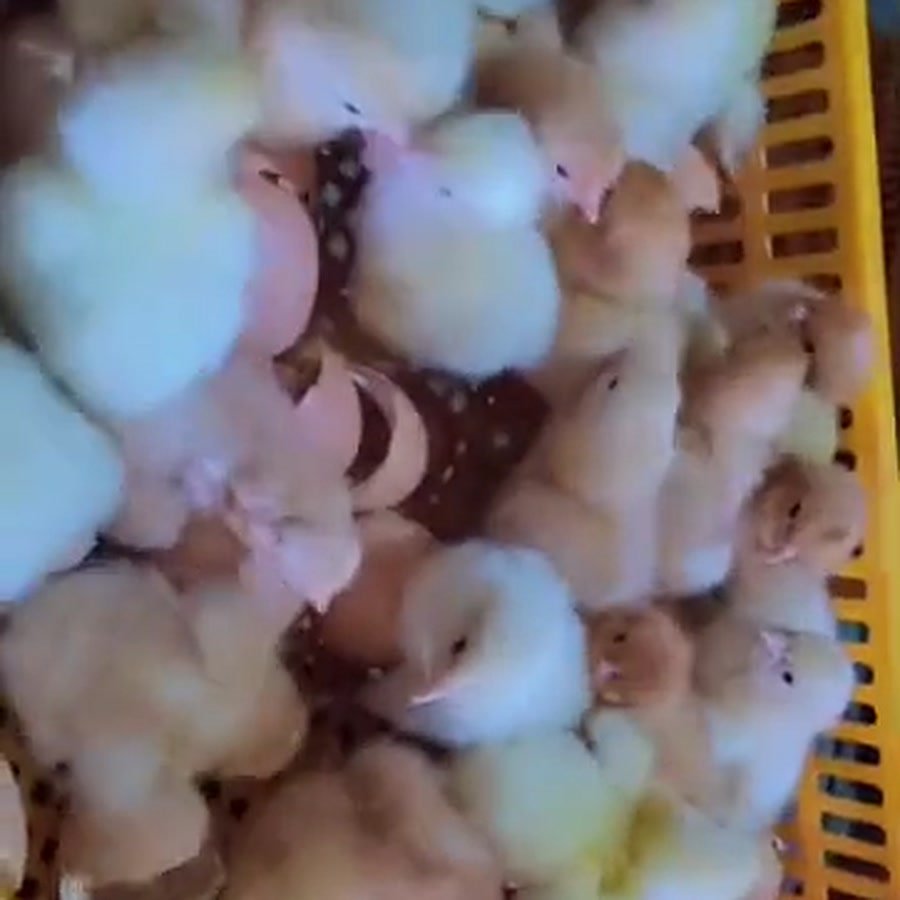
Chicks should never be stockpiled. They go into the house in the week they hatch. Our hatch runs every Thursday at 7:00 in Kasoa, with an average hatch rate of 98 percent, and we deliver to all 16 regions. Order the chicks against the placement date, not the price of the week. Current prices and how an order works are set out on the day-old chicks page.
Equipment and litter
Litter is bulky and absorbs moisture, so buy only the amount that will stay dry until the next clean-out. Equipment works on a longer cycle, as covered above. Either way, pay for it from cash that is not needed for the next placement, so that a slow sale does not force you to choose between feed and chicks.
A sensible order, worked through
Here is one way to think about the order for a single 1,000-bird placement. Suppose the grower has GH₵70,000 available, which sits inside the capital range for the batch. Buying one placement of feed at member prices takes GH₵34,020 out of that sum and leaves about GH₵36,000. The chicks and the other costs come to about GH₵32,000 between them, so the batch can be funded with a little to spare. Buying six placements of feed in one order would take GH₵204,120, which is more than the whole batch budget before a single chick is bought.
A middle path is often the safer one. Buy the feed for the placement you are starting now, then order the next placement's feed once the current batch is past the halfway point and its mortality is on track. That keeps cash free for the next decision and still gives you a regular supplier relationship, without holding a year of stock in a warm room.
A cheaper price on a larger order only counts if the batch still has cash in week four. Run the order through the batch cash plan, week by week, before you commit. If the figures show a shortfall once the chicks and labour are paid, the saving is not real, however good the unit price looks on the invoice.
Payment and paperwork
Pay through a route that leaves a trail. MTN MoMo, Telecel Cash, AirtelTigo, bank transfer and cash are all accepted at Agro Prime. Payments to Agro Prime Ghana Limited only ever go to the company account, so check the account name every time before you send money. Keep a receipt or statement for each input and write the batch number on it.
At the end of a batch, those records tell you the real cost per bird. That figure, set against the sale price, decides whether the batch was worth running, and it is the number a bulk order is supposed to improve.
Delivery is part of the cost too. A bulk order that needs a hired vehicle, hand unloading and a shed that leaks costs more than the invoice shows. Ask whether delivery is included, who loads and unloads, and where the bags will sit until they are used. The answers belong in the cost line, not in a footnote.
When you compare a bulk offer with your usual buying, use the same basis on both sides. Compare the price per 50 kilogram bag, the delivery charge, the storage cost and the cash held for the period. A bulk price that looks lower per bag can end up higher once those four sit on the same page.
How to judge a bulk offer
When a supplier or an intermediary offers a discount for a large order, ask four plain questions. How long will the stock last at your house's usage? Where will it be stored, and who checks it? What happens to the cash if prices fall? How many weeks will the money be tied up? An offer that cannot answer those questions is not a saving, however attractive the headline price looks.
Buy for the placement in front of you
The useful question is not whether a bulk price is lower. It is whether the stock will be used, stored well and paid for without starving the next batch. For most growers that means feed for the next placement or two, vaccines to a schedule, and chicks for the week they hatch. If you want to see how that cash fits a full batch, the partnership terms set out the profit-share structure, the written agreement and the weekly reporting.
Read the batch partnership terms
For the wider picture on cycles, cash and payout timing, the poultry business plan guide is a sensible next read.


