
Picture a Saturday evening in Kasoa. Your MoMo statement is open on one phone, a feed receipt sits folded in your shirt pocket, and the house manager has just messaged to ask for money for vaccines. You roughly know what the batch has cost so far. You cannot say exactly, and you cannot yet say what it will earn.
That fog is where small poultry businesses in Ghana lose the most sleep and, more quietly, the most money. The arithmetic is rarely difficult. The trouble is that the numbers live in too many places at once: receipts, text messages, a notebook under the feed store counter and a memory that is never quite the same twice.
Decide what the book has to answer
Before you pick any tool, decide what the records must tell you. For a broiler batch, four questions matter. What did it cost to get the birds to market? How many did you lose, and on which days? What did the sold birds bring in, and how was each buyer paid? How much of the cash in your account already belongs to the next batch?
None of those questions needs an app. They need one consistent place to write the answers, a date beside every entry and a habit of checking the entries against money that has actually moved. A paper cashbook answers them as well as any subscription product, provided the same person writes in it every day and nobody tears out pages.
What one batch produces in paperwork
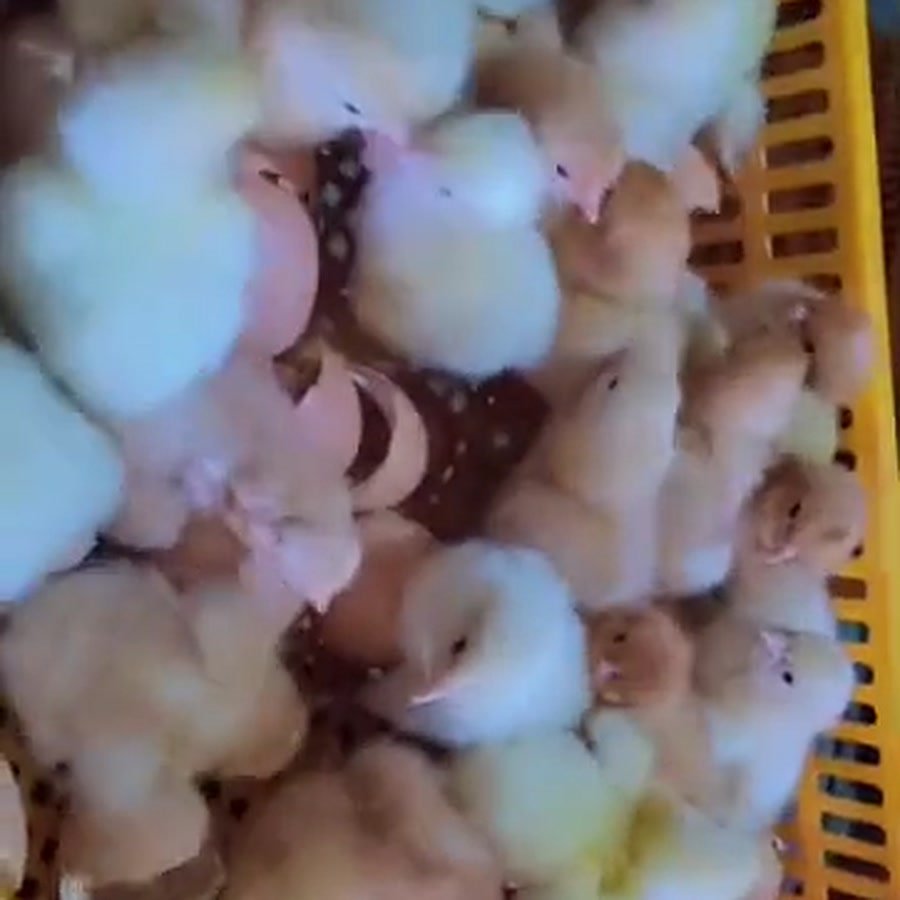
A broiler batch generates more paper than most first-time investors expect, even in a modest house. The chicks arrive as a single purchase. Day-old broiler chicks from a working hatchery start at GH₵20 a bird, and that order becomes the first line in the book. Feed follows over several weeks in 50 kg bags. Vaccines, litter, heat, labour and utilities trickle in as smaller bills. Deaths happen a few at a time, and sales come in two or three visits as the birds reach market weight.
Each category needs its own rule. Write the chick purchase with the number bought, the hatch date and the price per bird. Record each feed bag as it is collected, with its price and the date, because the gap between bags bought and bags used tells you more than any summary sheet does. In the figures we work from, GAPFA member prices for a 50 kg broiler starter bag sit at GH₵400–410, and the De Heus list price at GH₵451–472. Write down the price you actually paid, not the one you hoped for.
Other running costs, covering brooding heat, litter, vaccines and vitamins, labour and utilities, are easiest to track as one group. Planning figures put them at about GH₵12 per bird. That is an average to estimate with, not a receipt, so keep the real bills in a folder and let the average stand in only where a bill has not yet arrived.
Mortality needs a daily line, not a weekly guess. Count the birds found dead each morning, then write the number with a short note on what you think happened. Well-managed houses tend to finish with 3–5% mortality, while poor management or disease can push losses to 10–20%. You cannot tell which kind of batch you are running unless you counted every day.
Sales are the last line and the one most often left vague. Record the number of birds sold, the live weight, the price per bird and how the buyer paid. A buyer who pays on MoMo leaves a trail on both sides. A buyer who pays cash and is never written down leaves a hole in the book, and holes are where disputes start, usually months later when nobody remembers the conversation. Quiet months have carried roughly GH₵75–80 per live bird, while the Christmas, Easter and Eid peaks have pushed past GH₵100.
Tools that fit a small operation
Three approaches cover most small operations, and many people use two of them at once. The first is a paper cashbook for daily cash in and out, with a separate page for each batch. It costs very little, works without power and gives the house manager something to sign. Its weakness is arithmetic. Totals drift, and nobody notices until a month has gone by.
The second is a spreadsheet, in Excel or Google Sheets. One workbook with a sheet for purchases, one for daily mortality and feed, one for sales and a summary page is enough to carry a 1,000-bird batch. You do not need clever formulas, only sums and simple subtraction. Keep the raw entries on their own sheet so that any wrong total can be traced back to the line that caused it. A poultry business plan that lists the same cost lines makes a sensible template for the sheet's structure.
The third is an online accounting app. Products such as Wave and QuickBooks handle invoicing and expense tracking, and some produce reports that a bank will ask to see. Before you subscribe, check whether the app records cedis cleanly, whether it can log MoMo transfers as payments and whether it supports the tax and payroll forms you will need once you have staff. An app built for a freelancer in another country can be awkward for a farm that buys feed for cash at the store counter.
For most readers the sensible route is the spreadsheet, kept beside a paper book for cash. Move to an accounting app when you run more than one batch at a time, or when someone asks for statements you cannot produce in an afternoon.
Test your own sheet against a real calculator
The batch calculator on our partner page lets you change the feed price, the mortality rate and the sale price, then watch how a batch moves. Try your own figures there before you buy a single bag. If you would rather talk through one cost line, message the farm on WhatsApp at +49 151 68495881.
Reconcile every week, not at year end
The most useful habit in bookkeeping is reconciliation, and it takes less time than most people fear. Once a week, take the closing balance on your MoMo wallet and your bank account, then compare it with what your book says should be there. Work out the difference. Usually it is one missing receipt or a payment entered twice. Finding that on a Sunday takes a few minutes. Finding it at the end of a six-week batch takes an afternoon and a good deal of patience.
Do the same with feed. Count the bags in the store, then compare that count with the bags recorded as bought and the bags recorded as issued to the house. A shortfall is not automatically theft. It might be spillage, a bag lent to a neighbour or a delivery that was never written up. Whatever the cause, the shortfall belongs in the book. Feed is more than half of a batch's total cost, so a leak there matters more than a leak anywhere else.
Reconciliation also gives you something no summary sheet can. Once you know exactly how many bags went into a house, feed use per bird becomes a measured fact rather than an estimate. You can see early whether a batch is eating more or less than the last one did, and that early warning is worth more than any tidy monthly total.
A month-end check that takes an hour
Once a month, set aside a quiet hour and close the books properly. Start with the cash. Add the opening balance of each account, add every receipt and subtract every payment, then compare the result with the closing statement. If the two disagree, go back through the month's MoMo and bank entries line by line until the difference is found. Do not move on with an unexplained gap, because the next month will only hide it deeper.
Then look at the batch as a whole. Compare the feed bags used with the feed you planned, the birds placed with the birds sold and the mortality count with the note you wrote each day. Where the numbers do not match, write one sentence explaining why. Those short notes are the most valuable part of the book six months later, when you are trying to remember what went wrong in a particular house.
Finish by saving a copy of the workbook in a second place, such as a memory stick or a second email account, and print the monthly summary page if a bank or partner ever asks for one. A book that lives on one phone is one lost phone away from disappearing.
A worked ledger for 1,000 birds
Here is how the costs of one thousand birds can look from chick to market. This is an illustrative calculation built only from the planning figures above. It is not a forecast, and your own receipts will differ. It also simplifies: it treats every chick as paid for and spreads the feed across all the birds placed.
| Cost line | Working | Amount (GH₵) |
|---|---|---|
| Day-old chicks | 1,000 birds at GH₵20 | 20,000 |
| Feed | 1,000 × 4.2 kg = 4,200 kg, or 84 bags of 50 kg at GH₵400–410 | 33,600–34,440 |
| Other running costs | 1,000 birds at about GH₵12 | 12,000 |
| Total cost to market | Chick to market, planning basis | 65,600–66,440 |
Two things stand out. Feed is the swing item, and the gap between the two bag prices alone moves the total by GH₵840. The cost total is also only half the story. Mortality reduces the birds you sell while the chick cost stays on the sheet, so a ledger that records purchases carefully but misses deaths will flatter the batch.
The planning range for a 1,000-bird batch from chick to market is GH₵65,000–80,000, and this sheet lands near the bottom of it. The gap above that usually comes from dearer feed, heavier heating and labour costs, or a chick price above the GH₵20 starting point. Ask the farm for its own cost breakdown before you rely on any single figure, including the ones in this article.
Three habits that cause most of the trouble
Most bookkeeping failures are small habits rather than dramatic mistakes. The first is paying for things from a personal account and never separating the money. After a few weeks nobody can tell which bills belonged to the house and which to the household. Open a separate MoMo wallet or bank account for the business, even if it serves only one batch, and pay every farm cost from it.
The second is writing sales from memory. A buyer who collects birds on a Friday and pays on Monday is easy to forget. Write the sale on the day the birds leave the house, then add the payment when it lands. The gap between the two is money owed to you, and it belongs in the book until it is cleared.
The third is treating the book as a job done once per batch. A book written after the clean-out is a reconstruction, and reconstructions drift. Give the record a short, fixed slot each evening and it stays close to the truth. Mortality deserves particular attention because it hides so easily. A house that loses birds quietly can look fine right up until the sales arrive.
Good records do not make a scheme safe
A tidy spreadsheet is easy to fake. If someone offers a fixed monthly return on a batch and cannot show you the feed invoices, the daily mortality log and the buyer's payment records, the spreadsheet is decoration. Genuine batch returns move with real costs and real sale prices. Any offer that promises a set percentage each month should be refused, and Ghana's Securities and Exchange Commission has warned the public against exactly that kind of promise.
Keep the book in step with the birds
A good record turns a batch from a hope into something you can explain. It lets you answer a partner, a bank or your own future self with figures rather than recollection. None of this needs expensive software. It needs a daily habit, a weekly reconciliation and honesty about the lines that hurt.
If you are weighing a batch with us, the partner page sets out what arrives every Thursday: a photo, the weight, the feed used and the mortality, so you can check your own sheet against the farm's. Payments go only to the Agro Prime Ghana Limited company account, and the profit-share agreement is written and signed before the chicks are placed.
Compare the batch reports and terms
For the cash side of the same question, read our guide on poultry cash flow and break-even, which covers when money leaves the account and when it comes back.

