
A retired teacher from Koforidua visited our hatchery with a notebook full of contradictions. One dealer had told him Isa Brown was "the best layer in the world". A neighbour swore by Hy-Line. A YouTube video from Nigeria said only Lohmann would do. A cousin in Techiman insisted that local birds crossed with a "grader" cockerel laid better and never fell sick. He wanted to start 500 layers and he wanted one straight answer.
The straight answer is that for a commercial egg farm in Ghana the four leading brown hybrids are so close in genetic potential that the hatchery that supplies them, and the way you rear them, matter far more than the name on the box. But that answer, while true, is not enough to make a decision. Each strain has real differences in egg size, temperament, heat tolerance, persistency and price, and there are situations where a white layer or a dual-purpose bird is the correct choice rather than a brown hybrid at all.
This guide compares the layer options actually available in Ghana, with the numbers we see in our customers' flocks rather than the brochure figures, and ends with a plain recommendation for each type of farmer. We hatch and sell several of these strains ourselves, and where our experience is limited with a particular bird, we say so.
Written from our hatchery floor
This guide reflects day-to-day practice at the Agro Prime hatchery in Kasoa, where we hatch and supply day-old chicks to farmers across Ghana. Always confirm current prices and confirm any medication or vaccination programme with your veterinarian.
First, understand what a "breed" means in commercial layers
None of the birds in this comparison is a breed in the old sense. Lohmann Brown, Isa Brown, Hy-Line Brown and Bovans Brown are commercial hybrids: proprietary crosses of several pure lines, mostly based on Rhode Island Red and White Rock or Rhode Island White genetics, selected for decades on egg number, shell strength, feed efficiency and livability. The white layers (Lohmann LSL, Hy-Line W-36, Isa White, Bovans White and others) are built on White Leghorn lines. The breeding companies hold the pure lines; Ghanaian hatcheries hatch the final commercial cross from imported parent stock or imported hatching eggs.
Two consequences follow. First, you cannot breed from these hens. Their chicks will not lay like their mothers. Second, the quality of what you buy depends heavily on the parent flock's age and health, the hatchery's hygiene and the chick's first 24 hours. A Lohmann chick from a stressed 65-week parent flock hatched in a dirty machine will underperform an Isa chick from a 35-week flock hatched properly, regardless of what the genetics say. Our guide on choosing healthy day-old chicks tells you what to check before the strain question even arises.
The brown hybrids side by side
The table below uses breed-company objectives for the potential column and our observed ranges in open-sided Ghanaian houses on locally milled mash for the Ghana column. Treat the Ghana figures as what a competent farmer should expect, not a floor or a ceiling.
| Trait | Lohmann Brown Classic | Isa Brown | Hy-Line Brown | Bovans Brown |
|---|---|---|---|---|
| Age at 50% lay (potential / Ghana) | 20–21 / 21–23 wks | 20 / 21–23 wks | 20–21 / 21–23 wks | 20–21 / 22–23 wks |
| Peak production (potential / Ghana) | 94–95% / 88–93% | 95–96% / 88–93% | 94–96% / 88–92% | 94–95% / 87–92% |
| Eggs to 72 wks (potential / Ghana) | ≈320 / 280–305 | ≈325 / 280–305 | ≈320 / 275–300 | ≈320 / 275–300 |
| Egg weight at 30 wks | 60–61 g | 59–60 g | 59–60 g | 60–61 g |
| Body weight at 30 wks | 1.9–2.0 kg | 1.9–2.0 kg | 1.9–2.0 kg | 1.95–2.05 kg |
| Feed per day at peak (mash, Ghana) | 110–120 g | 108–118 g | 108–118 g | 112–122 g |
| Temperament | Very calm | Calm | Calm, slightly active | Calm, robust |
| Shell colour | Uniform dark brown | Brown, lightens with age | Brown | Dark brown |
| Colour sexable at day-old | Yes | Yes | Yes | Yes |
| Availability in Ghana | Wide | Wide | Moderate | Moderate to limited |
Orientation figures. Breed potentials are from published objectives; Ghana ranges are from our customer records and vary with lighting, feed, house and disease pressure. Confirm availability and price with your hatchery.
Read across that table and the message is clear. In genetic potential the four browns are within a few eggs of each other. Where they differ is in the details that matter to particular farmers. The Lohmann Brown reaches a large egg early, which suits traders who grade crates by size, and it is the calmest of the four, which helps in tightly stocked deep-litter houses where feather pecking is a risk. We cover its management fully in the Lohmann Brown guide. The Isa Brown has a slightly higher peak and the best feed efficiency on paper, and it is the strain most farmers in Ghana have had experience with; its shell colour fading after 50 weeks is a minor issue for some buyers. The Hy-Line Brown is known for persistency, holding production well past 70 weeks, which suits a farmer who intends to keep the flock long. The Bovans Brown is a slightly heavier, robust bird with a very dark shell, well regarded in hotter regions, but supply in Ghana is less consistent.

White layers: the option most Ghanaian farmers ignore
White-egg layers such as Lohmann LSL, Hy-Line W-36 and W-80, Isa White and Bovans White are, on pure numbers, the most efficient egg machines in the world. They are lighter birds (1.5 to 1.7 kg at peak), eat 10 to 15 percent less feed per egg, tolerate heat better because of their smaller body, and produce more eggs to 80 or 90 weeks than the browns. Their eggs are white-shelled and slightly smaller on average.
Why does almost nobody in Ghana keep them? Market preference. Ghanaian consumers and traders are used to brown eggs, and white eggs in many markets are assumed to be small, old or imported. That preference is not universal. Some bakeries and food processors do not care about shell colour and buy on price per crate; some supermarket buyers have started to accept white eggs; and in the north, where we have customers who supply institutions, colour matters less than price. White layers are also more nervous and flighty, which makes them better suited to cages than to deep litter, and they are more prone to feather pecking under bright light.
Our position: if you have a confirmed buyer who does not care about shell colour, and you keep birds in cages, a white layer will give you the lowest feed cost per egg in Ghana. If you sell crates to traders at the farm gate or in the open market, stay with brown. The difference in feed efficiency is real but will not survive a 10 percent price discount on every crate.
Dual-purpose and improved local birds as "layers"
Noiler, Kuroiler, Sasso and similar dual-purpose or improved birds are sold across Ghana with claims about egg production that need careful reading. A Noiler hen may lay 150 to 200 eggs a year under good management, and a Kuroiler hen a similar number, against 280 to 305 for a brown hybrid. They start later (22 to 26 weeks), eat more per egg because of their larger body, and their eggs are lighter brown to tinted. What they offer is hardiness, a heavier carcass at the end of lay, and the ability to survive in semi-scavenging systems where a Lohmann would die. We compare them in the Noiler and Kuroiler guide.
For a household flock of 20 to 50 birds around a compound in the Volta Region or the north, where feed is partly scavenged and the birds double as meat, a Noiler or Kuroiler is a reasonable layer choice. For a commercial egg farm buying every gram of feed, it is not. Feed cost per egg is roughly 40 to 60 percent higher than with a brown hybrid, and no amount of hardiness compensates for that in a fully housed system.
Beware unnamed "layer chicks" and hatchery substitutions
Some dealers sell "layer day-olds" without naming the strain, or sell one strain under the name of another because the customer asked for it. There is no way to tell a Lohmann from an Isa chick by looking. Buy from a hatchery that names the strain and the parent flock on the invoice, and be suspicious of a price well below the market. A crossbred or cockerel chick sold as a pullet costs you 20 weeks of feed before you find out.
What actually decides your result: the five factors ahead of strain
We keep records for customers who ask, and when we look at what separates the flocks that peaked at 92 percent from those that peaked at 78 percent, strain is almost never on the list. These five things are.
- Body weight at 16 to 18 weeks. A pullet 10 percent under target at light stimulation peaks late and low no matter which hybrid it is. Weigh every two weeks and follow the strain's weight curve. See the point-of-lay management guide.
- Lighting. Flocks with a timer-driven programme reaching 16 hours by week 22 outperform those on natural day length by 4 to 8 points at peak, in every strain. Our lighting programme article gives the schedule.
- Vaccination and biosecurity. A single Newcastle or infectious bronchitis break in lay wipes out the differences between hybrids for the rest of the flock's life. Follow the vaccination schedule and the biosecurity guide.
- Feed consistency. A change in feed supplier or a batch of mouldy maize costs more eggs than any strain difference. Buy from one reliable source and inspect every delivery.
- Heat. Every strain drops in April. The farm with shade trees, a high roof, cool water and morning feeding loses 3 points; the farm without loses 12.

Price and availability in Ghana
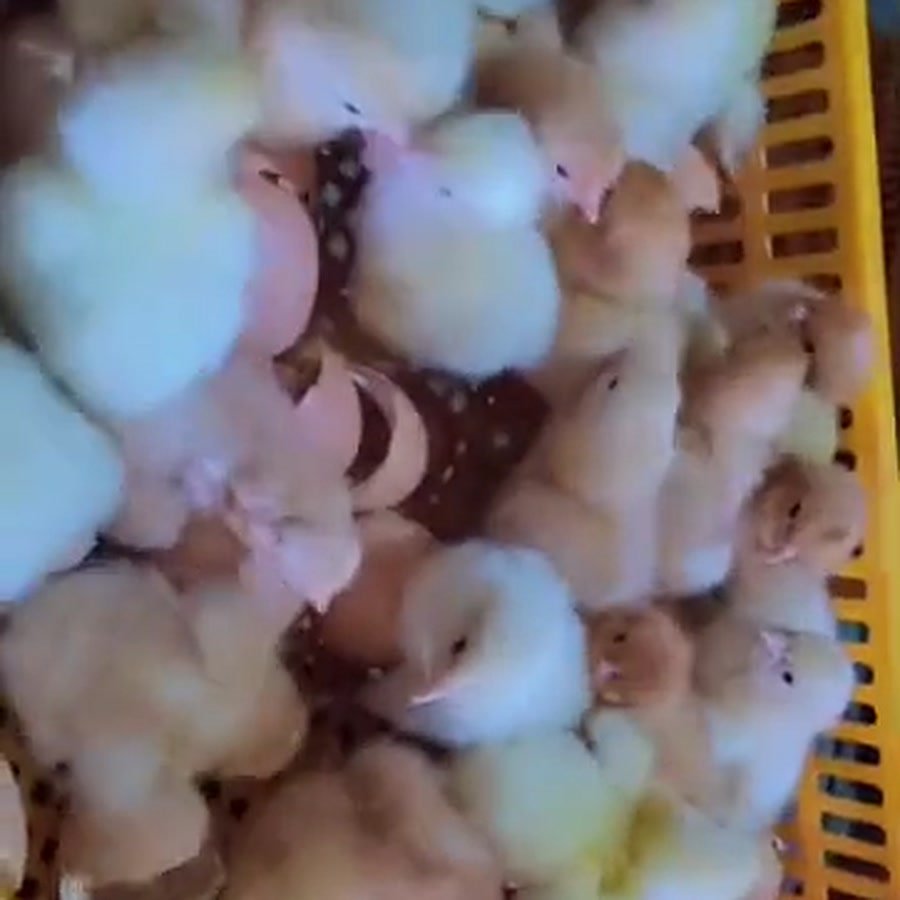
Day-old brown hybrid pullet chicks in Ghana were in the range of GH₵ 14 to 18 each from established hatcheries in mid-2026, with small differences between strains driven more by import costs of parent stock and hatching eggs than by any premium for a name. White layer chicks are sometimes slightly cheaper but availability is patchy. Point-of-lay pullets at 16 to 18 weeks run roughly GH₵ 65 to 95 depending on age, vaccination status and region. Check the live figures in our chick price guide and where to buy article.
| Option | Day-old pullet chick (GH₵, orientation) | Point of lay 16–18 wks (GH₵) | Feed to 72 wks per bird | Eggs to 72 wks (Ghana) |
|---|---|---|---|---|
| Brown hybrid (any of the four) | 14–18 | 65–95 | 48–52 kg | 275–305 |
| White hybrid | 13–17 | 60–90 | 42–46 kg | 285–315 |
| Noiler / Kuroiler (as layer) | 10–14 | 55–80 | 55–65 kg (housed) | 150–200 |
Orientation prices, mid-2026, southern Ghana. Prices vary by region, season and order size and move with the cedi. Confirm live before budgeting.
Run the arithmetic and the brown hybrids are the clear commercial choice for a housed flock selling brown eggs: 48 to 52 kg of feed for about 290 eggs is roughly 170 g of feed per egg. The dual-purpose bird at 60 kg for 175 eggs is over 340 g per egg. At current feed prices that difference is larger than the entire margin on a crate. Our layer farming guide takes this through to a full budget.
Mini-case: two strains, one farm, same result
A customer at Dodowa placed 1,000 Lohmann Brown and 1,000 Isa Brown chicks from us in the same week in 2024, reared them in adjoining pens on the same feed with the same lighting, and kept separate records because he wanted to settle the argument for himself. The Isa flock reached 50 percent lay four days earlier. The Lohmann flock's average egg weight was about 1.5 g heavier through the first 20 weeks of lay. Peak was 91.8 percent for the Isa and 91.1 for the Lohmann. At 72 weeks, eggs per hen housed were 296 and 293. Mortality was 4.2 and 3.9 percent. He sold both flocks to the same trader on the same day. His conclusion was that he would buy whichever strain the hatchery had available from a younger parent flock, and put the energy he had spent on the strain question into his lighting and his weighing.
Our recommendation by type of farmer
Commercial egg farm, 500 to 20,000 birds, selling brown eggs to traders, shops or supermarkets: any of the four brown hybrids, chosen by which hatchery near you supplies it reliably from a healthy parent flock. If you sell by size to traders, the Lohmann Brown's early large egg is a small advantage. If you plan to keep flocks past 75 weeks, Hy-Line Brown's persistency is worth considering. Stay with one strain for at least three flocks so you learn its curve.
Caged flock with a buyer indifferent to shell colour (bakery, processor, institution): a white layer. Lower feed cost per egg, better heat tolerance, more eggs late in life. Confirm the buyer in writing before you order chicks.
Household or semi-scavenging flock, under 100 birds, wanting eggs and meat: Noiler, Kuroiler or an improved local cross. Not a brown hybrid, which will not survive scavenging and will not repay housed feed at that scale.
Farmer in the hot north (Tamale, Bolgatanga, Wa) with an open house: a brown hybrid still works, but pay special attention to house design and consider a white layer if the market allows. Bovans Brown has a reputation for heat robustness, but supply may be the deciding factor.
Whatever you choose, the strain is the smallest of your decisions. Read our broader breed guide for how layers fit alongside broilers and dual-purpose birds, and then spend your attention on rearing, light and vaccination.
Frequently asked questions
Which layer breed lays the most eggs in Ghana?
Is Isa Brown better than Lohmann Brown?
Can I keep white layers in Ghana?
Are Noiler or Kuroiler good layers?
How do I know which strain a hatchery is selling me?
Which layer breed is best for hot weather in Ghana?
Should I buy day-old chicks or point-of-lay pullets?
Not sure which layer to order? Ask us what we have from a young parent flock
Agro Prime hatches sexed brown hybrid pullet chicks in Kasoa and will tell you the strain, the parent flock age and the hatchery vaccinations on every batch. We will also help you match the strain to your market. WhatsApp or call +233 24 915 1503, email support@halaalfarmsghana.com, or book a visit to see the chicks and talk through your plan.


